10 Creative Ways to Use LED Strip Lights in Your Home in 2026
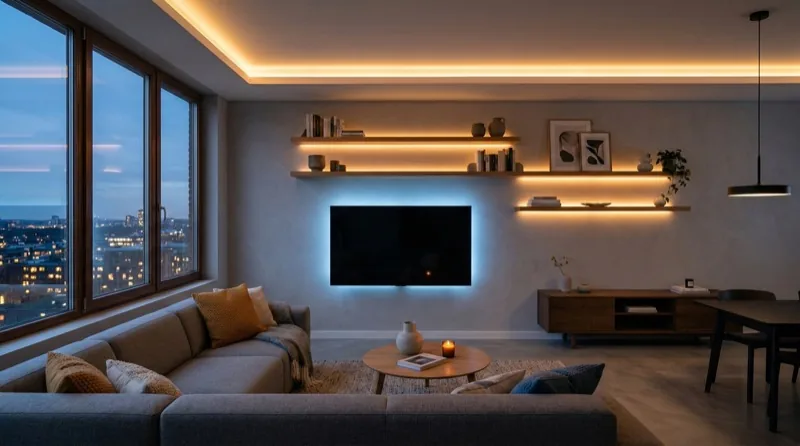
LED strip lights have come a long way since the basic white tape strips of a few years ago. In 2026, you can buy smart RGBIC strips that display multiple colors simultaneously, COB (Chip-on-Board) strips that produce a seamless glow without visible LED dots, and Wi-Fi-enabled strips you can control with voice commands or sync to music.
Whether you are renovating your entire home or just want to add some atmosphere to a single room, LED strips are one of the most affordable and impactful upgrades you can make. Here are 10 creative ways to use them.
1. Under-Cabinet Kitchen Lighting
This remains the most practical application for LED strips. Mount waterproof strips under your kitchen cabinets to illuminate your countertops. The difference is immediately noticeable: no more shadows while chopping vegetables or reading recipes. In 2026, tunable white strips let you switch between warm white (2700K) for evening cooking and cool white (5000K) for detailed prep work. Look for strips with a CRI (Color Rendering Index) above 90 so food looks natural under the light.
2. TV and Monitor Backlighting
Bias lighting behind your TV or monitor reduces eye strain and makes the picture appear more vivid. Smart RGBIC strips like the Govee Immersion or Philips Hue Play Gradient can sync with your screen content in real time, extending colors from the display onto the wall behind it. This creates an immersive effect that makes a 55-inch TV feel like a 75-inch. Most kits attach with adhesive and connect via USB or a separate controller.
3. Staircase Step Lighting
LED strips under each stair tread serve a dual purpose: they look stunning and they prevent nighttime trips. Motion-activated strips that light up as you approach are now widely available. Aluminum channels with diffusers are essential here. They protect the strip from foot traffic, spread the light evenly, and eliminate harsh LED dots. Install them on the underside of each step nose for a floating glow effect.
4. Bedroom Ceiling Cove Lighting
Drop-ceiling coves or crown molding with a hidden LED strip behind it transforms a bedroom into a hotel-suite experience. Warm white (2700K-3000K) strips create a relaxing ambient glow that bounces off the ceiling without any visible light source. Pair this with a smart dimmer so you can gradually lower the brightness as you wind down for sleep. Some smart strips like Nanoleaf Essentials support circadian rhythm schedules that automatically shift color temperature throughout the day.
5. Bathroom Mirror Perimeter
LED strips behind or around your bathroom mirror provide even, shadow-free lighting for grooming. This is far better than overhead fixtures that create harsh shadows under your chin and eyes. Use IP65-rated waterproof strips in bathrooms to protect against moisture. Tunable white strips are ideal here too, so you can switch to daylight-balanced light when applying makeup or shaving.
6. Floating Shelf and Display Cabinet Lighting
Mount strips on the underside of floating shelves or inside glass display cabinets to highlight books, art, collectibles, or plants. This is one of the simplest installs: peel-and-stick the strip, plug it in, and you are done. For display cabinets, warm white LEDs with a high CRI make colors pop without generating the heat that halogen spotlights produce. This is especially important for items that could be damaged by heat.
7. Home Theater and Gaming Room Ambient Lighting
Beyond TV backlighting, LED strips can outline your entire entertainment setup: behind desks, along baseboards, under seating platforms, and around acoustic panels. RGBIC strips let you create themed lighting scenes. Music-sync modes pulse the lights to your audio, adding atmosphere to movie nights or gaming sessions. Matter-compatible strips (the new smart home standard) work across Apple Home, Google Home, and Alexa without needing separate apps.
8. Outdoor Deck and Patio Edges
Waterproof LED strips (IP67 or higher) can outline deck edges, railings, pergola beams, and garden paths. Solar-powered outdoor strips have improved significantly and now last through most of the night on a full charge. For permanent installations, hardwired 24V strips are more reliable. Always use outdoor-rated aluminum channels to protect the strips from weather and UV degradation.
9. Wardrobe and Closet Interior Lighting
A motion-activated strip inside your wardrobe or walk-in closet makes finding clothes in the morning effortless. Battery-powered, rechargeable strips with built-in PIR sensors are available for under $15. They turn on when you open the door and shut off automatically after 30-60 seconds. For larger walk-in closets, hardwired strips along the shelf edges and hanging rails provide more comprehensive coverage.
10. Architectural Feature Highlighting
Use strips to accentuate architectural details that would otherwise go unnoticed: recessed wall niches, exposed brick, archways, built-in bookshelves, or ceiling beams. COB LED strips are the best choice for architectural applications because they produce a continuous line of light without visible dots, creating a clean, professional finish. They cost slightly more than traditional SMD strips but the visual difference is significant.
LED Strip Buying Guide: What to Look For in 2026
- COB vs SMD: COB strips have no visible LED dots and produce a smoother, more uniform light. SMD strips (like 2835 or 5050) are cheaper and come in more varieties. For visible installations, choose COB.
- RGBIC vs RGB: RGBIC strips can display multiple colors simultaneously along the strip. Standard RGB strips can only show one color at a time. RGBIC costs more but enables gradient and rainbow effects.
- Voltage: 24V strips are better for longer runs (over 5 meters) because they have less voltage drop. 12V strips are fine for shorter lengths.
- CRI: For task lighting and areas where color accuracy matters, get strips with CRI 90+.
- IP Rating: IP20 for indoor dry areas, IP65 for bathrooms and kitchens, IP67+ for outdoor use.
- Smart connectivity: Look for Matter or Wi-Fi strips if you want voice control and automation. Bluetooth-only strips have limited range.
The Bottom Line
LED strip lights are one of the highest-impact, lowest-effort home upgrades you can make. The technology has matured to the point where a $30 smart strip can transform a room in 15 minutes. Start with one high-impact area like TV backlighting or under-cabinet kitchen lights, and expand from there. The key is using the right strip type for each application: waterproof for wet areas, high-CRI for task lighting, and COB for visible architectural features.