The Surprising Link Between Clean Labels and Consumer Trust
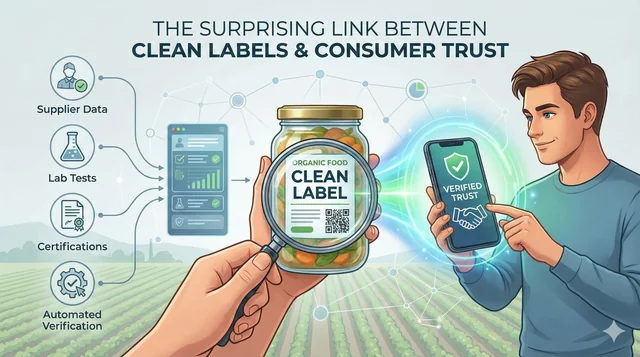
Consumers pay close attention to ingredient labels before purchasing packaged foods. Increased recalls and supply chain audits have made label accuracy and ingredient transparency essential to both trust and regulatory compliance. Brands must maintain complete ingredient records, validate supplier data, and display information clearly on packaging to sustain consumer confidence.
Reliable documentation covers supplier identity, geographic origin, certification status, and verified test results, forming an auditable trail that satisfies retailers and regulators. Automated systems that connect supplier and label data enable faster responses to sourcing updates. Standardized templates for review and consistent formatting reduce errors, shorten approval times, and establish a measurable foundation for consumer trust and transparent operational accountability.
Ingredient Transparency as a Functional Standard
Maintaining a single, verified record of all ingredients provides accountability and traceability across production. Each record should document supplier ID, geographic origin, certification details, lot numbers, audit timestamps, and linked test results. Centralized data management prevents conflicts, supports accurate reporting, and identifies responsibility for every entry.
Automated compliance systems compare ingredient information against label claims and flag discrepancies for review. Integration with procurement, inventory, and quality systems retains version histories when formulations change. This process applies across multi-ingredient categories such as seasonings and dry rubs, where verified sourcing data confirm ingredient identity and labeling accuracy. These controls reduce manual review, maintain compliance, and deliver continuous visibility throughout the verification process.
Visual Integrity That Reinforces Transparency
Label design should directly represent verified product data to prevent confusion. Font hierarchy, allergen emphasis, certification symbols, and net weight displays must align with documented information. Removing decorative graphics or unverified icons eliminates misleading impressions and helps consumers interpret packaging correctly.
A single, standardized style guide defines consistent formatting for all products. Centralized templates, size specifications, and approved icon libraries make reviews faster and reduce the chance of mislabeling. Routine visual audits confirm alignment between packaging, digital listings, and regulatory submissions. Consistent formatting improves consumer understanding, simplifies retailer checks, and reinforces the credibility of every verified attribute shown on the label.
Verification Systems That Sustain Credibility
Verification systems connect each label claim to measurable test results and certification records. Regular documentation of lab results, certificate renewals, and processing checkpoints creates a searchable audit trail that supports regulator and retailer reviews. Keeping this information in machine-readable form allows quick retrieval and efficient compliance checks.
An integrated traceability platform combines supplier reports, laboratory outputs, and inventory updates to validate every claim in real time. Including QR codes on packaging enables consumers to confirm test summaries and certificate links for specific batches. These connected systems shorten investigation times, strengthen data accuracy, and provide a unified operational view of label reliability and verification activities across production.
Cross-Category Standardization for Unified Trust
Applying one labeling framework across all product categories eliminates inconsistencies that reduce trust. A standardized clean-label manual defines required ingredient panel elements, sign-off procedures, record retention periods, and approved claims. Using identical templates across teams replaces variable practices and improves validation speed.
Supplier evaluations should use shared scorecards, sampling plans, and audit criteria to produce comparable evidence across product lines. Connecting supplier performance thresholds to label permissions prevents exceptions and accelerates approval cycles. Step-by-step implementation and staff training establish consistent adoption across operations. This unified approach demonstrates to retailers and consumers a measurable, repeatable commitment to transparency that remains verifiable across every brand and product group.
Transparency as an Ongoing Operational Practice
Transparency requires continuous tracking and open access to updated information. Timestamped logs, controlled label versions, and digital records let teams trace formulation or supplier changes quickly. Public documentation supports retailer inquiries and compliance verification without manual searches.
Ingredient verification should operate as a continuous system. Automated sampling, laboratory confirmation, and supplier attestations recorded by lot provide reliable trace data. Real-time notifications to procurement, quality, and communications teams minimize response delays, while QR updates or public change logs keep consumers informed. Integrating these activities into everyday operations sustains accuracy, accelerates reviews, and maintains confidence through clear, documented accountability.
Transparent labeling relies on standardized data, verified sourcing, precise design, and ongoing oversight. Linking ingredient records to supplier certifications and test results confirms accuracy. Coordinated approval workflows and uniform visual standards reduce inconsistencies and simplify compliance. Machine-readable records, accessible documentation, and version control make transparency verifiable at every production stage. Implementing these integrated systems builds measurable trust among brands, regulators, and consumers. A unified documentation framework and consistent recordkeeping strengthen audit readiness and credibility. Reliable, verified data across all packaging turns transparency from a procedural task into a quantifiable performance standard that reflects operational integrity in every product line.