The Luxury Beauty Tax Is Real: 36 Drugstore Dupes That Prove It
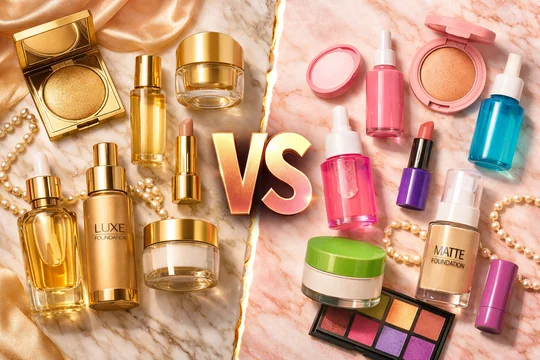
If you've ever stood in the skincare aisle wondering whether the $182 vitamin C serum is really nine times better than the $20 one, you're asking exactly the right question. A comprehensive roundup of 36 beauty product alternatives has laid bare the staggering price differences between luxury and drugstore beauty — and the consensus from thousands of reviewers is clear: in most cases, the cheaper option performs just as well.
The Most Shocking Price Gaps
Let's start with the numbers that will make you rethink your entire beauty budget. TruSkin's vitamin C serum ($20) is being compared favorably to SkinCeuticals' CE Ferulic serum, which retails for $182. That's not a typo — the luxury version costs over nine times more for what reviewers describe as comparable results in brightening and smoothing skin.
Then there's the under-eye corrector category, where Catrice's "Instant Awake" brightener comes in at less than one-fifth the price of the Becca Under-Eye Corrector ($33). Both use peachy-orange tones to cancel dark circles. Both work. One just happens to cost dramatically less.
CeraVe's Retinol Serum (around $16) is drawing comparisons to Murad's version at $92, with reviewers specifically noting they prefer the drugstore option for its quick absorption and zero irritation. When the cheaper product is actually preferred, the pricing conversation gets uncomfortable for luxury brands.
The E.l.f. Revolution
No brand appears more frequently in the dupe conversation than E.l.f. Cosmetics, and it's not hard to see why. Their Halo Glow Liquid Filter has become the go-to alternative for Charlotte Tilbury's famous Flawless Filter — at a fraction of the price. Their Squeeze Me lip balm (under $5) is being favorably compared to Summer Fridays' Lip Butter Balm ($24). Their Camo liquid blush rivals offerings from Saie and Rare Beauty.
E.l.f.'s strategy is remarkably straightforward: identify what makes a luxury product beloved, replicate the key features, and price it for accessibility. The fact that they keep succeeding at this formula says something important about how much of luxury pricing is actually justified by formulation versus how much is brand premium.
The Hair Care Surprise
Perhaps the most interesting dupe on the list is Shea Moisture's manuka honey mask, which reviewers — including professional cosmetologists — compare favorably to both K18 and Olaplex treatments. These are brands that have built entire cult followings around proprietary technology and premium positioning. For a product packed with mafura oil, shea butter, baobab oil, and honey to deliver comparable results at a fraction of the price challenges the narrative that expensive hair care equals better hair care.
What You're Actually Paying For
The beauty industry operates on a simple principle: perception drives pricing. A sleek package, a prestigious brand name, a celebrity endorsement, and strategic placement in high-end retailers all contribute to what consumers believe a product is worth. But the active ingredients in skincare and cosmetics are, by and large, available to all manufacturers.
Retinol is retinol. Hyaluronic acid is hyaluronic acid. Vitamin C is vitamin C. The formulation matters — concentration, delivery systems, and complementary ingredients all play a role — but the gap between a well-formulated drugstore product and its luxury counterpart is far smaller than the price difference suggests.
The Smart Approach
This doesn't mean all luxury beauty products are overpriced, or that every drugstore dupe is a perfect match. Some formulations genuinely justify a premium through innovative delivery systems, unique ingredient combinations, or superior textures. The key is being an informed consumer who evaluates products on their ingredients and results rather than their price tags and packaging.
The dupe movement isn't about being cheap — it's about being smart. When a $5 lip balm and a $24 lip balm deliver the same moisturizing experience, choosing the affordable option isn't settling. It's just good sense. And the $19 you saved? That's an entire extra product in your routine.