The Future of Last Mile Routing Software in Intelligent Logistics
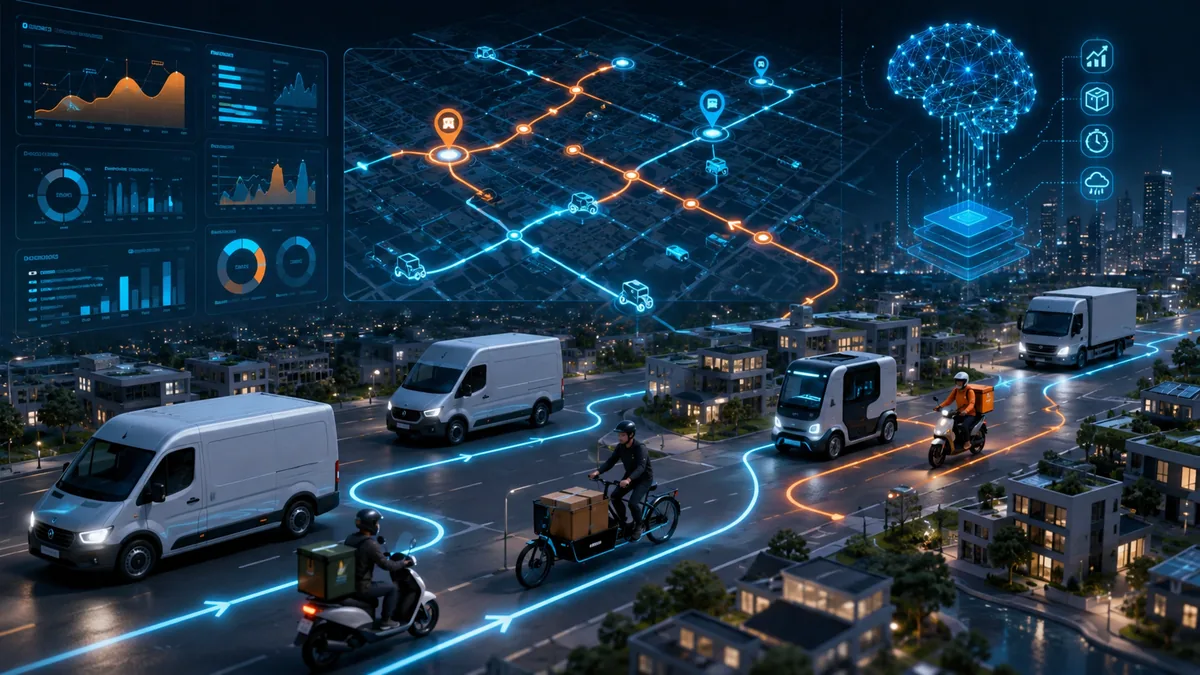
Delivery economics are tightening as customer expectations rise, placing routing decisions under greater operational scrutiny. The global last mile software industry will hit USD 158.44 billion by 2035. This surge reflects the centrality of execution technology in modern logistics operations.
Last mile routing software is moving beyond shortest-path planning into continuous decision support across capacity, constraints and service promises. It increasingly combines AI-based routing and constraint optimization, predictive intelligence that learns from patterns and real-time data ingestion for dynamic decisions.
Strong platforms also deliver deep constraint handling with capacity insights, rate-based routing and territory planning, supported by integration-backed analytics visibility across owned and outsourced fleets. Let's learn about the future of last mile routing software and how to evaluate it.
Why Routing is Becoming The Control Layer For Delivery Reliability
The last mile has always been complex, but the pace of change is new. Same-day expectations, higher stop density, tighter delivery windows and more hybrid fleet models mean "planning once" is not enough.
That is why last mile routing software is increasingly treated as operational infrastructure, alongside dispatch, tracking, proof and exception governance. The future state is clear: routing becomes the system that balances customer commitments with real constraints, while protecting cost-to-serve and fleet productivity.
5 Forces Shaping the Future of Last Mile Routing Software
These shifts explain why last mile routing software is becoming an execution control layer, not a planning tool that stops at route creation. Use the sections below to understand what is changing, what to operationalize and how to build repeatable performance across markets and fleet types.
AI and ML are Shifting Routing From Fixed Plans to Adaptive Decisions
AI and ML are expanding what routing can do during a live operating day, because systems learn from historical patterns and adjust to real-world signals. This improves last mile efficiency by helping teams make faster, more accurate decisions while routes are still in motion.
Predictive Service-time Modeling
ML estimates dwell time by stop type, building access and customer behavior, improving route feasibility across dense, high-variance delivery zones.
Dynamic Resequencing
Routes are updated when exceptions occur, reducing end-of-day compression and protecting promised windows without forcing dispatchers to patch manually.
Risk-aware Decisions
Models flag higher-risk drops and likely exception zones, prompting earlier interventions and tighter proof rules for stops that need added control.
Constraint-first Routing Will Replace Distance-first Optimization
Distance-only routing breaks under real constraints, so feasibility is becoming the primary routing objective that protects margins and service reliability. Sequencing becomes secondary to promised windows, vehicle capacity, access restrictions and driver rules that define what can actually be completed.
Compliance-ready Planning
Hours-of-Service (HoS) compliance constrains what a driver can legally complete, so routing must account for shift rules and realistic drive time.
ELD-backed Recordkeeping
Electronic Logging Device (ELD) technology can automatically record driving time and related hours-of-service data, supporting more accurate compliance recordkeeping.
Safer End-of-Shift Execution
Feasible plans reduce unrealistic overtime and unsafe end-of-shift pressure, improving route completion consistency across peak variability and dense areas.
Multimodal Execution and Sustainability Will Become Default Expectations
As congestion and curbside constraints increase, mixed vehicle strategies are becoming more common and routing must coordinate that complexity. Handled well, multimodal planning improves resilience, reduces failed handoffs and supports sustainability without sacrificing throughput.
Vehicle-type Allocation by Stop Requirements
Routing determines which stops should be served by two-wheelers, vans or larger vehicles based on access, payload and service constraints.
Micro-depots and Pickup Point Enablement
Routing can incorporate micro-depots and pickup points to reduce missed handoffs and improve first-attempt success in dense neighborhoods.
Congestion-aware Sequencing
Better sequencing reduces congestion exposure and reattempt risk, improving daily stability for efficient last mile deliveries across city routes.
Data Quality and Event Consistency are the Dominant Forces Behind Routing Outcomes
Advanced routing is only as strong as the signals feeding it, so event consistency is becoming a core requirement for performance improvements. Inconsistent milestones, delayed updates and vague exception codes weaken decision quality and reduce trust in routing recommendations.
Unified Execution Stack Connectivity
Last mile routing software connects to tracking events, proof capture, customer communications and exception workflows that drive operational control.
Comparable Performance Across Partners
When event definitions are consistent across partners, planned-versus-actual analysis becomes meaningful and rule changes can be made with confidence.
Faster Root Cause Identification
Clean data in last mile routing software reveals repeat failure patterns by zone and stop type, enabling targeted fixes rather than broad operational changes that create disruption.
Measurement Will Shift From Weekly KPIs to Daily Planned Versus Actual Governance
High-performing teams treat routing performance as a daily operating discipline, comparing what was planned against what actually happened. That feedback loop turns routing into a reliability flywheel that improves execution with each shift.
Feasibility Rate
Measure the percentage of routes completed without replanning, because frequent replans indicate weak constraint modeling or poor data inputs.
Planned vs Actual Arrival Variance
Track variance by zone, stop type and service tier, then refine service times and constraints that drive missed windows and route compression.
First-attempt Success Drivers
Monitor exception frequency by reason code to identify the operational causes behind reattempts and preventable failures.
Productivity Stability
Evaluate stops per hour without late-stage compression, because stable productivity signals routes that are feasible and operationally consistent.
Next-generation Capabilities to Expect From Last Mile Routing Software
Modern platforms go beyond route creation and act as an operating system for planning, dispatch and continuous improvement across every fleet type and territory.
AI-based Routing and Constraint Optimization
Models time windows, capacity, service times, traffic and driver shifts to generate feasible multi-stop plans that improve ETA accuracy and route compliance.
Predictive Intelligence That Learns From Patterns
Uses AI and ML to learn from historical delays, zone behavior and driver performance, continuously improving routing accuracy and delivery outcomes.
Real-time Data Ingestion For Dynamic Decisions
Aggregates telematics, GPS and partner carrier signals to support re-routing, reassignment and mid-route resequencing when conditions change.
Deep Constraint Handling and Capacity Insights
Balances Service Level Agreement (SLA) promises with real capacity, supports what-if simulations and strengthens territory planning based on density and demand patterns.
Unified Visibility Across Owned, Outsourced and EV Fleets
Consolidates fleet types into a single control view so dispatch can instantly match the right vehicle to the right job.
Workflow Automation and Exception Handling
Automates order-to-dispatch, auto-assigns routes and triggers predefined actions when exceptions occur, reducing manual patching and SLA breaches.
Rate-based Routing and Carrier Optimization
Uses rate cards and performance metrics to allocate carriers intelligently, reduce billing exceptions and minimize carrier leakage.
Integration-backed Analytics Visibility
API-first integration connects ERP, OMS, WMS, CRM, TMS, IoT and messaging systems, enabling planned-versus-actual analytics and explainable decisions.
In practice, the strongest platforms help teams operationalize consistent playbooks across regions, carriers and service tiers, even when volume patterns fluctuate.
Build Reliable Delivery Performance With AI-driven Last Mile Routing Software
The future of last mile routing software is not simply faster calculations, because routing must directly improve service reliability and cost-to-serve at scale. As AI and ML mature, last mile routing software becomes the layer that aligns customer promises with operational constraints, while protecting unit economics daily.
The strongest teams connect routing to tracking, proof and exception governance, then refine constraints using planned-versus-actual discipline across every shift. With technology partners such as FarEye, logistics teams can accelerate deployment while standardizing events, workflows and performance governance across regions and partners.
The way forward is clear: treat last mile routing software as operational infrastructure, then use automation to reduce decision latency and stabilize outcomes under pressure.