The Evolving Financial Industry: How AI and Technology Are Shaping Trading Platforms
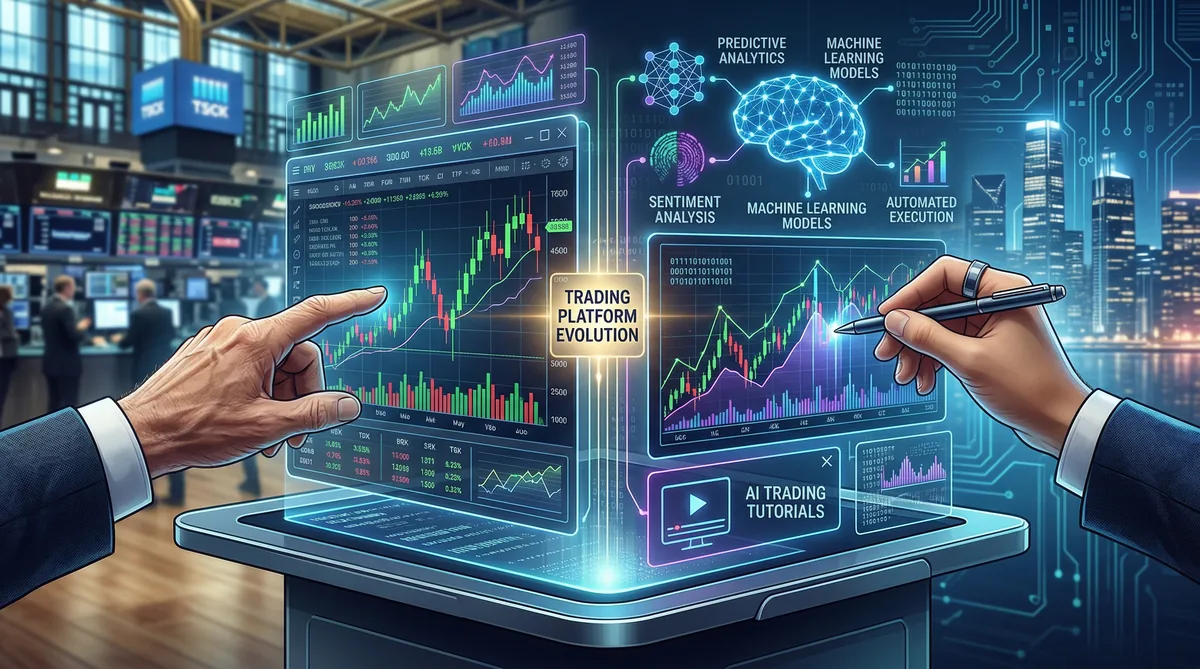
The financial sector has for a long time been in a state of change, but in the past ten years the most unprecedented of changes have occurred due to technology. From algorithmic trading to mobile investment apps, what is seen today in terms of how investors trade in the markets is very different from what was seen even a few years ago. Today artificial intelligence (AI) and machine learning are not just buzzwords; they are at the core of what is seen in the evolution of trading platforms, which in turn is changing investor expectations and defining the future of finance.
The Rise of Technology in Trading
Historically, trading was a closed shop run by a small group of pros at stock exchanges. But then came MetaTrader, which really opened the doors; it is seen today that any investor can trade the world’s markets from their home computers. For a long time, MetaTrader served as the foundation of retail trading, in particular for the over 40 set, which counted on its easy-to-use interface and extensive features to trade in foreign exchange and commodities.
However, it is seen that what traditional platforms counted on for success in the past no longer do. As technology advances, platforms that don’t include AI or that don’t put out better user experiences risk being left behind. Also, investors are putting money into tools that do real-time data analysis, that predict trends, and that adapt to market volatility, which is a far way from what traditional platforms are just now doing to that.
AI and Machine Learning Transforming Investor Expectations
Artificial intelligence has gone from being an experiment to a main player in financial markets. It is seen in machine learning’s ability to work with huge data sets, which outstrip what a human can do; they identify trends and produce predictive data. What is now seen is that which was once the tool of institutional investors is available to the average person.
Today’s users require that platforms present them with intelligent platforms that learn and adapt to market changes. Investors have outgrown the manual strategies and outdated charts; they are looking for data-driven reports, risk assessment, and real-time feedback.
MetaTrader and the Challenge of Legacy Platforms
Despite growth in new techs, legacy systems like MetaTrader still do well. They provide a familiar interface, a proven track record, and large support communities, which in turn appeals to the older set of investors that may not be as into the latest AI-powered plays. MetaTrader’s success is a play for the importance of ease of use and trust in financial software.
Yet in the past few decades, it is seen even the oldest of platforms struggling. The financial world is changing at a rate that no single software player can turn a blind eye to. Although MetaTrader still serves the needs of millions of users worldwide, it also must adapt to issues like AI integration, mobile-first experiences, and improved cybersecurity. Without modernization these traditional platforms do not stand a chance in the coming years.
Educational Resources: The Role of Tutorials and Guidance
As it is seen platforms grow and change, education plays a key role. Many investors, which include those that are transitioning from legacy systems, turn to instructional materials and learning resources to better understand the new tools and strategies. Mt5 video tutorials in fact have become a main feature of today’s trading platform. They go into detail from basic navigation through to very complex algorithmic strategies, which in turn allows investors to adapt to the very dynamic markets seen today.
Educational resources, which also serve to improve usability, do in fact empower investors to make better decisions. With AI in the picture, it is of great import to see through the algorithms’ logic and to what extent investors should count on them or go against them. This transition is seen as a growth of the connection between tech and financial literacy, which in turn makes info as important as the tools that are at investors’ disposal.
The Future of Trading Platforms
In the future trading platform will be very adaptive and personalized. It is seen that AI is improving investment strategies based on individual investor behavior, risk tolerance, and market conditions. Machine learning models may also put out predictive insights, which in turn preclude some trends from even happening, and at the same time automation tools will do trades at the best possible times.
Also, it is seen that the present trend of AI in platforms is to redefine what access means. Young investors, which are coming in, are used to very easy-to-use mobile experiences, and they expect the same from financial software. Legacy platforms must transform to present a smooth interface, personalizable dashboards, and strong security features. Those that do not innovate run the risk of losing users to more progressive competitors.
Adapting to a Fast-Changing Financial World
Trading platform development is a barometer aimed at the larger financial business trends. It is seen a shift from passive to interactive, intelligent systems that investors are demanding. Tech is going beyond enabler to become a core element of investment strategy. Those which integrate AI, machine learning, and educational resources will do better in meeting investor expectations.
At the same time, this transformation is a wake-up call that no player is out of the woods when it comes to disruption. Even the popular software like MetaTrader is seen in a very dynamic tech-based market. Investors, who may be pro or new to the game, must be adaptive and informed, which means they should use what worked from the past as well as what the new tech has to offer in order to weather the change.
Conclusion
The financial sector is in the process of a great transformation. AI and machine learning are not the only forces at play; they are also redefining how investors think, what they want, and which strategies they use. Although the value in legacy platforms which offer stability and familiarity is still seen, in the long term what determines their success is their adoption of innovation. As education materials and adaptive tools become more available, investors are better equipped to deal with complex markets—but only if they are also informed and adaptive.
In the coming years finance will see a mix of tech and strategy which will include AI powered insights that come into play with human decision making. In this setting it is up to investors and platforms to grow together and use technology to not only survive but also prosper in a very dynamic world.