The Epstein Files Reveal How Elite Networks Protect Their Own
A Bipartisan Push to Expose the Truth
In a rare display of bipartisan unity, Rep. Ro Khanna (D-CA) and Rep. Thomas Massie (R-KY) joined forces to introduce the Epstein Files Transparency Act. Together with MAGA conservatives like Lauren Boebert and Marjorie Taylor Greene, they used a discharge petition to defy both President Trump and Speaker Mike Johnson, forcing the bill to the House floor where it passed overwhelmingly.
The result: approximately 3.5 million pages of emails, text messages, and court records have been made public. But as Khanna has discovered, what's been released is only part of the story — and perhaps not the most revealing part.
What the Files Show — and What They Don't
The documents released were first reviewed and redacted by lawyers from Pam Bondi's Department of Justice. Todd Blanche, the deputy attorney general overseeing the process, was previously one of Trump's personal lawyers. More than six million pages exist in total, and crucially, the survivors' statements to the FBI — detailing who assaulted them — remain secret.
"We still don't have the most potent thing, which is the survivors' statements to the F.B.I. over who raped them and who committed these acts," Khanna told the New York Times.
Epstein: Broker of Connections
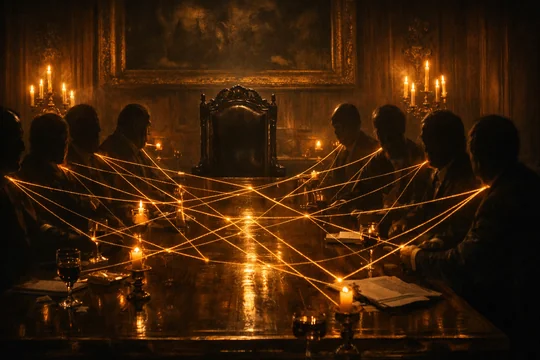
What the files do reveal is how Epstein operated as a broker — of money, introductions, information, and human beings. His network crossed every conventional boundary of American life. He maintained relationships with Noam Chomsky and Peter Thiel, Steve Bannon and Barack Obama's White House counsel, Deepak Chopra and Howard Lutnick.
As Ezra Klein writes in the New York Times, Epstein had "a talent for sniffing out what his correspondents want most. The rich want to be taken seriously, the not-so-rich want the trappings of wealth, many of the men wanted sex and everyone wanted connections."
In one revealing 2013 exchange, Epstein wrote to Elon Musk about "interesting people coming to the house." When Musk dismissed the idea, Epstein changed tack: "No one over 25 and all very cute." Musk appears to have ignored the invitation entirely.
The Self-Reinforcing Shield
The network's breadth was self-reinforcing. For many in Epstein's orbit, his proximity to the rich and powerful served as evidence that whatever he had done, it couldn't be that bad. JPMorgan Chase continued banking with Epstein despite internal suspicions about sex trafficking because he connected the bank to billionaire clients like Sultan Ahmed bin Sulayem and Sergey Brin.
Even after Epstein's 2008 conviction for soliciting a minor, the messages kept flowing. Peter Mandelson wrote, "I think the world of you." Jes Staley of JPMorgan told Epstein, "I hope you keep the island. We all may need to live there."
When the Miami Herald published its investigation identifying 80 victims in 2018, Larry Summers' response to Epstein was simply: "U have returned to the press." They moved on to other matters.
The "Epstein Class"
Khanna has coined the term "Epstein class" to describe "the rich and powerful people who act and think like they're above the law and perhaps above morality." As author Anand Giridharadas explains, Epstein exploited a fundamental vulnerability of elite networks: "These people are actually not that serious about character. In fact, character may be a liability for some of them."
Giridharadas raises a haunting question about the network age: "I just wonder if courage is a value that has suffered in a network age, because to be courageous is to break ties. And the more valuable ties become — the more exponentially valuable more ties become — the more exponentially expensive it is to cut off that tie."
What Comes Next
The Epstein files have shaken Khanna's belief that positive policy alone can address systemic inequality. "I used to think, 'Let's just have a positive vision of Medicare for All and child care,'" he said. "I am more in the camp now that there has to be some accountability. You need people's faith in a democratic project."
With millions of pages still unreleased and survivors' FBI statements withheld, the full truth about Epstein's network remains partially hidden. The question now is whether the political will exists to release the rest — or whether the same elite solidarity that protected Epstein for decades will continue to shield his associates.
Source: The New York Times