The DOJ Is Joining xAI's Legal Challenge to Colorado's AI Anti-Discrimination Law
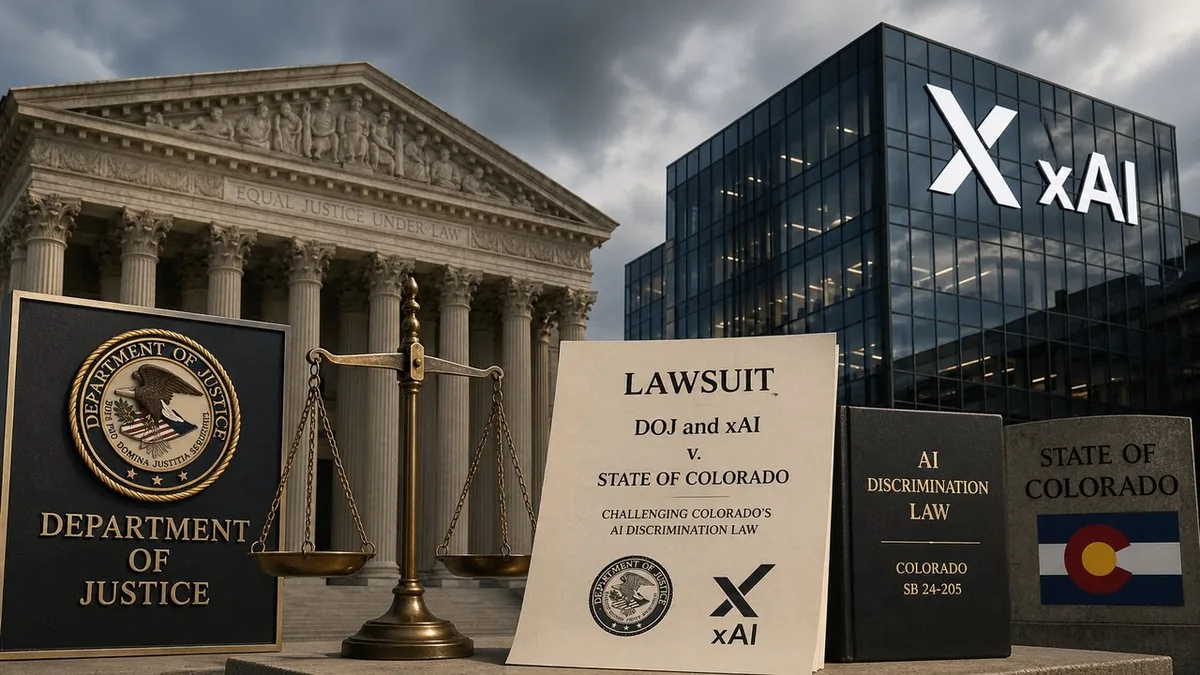
The Department of Justice has joined xAI's legal challenge against a Colorado law designed to prevent discrimination by AI tools in employment decisions and other high-stakes domains. This is a significant development: the federal government is effectively taking a position against state-level AI regulation, and it's doing so alongside Elon Musk's AI company.
What Colorado's Law Does
The Colorado AI law requires companies deploying AI systems in consequential decisions — employment, lending, housing — to assess those systems for discriminatory impact and disclose when AI is being used. It creates liability for harms caused by biased algorithmic outputs. On paper, it's a consumer protection law. Opponents argue it creates compliance burdens that would slow AI deployment and expose companies to litigation over outputs they can't fully explain.
Why the DOJ Got Involved
The DOJ's participation signals that the Trump administration views state AI regulation as a policy concern — likely arguing that a patchwork of state laws creates inconsistency for companies operating nationally. This is the same argument the tech industry has been making. Having the federal government make it in court is a different level of backing for the "federal preemption" position.
The xAI Connection
xAI's involvement is notable because Musk's companies — Tesla, SpaceX, xAI — use algorithmic tools in hiring and operations that could fall under laws like Colorado's. There's a direct financial interest in defeating this regulation, not just a philosophical one.
My Take
Anti-discrimination law applied to AI is overdue, not premature. The DOJ joining a tech company to defeat state consumer protections is a preview of what federal AI policy looks like under this administration: clear the runway for deployment, deal with harms later. Colorado was trying to not wait for "later."
The Bottom Line
This case will likely shape whether state AI discrimination laws survive federal challenge. The outcome could determine the entire landscape for AI regulation outside Congress for the next decade.