The Assumable Mortgage Loophole That Could Save You $1,100 a Month
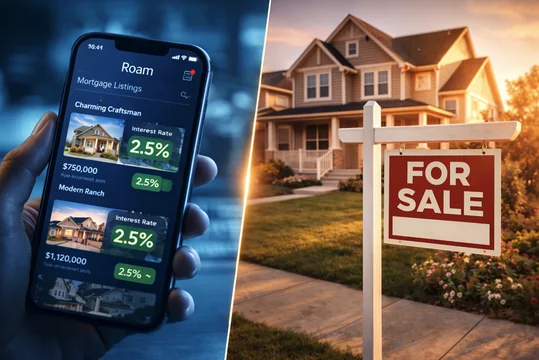
If you bought a house during the pandemic, congratulations — you're sitting on what might be the most valuable financial asset of the decade. Not the house itself, but the mortgage rate attached to it. A 2.5% or 3% fixed rate in a world where new buyers are staring down 6.5%? That's not a loan. That's a lottery ticket.
But here's the part almost nobody talks about: that rate doesn't have to die with the sale. Under the right conditions, a buyer can take over your mortgage — rate and all. It's called an assumable mortgage, and it might be the most underutilized tool in American real estate.
6 Million Homes, Almost Zero Awareness
According to Assume List, a company that helps buyers find and navigate these transfers, roughly 6 million homes in the US have both an assumable mortgage and an interest rate below 5%. That's not a rounding error. That's a significant chunk of the housing market sitting on transferable, below-market debt.
The catch? Most of those homeowners have no idea their mortgage can be transferred. And neither do the buyers who could benefit from it.
Not every mortgage qualifies. Most conventional loans don't allow assumption. But government-backed loans — VA loans through the Department of Veterans Affairs and FHA loans through the Federal Housing Administration — do. About 18% of new mortgages issued in 2020 were VA and FHA loans, which means there's a meaningful pool of transferable mortgages from the low-rate era.
The Zillow vs. Roam Gap Tells the Whole Story
Here's a stat that should make you furious: a search for assumable mortgages on Roam, a startup that uses AI to identify qualifying homes, showed 433 listings in Houston alone with rates at 3% or lower. The same search on Zillow — which relies on sellers to self-report — turned up exactly three.
That's not a discovery problem. That's a disclosure problem. The infrastructure to find these deals barely exists, and the industry has almost zero incentive to build it.
Why Mortgage Servicers Don't Want You to Know
Think about it from the servicer's perspective. They're currently managing a loan at 2.5%. If that loan gets assumed, they keep servicing it at 2.5%. But if the seller pays off the old mortgage and the buyer takes out a new one? The servicer — or more likely, the lending ecosystem around them — gets to originate a fresh loan at 6.5%. The math isn't subtle.
"If a lender can get rid of a 2.5% rate and lend money out at 6.5%, I think they'd prefer to do that," says Craig O'Boyle, president of Assumption Solutions, a company that helps facilitate mortgage transfers.
By law, servicers have 45 days to evaluate a buyer's credit and approve a transfer. In practice, it can take months. The FHA allows servicers to charge up to $1,800 in fees for the process, but these companies make far more starting a new loan at today's rates.
The Reddit Thread That Says It All
Brendan Burroughs, a food service driver, tried to assume a 2.5% mortgage on a Florida four-bedroom. His mortgage company, Mr. Cooper, told him 1,500 people were ahead of him. Then radio silence for a month. When he posted about it on Reddit, commenters told him to expect months more of waiting.
Then he hired Assume Loans, a specialized company, to push his case. Three days later, his servicer called. "I got pushed from the spot number 1,500 to No. 1," Burroughs says.
Mr. Cooper pushed back, claiming the timeline was standard and that Burroughs paid "unnecessary fees for services homeowners can complete themselves at no cost." But the pattern is hard to ignore: an entire cottage industry of assumption facilitators has sprung up precisely because the process is designed to be difficult.
The Down Payment Problem
Even when the assumption process works, there's another hurdle: the math on home prices. Housing prices are up 54% since January 2020. That means the existing mortgage — originated when prices were lower — doesn't cover the current value of the home. The buyer has to make up the difference.
Take a house that sold for $500,000 in 2021 and is now worth $700,000. That's a $200,000 gap before you even account for what the seller has already paid down on the principal. For many buyers, that down payment requirement puts assumable mortgages out of reach — or pushes them toward second loans to bridge the gap.
A New Category of Startups
Despite the obstacles, a whole ecosystem is forming around assumable mortgages. Companies like Roam use AI to identify qualifying homes. Assume Loans and Assumption Solutions act as intermediaries who pressure servicers to comply with legal timelines. Some offer their own listing platforms specifically for assumable properties.
It's a classic case of startups filling a gap that incumbents have no interest in closing. The information asymmetry is staggering, and the companies exploiting it are growing fast.
The Bigger Picture
The assumable mortgage situation is a microcosm of everything broken about American housing. Millions of homeowners won't sell because they're locked into rates they'll never see again — the so-called "lock-in effect." Millions of would-be buyers can't afford to buy at current rates. Assumable mortgages could help both sides, unlocking inventory while giving buyers affordable entry points.
But the mortgage industry makes more money keeping everyone stuck. And until the regulatory framework catches up — or enough startups make the process frictionless — 6 million potential deals will keep sitting on the table, invisible to almost everyone who could benefit from them.