The $599 MacBook Is Apple’s Smartest Upsell Yet
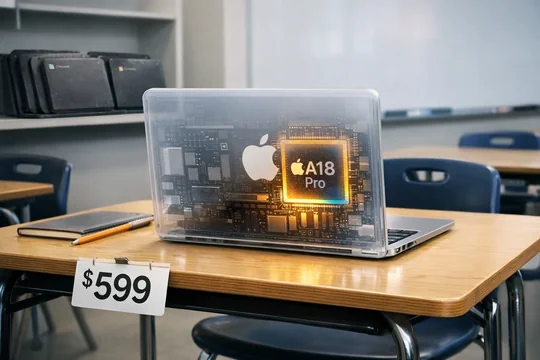
Apple doesn't do "budget" — it does "entry-level." And if the latest leaks from Forbes are accurate, the rumored $599 MacBook is a masterclass in strategic product positioning. Every spec choice tells you exactly what Apple wants: to get first-time Mac buyers in the door while making sure the MacBook Air remains the obvious upgrade.
The Spec Sheet Tells a Story
According to analyst reports compiled by Ewan Spence at Forbes, the budget MacBook would feature the A18 Pro chip — the same silicon that powers the iPhone 16 Pro. On paper, that's impressive. In practice, it's paired with deliberate limitations that define the product's real purpose.
The rumored specs include a single USB-C port, an LCD display (not the Liquid Retina XDR found in higher-end models), and 8GB of unified memory. Each of these choices saves Apple money while creating clear upgrade paths. Need more than one port? MacBook Air. Want a better display? MacBook Air. Need more RAM for your workflows? MacBook Air.
The A18 Pro Advantage
Using the A18 Pro chip is strategically brilliant. It gives Apple two major wins: first, it recycles proven silicon from the iPhone production line, keeping costs down. Second, it ensures the budget MacBook can run Apple Intelligence features, which require a minimum neural engine capability that older chips can't provide.
This means even the cheapest Mac in the lineup will be "AI-ready" — a marketing point that becomes increasingly important as Apple pushes its AI features across the ecosystem. Buyers won't feel like they're getting a second-class citizen when it comes to the headline features Apple will promote at WWDC.
Who Is This For?
The target audience is crystal clear: students, first-time computer buyers, and anyone currently using a Chromebook or aging Windows laptop who's been curious about macOS. At $599, Apple directly competes with mid-range Windows laptops and premium Chromebooks — segments where it currently has zero presence.
The education market is particularly significant. Apple has been losing ground to Chromebooks in schools for years. A $599 MacBook that runs the full macOS experience could reclaim territory that the iPad has struggled to hold in classroom settings where students need a proper keyboard and file management system.
The Upsell Funnel
Here's what makes this product fascinating from a business perspective: it's designed to be slightly frustrating. Not bad — Apple would never ship something that damages the brand — but limited enough that within a year or two, most users will understand exactly why the MacBook Air costs $300 more.
That single USB-C port means carrying a dongle or choosing between charging and connecting a peripheral. The LCD screen, while adequate, will look noticeably worse next to any Retina display in an Apple Store. The 8GB of RAM will handle basic tasks but choke on anything ambitious.
Apple isn't selling a destination product. It's selling a gateway drug to the Mac ecosystem.
Market Impact
If Apple hits the $599 price point, the ripple effects will be significant. Chromebook manufacturers will need to justify their premium-tier pricing. Windows laptop makers in the $500-800 range will face a competitor they've never had to deal with before. And Apple's own MacBook Air might see even stronger sales as budget MacBook owners upgrade.
The $599 MacBook might be the least impressive Mac ever made. It might also be the most strategically important.