Tesla Kills the Model S and Model X — Bets Everything on Cybercab and Robots
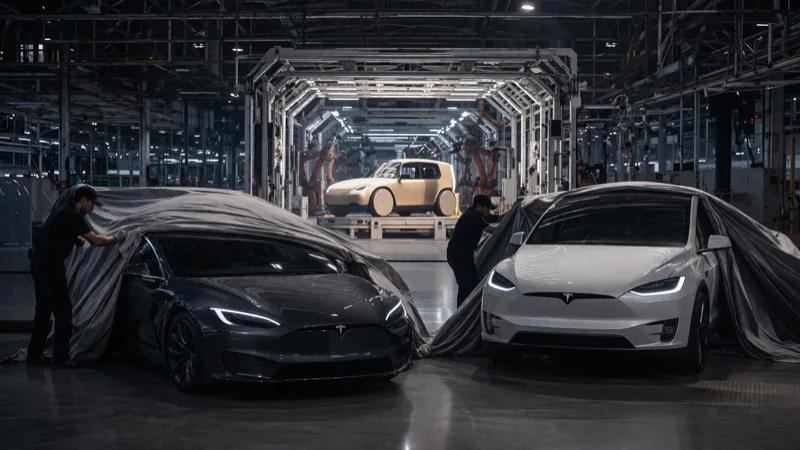
It is official: Tesla has stopped taking custom orders for the Model S and Model X, with just a few hundred units left in inventory. The two vehicles that defined Tesla's luxury brand are being put out to pasture — and the factory space they occupied is being converted to produce humanoid robots.
Welcome to Tesla's next chapter, where the company is betting its future on autonomous robotaxis and walking machines instead of premium sedans and SUVs.
The End of an Era
Elon Musk first announced in January 2026 that production of the Model S and Model X would cease from the second quarter of this year. This week, he confirmed on X that custom orders are officially over.
The writing has been on the wall for years. Sales of both models have fallen steadily as Tesla's cheaper, higher-volume Model 3 and Model Y took over. The Model S, once the flagship that proved electric cars could be desirable, and the Model X with its iconic falcon-wing doors, simply could not justify the production line space in Tesla's new strategic direction.
What Replaces Them: Cybercab and Optimus
Tesla is not just killing two models — it is fundamentally reshaping what the company builds. The Fremont factory space that once hand-assembled falcon-wing doors will soon produce something entirely different:
| What Is Leaving | What Is Coming |
|---|---|
| Model S — luxury sedan, $80K+ | Cybercab — autonomous two-seater robotaxi |
| Model X — luxury SUV with falcon-wing doors | Optimus — humanoid robot for manufacturing and service |
Musk has said Tesla will begin producing the Cybercab this month at its Austin, Texas factory. The Cybercab is an all-electric two-seater autonomous vehicle first shown as a concept in 2024, designed to operate as a robotaxi without a steering wheel or pedals.
Meanwhile, the Optimus humanoid robot — which has yet to go into production — will take over the old Model S and X production space at the Fremont factory. Tesla has committed $20 billion in capital spending for 2026, with a significant portion going toward robot manufacturing.
Tesla's Workforce Shrinks Too
The strategic pivot has human consequences. Tesla's Texas factory workforce reportedly shrank 22% in 2025, falling from 21,191 workers to 16,506 as the company grappled with its second straight year of declining vehicle sales.
The combination of discontinued models, factory retooling, and workforce reductions paints a picture of a company in the middle of a dramatic transformation — one that Musk is betting will pay off through autonomous vehicles and robotics rather than traditional car sales.
The $20 Billion Gamble
Tesla's bet is enormous and binary. The company is essentially saying: the future of Tesla is not selling cars to individual buyers. The future is operating a fleet of autonomous robotaxis and selling humanoid robots for labor.
If the Cybercab works and achieves true Level 4+ autonomy at scale, the economics could be transformative. A robotaxi that operates 24/7 without a driver could generate far more revenue per vehicle than a sedan sitting in a garage 95% of the time.
But if autonomous driving continues to face regulatory hurdles, technical challenges, or public trust issues, Tesla will have killed its luxury lineup for a product that is not ready for prime time.
The Bottom Line
Tesla is no longer the company that makes the Model S. It is becoming the company that makes robots and robotaxis. Whether that transformation succeeds or fails, the era of Tesla as a luxury electric vehicle maker ended this week with just a few hundred unsold Model S and Model X vehicles gathering dust in showrooms.
For Tesla fans who remember the thrill of the original Model S launch in 2012, this is a bittersweet moment. For investors, it is a $20 billion question mark. And for the auto industry, it is a reminder that in the age of AI and autonomy, even the most iconic vehicles are expendable.