Tarique Rahman Takes Oath as Bangladesh PM: BNP Returns to Power After Two Decades
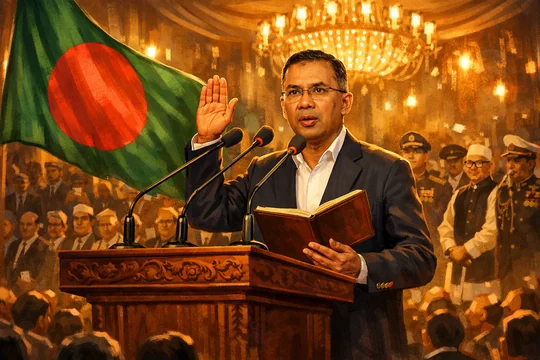
In a historic political shift, Tarique Rahman is set to take oath as the new Prime Minister of Bangladesh on Tuesday, marking the return of the Bangladesh Nationalist Party (BNP) to power after nearly two decades in the political wilderness.
BNP's Landslide Victory
The BNP-led alliance secured a commanding mandate in the recently concluded general elections, with the party winning over 200 seats in the 300-member parliament. Their ally, the Jamaat-e-Islami, added another 70+ seats, giving the coalition an overwhelming majority that leaves no room for doubt about the people's verdict.
This election result represents a dramatic political realignment in Bangladesh, where the Awami League under Sheikh Hasina had dominated politics for 15 consecutive years before being ousted in a popular uprising in August 2024.
The Return of Tarique Rahman
Rahman's journey to the Prime Minister's office is nothing short of extraordinary. The son of former PM Khaleda Zia, he spent 17 years in exile in London after being convicted in a corruption case that his supporters have long called politically motivated. His return to Bangladesh and subsequent rise to power mirrors the kind of dramatic political comebacks that South Asian politics is known for.
At 58, Rahman now faces the monumental task of steering a nation that has experienced significant political turbulence, including the military-backed caretaker government that followed Hasina's departure and the interim administration led by Nobel laureate Muhammad Yunus.
International Presence at the Ceremony
The swearing-in ceremony is expected to draw significant international attention. India's Lok Sabha Speaker Om Birla will be among the dignitaries attending, signaling New Delhi's intent to maintain strong bilateral ties regardless of which party governs in Dhaka. This diplomatic gesture is particularly significant given the historically complex relationship between India and the BNP.
What This Means for the Region
Bangladesh's political transition carries implications far beyond its borders. The BNP has traditionally maintained a more balanced foreign policy approach compared to the Awami League's overtly India-friendly stance. How Rahman navigates relationships with India, China, and Western nations will be closely watched by regional observers.
The new government inherits both challenges and opportunities — a growing economy that needs political stability, a garment industry that remains the backbone of exports, and a young population demanding jobs and governance reforms.
The Bottom Line
Tarique Rahman's oath-taking represents more than just a change of government — it symbolizes Bangladesh's democratic resilience. After years of authoritarian drift, a popular uprising, and a transitional period, the country has chosen its path through the ballot box. Whether Rahman can deliver on the massive expectations that come with such a mandate remains the defining question of Bangladesh's immediate political future.