STMicroelectronics Plans 100+ Humanoid Robots to Replace Workers in Chip Factories
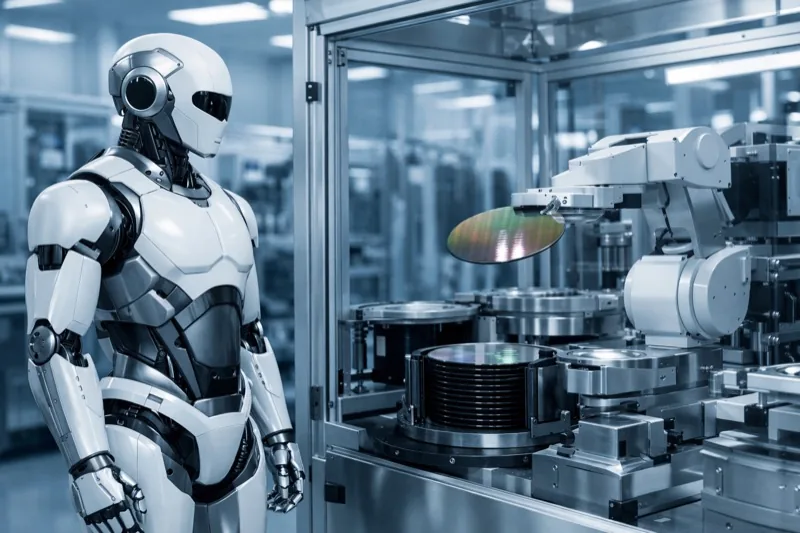
STMicro Wants Humanoid Robots on the Factory Floor
STMicroelectronics, one of Europe's largest chipmakers, is planning to deploy more than 100 humanoid robots across its semiconductor fabrication plants. The announcement was made by Thomas Morgenstern, STMicro's head of digital manufacturing, at the SEMI conference in Sopot, Poland on March 13, 2026.
The plan targets STMicro's older 200mm wafer fabs — facilities that were originally designed for human operators and lack the automation infrastructure of newer plants. According to Morgenstern, the humanoid robots would handle repetitive tasks that currently require workers to be present across multiple shifts.
One Robot, Three to Four Shifts Replaced
The economics are straightforward: a single humanoid robot can theoretically cover three to four human shifts worth of work, operating continuously without breaks, shift changes, or the fatigue-related errors that come with round-the-clock manufacturing. For a company in the middle of a 5,000-worker restructuring, the appeal is obvious.
STMicro has been under pressure after a significant revenue decline, and the restructuring announced in late 2025 included job cuts across its global operations. The humanoid robot deployment appears to be part of a broader strategy to reduce labor costs while maintaining output from aging facilities that would otherwise be expensive to fully automate with traditional industrial robotics.
Why Humanoid Robots Instead of Traditional Automation?
The key advantage of humanoid robots in older fabs is that they can work in spaces designed for humans. Traditional automation requires extensive facility redesigns — conveyor systems, robotic arms with fixed mounting points, and entirely new workflows. Humanoid robots, at least in theory, can navigate the same walkways, operate the same equipment controls, and handle the same tools that human workers use.
This is a critical distinction. Retrofitting a 200mm fab with full automation could cost hundreds of millions of dollars and take years. Deploying humanoid robots that fit into existing workflows is, on paper, a faster and cheaper path to reducing headcount.
The EU Chips Act Factor
STMicro's robot plans come against the backdrop of the European Chips Act, which has been funneling billions of euros into semiconductor manufacturing on the continent. The irony is hard to miss: governments are subsidizing chip factories to create jobs and strengthen domestic manufacturing, while the companies receiving those subsidies are actively planning to replace workers with robots.
Whether policymakers will view humanoid robot deployment as consistent with the spirit of these subsidies remains an open question — but the direction of travel in semiconductor manufacturing is unmistakable.
The Bottom Line
STMicro's plan to put 100+ humanoid robots in its chip factories is one of the first concrete, large-scale deployments of humanoid robots in heavy industry. It is not a research project or a demo — it is a cost-cutting measure driven by real financial pressure. The question is not whether humanoid robots will work in factories, but how quickly they will make human factory workers obsolete. STMicro appears to be betting that the answer is: sooner than most people think.