Soft Robotic Lens Breakthrough: The New “Robot Eye” That Outperforms Human Vision
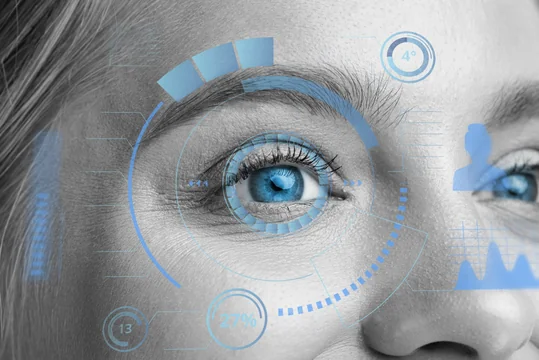
Soft Robotics Just Leveled Up: Why a New “Robot Eye” Could Transform Medicine, Machines & Human Vision
We may be standing on the brink of a new era in robotics—one where machines see with more clarity, flexibility, and precision than we do. A research team at the Georgia Institute of Technology recently revealed a photoresponsive soft lens that behaves more like living tissue than machinery. But the real story isn’t just the invention itself—it's what this breakthrough means for the future of robotics, medical devices, and even the way humans might one day see the world.
This isn’t another “cool gadget from a lab.” It’s part of a much bigger trend: biology-inspired robotics reshaping our tools, our workplaces, and potentially our bodies.
What Exactly Did Scientists Create? (And Why It’s Revolutionary)
Rather than relying on electronics and mechanical motors, this new soft lens—called a Photoresponsive Hydrogel Soft Lens (PHySL)—is powered entirely by light. That alone makes it a major leap from traditional robotic optics, which require bulky actuators or energy systems.
Here’s the simplified version of how it works:
-
The lens is built with a ring of light-absorbing hydrogel.
-
When light hits it, the material naturally swells or contracts.
-
That tiny movement changes the lens’s shape.
-
Changing shape means changing focus—similar to how the muscles in your eye work.
The result? A compact, squishy, bio-inspired lens that can zoom in close enough to detect the hair on an ant’s leg—all with no external power source.
This approach bypasses one of the biggest problems in soft robotics: integrating delicate optics into flexible, biocompatible systems.
Why This Innovation Matters (More Than You Might Think)
1. It Solves a Major Weakness in Human Eyesight
Humans don’t see as clearly as we like to believe. Much of what we perceive is reconstructed by our brain—essentially "fixing" what the eye itself can’t resolve. A soft robotic lens with ultra-precise focusing capabilities could outperform that biological limitation.
2. It Unlocks the Next Generation of Soft Robots
Soft robots are used in:
-
Minimally invasive surgery
-
Rehabilitation and physical therapy
-
Agriculture automation
-
Deep-ocean exploration
-
Search-and-rescue missions
Most struggle with limited or fragile vision systems. A flexible, durable, light-powered lens eliminates that bottleneck.
Imagine:
-
A soft surgical assistant that can zoom in at the microscopic level.
-
A rescue bot navigating collapsed buildings with sharper-than-human eyesight.
-
Ocean-floor robots studying life in deep trenches without electronics that corrode.
3. It Could Reinvent Medical Imaging and Microscopy
The PHySL can identify details as small as four micrometers—fine enough to rival specialized lab equipment. That opens the door to new, portable microscope alternatives for labs, field research, and diagnostics.
4. It Creates a Path Toward Smarter Wearables and Implants
Because it doesn’t need external power, this lens could be incorporated into:
-
Eye implants
-
AR contact lenses
-
Biocompatible medical sensors
-
Self-powered cameras
In other words, it’s a stepping stone toward organic-feeling technology that works with the body—not against it.
My Take: This Is a Glimpse of the Future of “Living Machines”
The biggest story here isn’t the lens itself. It’s the growing shift toward bio-inspired engineering—tech that doesn’t just mimic biology, but integrates with it.
The PHySL isn’t a fancy camera part. It’s a prototype for a future where:
-
Robotics become softer, safer, and more instinctive
-
Medical tools are more personalized and minimally invasive
-
Wearable tech feels like part of your body
-
Energy-hungry devices tap into natural forces like light
If the 2010s belonged to artificial intelligence, the next decade may belong to artificial biology.
We’re not replacing human senses—we're extending them.
What Comes Next?
Here are the likely next steps for this technology:
-
Clinical Trials: Testing biocompatibility for medical implants.
-
Miniaturization: Creating smaller versions for wearables.
-
Integration: Pairing the lens with soft robotic arms, surgical robots, or autonomous underwater drones.
-
Consumer Tech: Early prototypes of self-focusing smart lenses or ultra-thin cameras.
The PHySL is still in early-stage research, but its potential impacts span multiple industries—from healthcare to robotics to consumer tech.
If it progresses quickly, this “robot eye” could become one of the foundational technologies behind the next wave of human-machine integration.