Shadowfax IPO: Why Client Concentration Spooked the Market
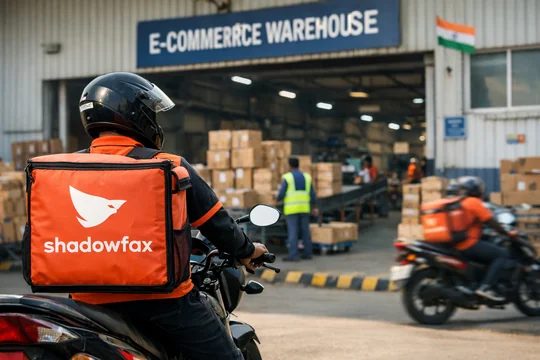
Shadowfax IPO: Why Client Concentration Spooked the Market
Shadowfax’s much-anticipated stock market debut didn’t go quite as planned. Despite strong revenue growth and a solid position in India’s booming logistics ecosystem, the company’s shares slipped on listing day—revealing a deeper investor concern that goes beyond short-term market sentiment.
The real issue? Heavy dependence on a small group of powerful clients.
This moment matters not just for Shadowfax, but for anyone tracking India’s startup-to-IPO pipeline, logistics businesses, or platform-dependent growth models.
Key Facts: What Happened With the Shadowfax IPO
Shadowfax, a Bengaluru-based third-party logistics company founded in 2015, raised roughly ₹19.07 billion through its initial public offering.
Here’s a quick snapshot of the debut:
-
Shares listed at about 9% below the issue price
-
IPO price band: ₹118–₹124 per share
-
Market valuation on debut: ~₹64.7 billion
-
IPO subscription: nearly 3× oversubscribed
Operationally, the company looks strong. Shadowfax serves e-commerce, quick-commerce, and food delivery platforms across 14,700 pin codes, operating 3.5 million square feet of logistics infrastructure nationwide.
Financially, revenue jumped 68% year-on-year in the six months ended September 2025, and profits more than doubled.
So why the weak listing?
The Real Concern: Client Concentration Risk
Roughly 74% of Shadowfax’s revenue comes from a handful of large clients, including Flipkart, Meesho, Zepto, and Zomato.
From an investor’s perspective, that’s a red flag.
When a logistics company depends heavily on a few platforms:
-
Pricing power shifts to the client
-
Contract renegotiations can hit margins fast
-
Any slowdown at a major client flows directly to revenues
This isn’t about Shadowfax’s execution—it’s about structural risk. Public market investors tend to be far less forgiving of concentration than private backers, especially after listing.
Why This Matters for India’s Logistics and Startup Ecosystem
The Shadowfax IPO highlights a broader tension in e-commerce logistics in India.
On one hand, platform-led growth has fueled massive scale. On the other, it creates fragile business models where suppliers grow quickly but remain dependent.
This dynamic matters because:
-
Many late-stage startups serve just 3–5 dominant platforms
-
Public markets reward diversified, resilient revenue streams
-
IPO investors look beyond growth to sustainability
Shadowfax’s experience suggests that strong fundamentals alone may not guarantee listing-day confidence if revenue risk isn’t well-balanced.
What Shadowfax’s Next Chapter Likely Looks Like
Management has been clear that the IPO is a milestone, not a finish line. Co-founder and CEO Abhishek Bansal summed it up during the listing event: “We are not building this for the next quarter… we are building this for the next century.”
Looking ahead, expect Shadowfax to focus on:
-
Client diversification beyond large marketplaces
-
Enterprise and D2C logistics expansion
-
Network investments using fresh IPO capital
-
Selective acquisitions to broaden capabilities
If Shadowfax can reduce its revenue concentration while maintaining growth, public market sentiment could shift meaningfully over time.
A Useful Comparison: Shadowfax vs. Delhivery
Shadowfax’s debut inevitably draws comparisons with Delhivery, which listed in 2022.
| Feature | Shadowfax | Delhivery |
|---|---|---|
| Core Focus | Last-mile & intra-city | End-to-end logistics |
| Growth Rate | High (68% YoY) | Moderate (low teens) |
| Client Concentration | High | More diversified |
| Years Public | Newly listed | ~3 years |
| Revenue Scale | Smaller | Significantly larger |
Bottom Line: Shadowfax is growing faster, but Delhivery’s scale and diversification better align with public market expectations—at least for now.
What Investors and Founders Should Take Away
For investors, the Shadowfax IPO is a reminder to look past headline growth and dig into revenue composition.
For founders, the lesson is even sharper: platform-led scale must eventually give way to diversified demand—especially before going public.
India’s logistics sector is still expanding rapidly. But as companies cross into public markets, the rules of trust, transparency, and risk tolerance change.
Conclusion: A Cautionary—but Not Negative—Signal
The Shadowfax IPO doesn’t signal weakness in the company or the sector. Instead, it reflects a more mature market asking harder questions.
If Shadowfax successfully broadens its client base and sustains profitability, this listing dip may look like a temporary pause—not a verdict. For India’s logistics startups, it’s a timely lesson in what public investors truly value.