Samsung Galaxy S26 Ultra Display Is Dimmer Than S25 Ultra and Nobody Knows Why
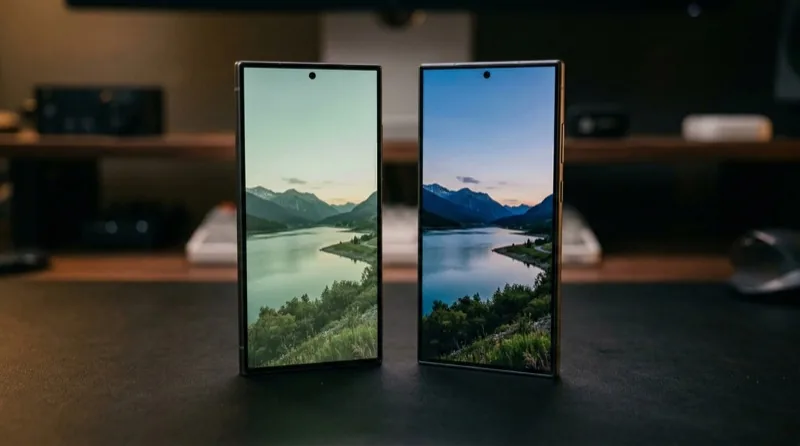
The Galaxy S26 Ultra Display Problem
Samsung's new Galaxy S26 Ultra has a display problem that the company has not acknowledged. According to testing by Tom's Guide, the S26 Ultra's screen peaks at 1,806 nits of brightness — compared to the S25 Ultra's 1,860 nits. That is a step backward from a phone that costs $1,299 and is supposed to represent the best Samsung has to offer.
But the raw brightness numbers only tell part of the story. The real issue is a feature called Privacy Display that Samsung enabled by default, and a confusing switch from 10-bit to 8-bit color depth that has left reviewers and users scratching their heads.
Privacy Display Is Making Things Worse
The Galaxy S26 Ultra ships with a feature called Privacy Display turned on by default. This feature narrows the viewing angles of the screen to prevent people nearby from seeing what is on your display. The trade-off? It significantly reduces perceived brightness when looking at the screen from even slightly off-center angles.
Users who disable Privacy Display report that the screen looks noticeably brighter and more vibrant. But the fact that Samsung ships this feature enabled by default — without clearly explaining the brightness trade-off — means many S26 Ultra owners are getting a worse display experience out of the box compared to the S25 Ultra.
The 8-Bit Color Depth Confusion
Adding to the display concerns is the S26 Ultra's switch from 10-bit to 8-bit color depth. A 10-bit display can show 1.07 billion colors, while an 8-bit display shows 16.7 million. On paper, this is a significant downgrade. Samsung has not explained why it made this change on a phone that costs more than its predecessor.
Some display experts argue that the difference between 8-bit and 10-bit color is barely perceptible to most users in everyday use. But for a $1,299 flagship that is supposed to push display technology forward, going from 10-bit to 8-bit feels like Samsung cutting corners to save costs while charging more.
Samsung Has Not Addressed the Issue
As of now, Samsung has not released any official statement about the brightness reduction or the color depth change. The company has not explained whether Privacy Display's default-on status is intentional or will be changed in a future software update. It has not clarified whether the 8-bit panel is a permanent hardware decision or whether there are display modes that could enable higher color depth.
This silence is unusual for a company that traditionally markets its displays as industry-leading. Samsung makes the displays for most flagship phones, including Apple's iPhone. The fact that its own flagship phone has a dimmer screen than last year's model — and Samsung is saying nothing — suggests the company knows it has a problem.
The Bottom Line
The Galaxy S26 Ultra costs $1,299 and delivers a dimmer display with fewer colors than the $1,299 Galaxy S25 Ultra it replaces. Privacy Display being enabled by default makes the screen look worse out of the box, and the switch to 8-bit color depth is an unexplained downgrade. Samsung fans who care about display quality — which has always been Samsung's strongest selling point — should think twice before upgrading. Sometimes the best upgrade is keeping what you already have.