Safety Software Revolution: Why Integrated EHS and Incident Management Drives Proactive Compliance
Introduction: Moving Beyond Paperwork to Proactive Safety
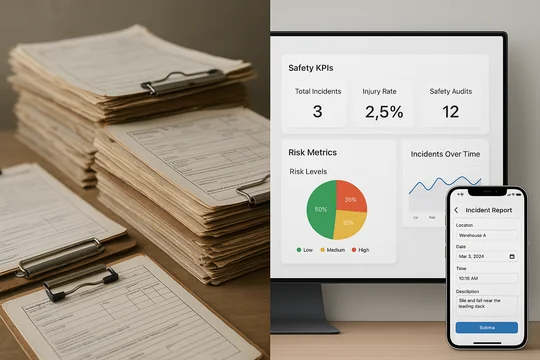
In today's complex operational environment, organizations face the constant challenge of protecting their people and the environment while navigating ever-tightening regulations. Historically, Environmental, Health, and Safety (EHS) management relied on manual, paper-based processes—an administrative burden that involved inspections, assessments, policy consultation, and documentation by hand.
But the world of safety management is undergoing a significant digital transformation. Modern challenges demand sophisticated solutions to mitigate risks, correctly document incidents, and ensure compliance. This is where integrated EHS and Safety Management Software (SMS) platforms step in, offering a centralized approach to streamline operations, reduce risks, and achieve operational continuity.
This comprehensive guide will unpack what these powerful digital tools are, detail the essential features they must possess, highlight leading platforms across EHS and Incident Management, and provide expert guidance on selecting a system that ensures your organization works smarter and safer.
Defining the Digital Safety Toolkit: EHS, SMS, and IMS
The universe of safety technology often uses several overlapping terms. Understanding the core definitions helps clarify which tools address specific organizational pain points.
What is Safety Management Software (SMS)?
Safety Management Software is a digital tool designed specifically to help organizations manage and improve workplace safety and compliance. These platforms automate and streamline core health and safety management processes, including safety training, risk assessment, regulatory adherence, and incident reporting. By centralizing safety data, these platforms facilitate proactive hazard identification and mitigation, which is essential for reducing injuries and maintaining a safe work environment.
Examples of safety management platforms include SiteDocs, which digitizes the entire safety administration process, allowing workers to focus on core tasks instead of paperwork, and WHS Monitor, which offers advanced solutions including access to over 7 million safety documents and templates.
Understanding EHS Software
Environmental, Health, and Safety (EHS) is a broad term covering the laws, programs, regulations, and processes aimed at protecting the public, employees, and the environment from workplace hazards. EHS management software offers a unified, integrated, and centralized platform for operating every aspect of these processes.
EHS solutions ensure organizations meet safety regulations and standards, track compliance with legal requirements, and manage the health and well-being of employees. Modern platforms also extend into Environmental Management (tracking waste and emissions) and ESG (Environmental, Social, and Governance) criteria to promote sustainable practices. Solutions like Intelex are customizable EHS tools that can integrate quality, risk management, and sustainability modules.
The Role of Incident Management Software (IMS)
While EHS and SMS focus broadly on prevention and compliance, Incident Management Software (IMS) specifically helps organizations efficiently manage and resolve operational disruptions or incidents. These tools are critical for IT professionals, customer support teams, and risk management specialists who need to quickly address issues to minimize downtime and maintain service quality.
IMS systems provide real-time notifications, automated workflows, and user-centric dashboards to monitor incidents and coordinate responses. The 5 C’s of incident management—Conditions, Correlations, Contributions, Causes, and Corrections—provide a structured method these systems support to analyze incidents and identify root causes for corrective actions. Tools like Jira Service Management excel at connecting development and IT support teams for cross-team collaboration during incidents.
Why Digital Transformation is Essential for EHS Compliance and Risk Management
Investing in digital safety solutions is no longer optional; it’s a strategic imperative. Digital platforms address critical organizational weaknesses while maximizing resource effectiveness.
The Hidden Costs of Manual Processes
For decades, EHS relied heavily on manual processes. Every inspection, assessment, and incident required extensive paperwork, which then had to be manually cataloged and stored. This reliance on paper creates severe operational friction:
- Administrative Waste: Managers often waste as much as 20 hours a week on administrative tasks that could be automated.
- Delayed Visibility: Information silos, redundancies, and process bottlenecks often slow down safety processes. When an incident or near-miss goes unreported because an employee couldn't be bothered filling out physical forms, the organization misses critical data.
- Auditing Risk: Finding and retrieving paper records for regulators and audits is complex, time-consuming, and carries the risk of filing information incorrectly. HR teams, who are often involved in detailed record-keeping for auditing and compliance, face challenges managing the vast array of employee records and certifications.
The Measurable ROI of Integrated Safety Systems
Switching to an integrated digital platform generates significant returns beyond mere compliance. Modern EHS platforms enhance safety, improve quality, and, crucially, save money.
- Significant Financial Return: Research shows that for every $1 invested in safety, the return is estimated to be $4 to $6. This ROI comes from reducing claims, cutting waste, and staying compliant to avoid costly fines and legal actions. The cost of US job injuries and illnesses is estimated at a staggering $176 billion to $352 billion annually.
- Deeper, Proactive Insights: EHS software makes it easy for all incidents to be reported quickly, enabling managers to spot trends and address them proactively. With data flowing into customized dashboards in real-time, safety statistics are always current. Incident management software specifically uses predictive analytics to forecast potential incidents, helping teams anticipate problems before they occur.
- Enhanced Engagement and Culture: A good EHS system promotes a safety culture by increasing employee engagement. User-friendly mobile interfaces, for example, allow employees to report concerns as soon as they occur, encouraging everyone to be part of the solution.
Given these benefits, it is perhaps unsurprising that over half of companies are planning for widespread usage of EHS software.
Core Features That Define Top Safety Management Software
While vendor offerings vary, the leading safety, EHS, and incident management solutions share a foundational set of capabilities designed to create efficiency, manage risk, and automate compliance.
Operational Risk Management and Incident Response
The primary function of these systems is reducing incident frequency and severity. This requires tools that make it quick and easy to report, track, and analyze risks.
- Digital and Mobile Forms: The era of paper forms is over. Digital forms increase efficiency, allowing workers to complete safety-related forms and checklists on mobile devices from anywhere. Solutions like SiteDocs allow workers to dictate notes, e-sign forms, and submit documents digitally using a tablet or mobile device.
- Incident Capture and Tracking: Software must capture, track, investigate, and report on every type of incident and near-miss, including property damage, injuries, illnesses, and spills. For IT issues, automated ticketing systems streamline helpdesk operations and ensure quick response times.
- Hazard and Risk Management: Systems must make it easy for employees to report on hazards, observations, and risky behaviors. Advanced tools, such as BrightSafe, offer customizable risk assessment capabilities, allowing users to create new assessments or adapt from 250+ sample templates. The system can facilitate risk assessments by allowing users to log potential hazards and automatically suggest mitigation strategies based on historical data.
- Offline Accessibility: For organizations with field teams or remote locations (such as construction, oil & gas, or aviation), offline data storage is crucial. Software like Lighthouse and Fluix supports offline work, storing data locally on the mobile device and uploading it as soon as a connection is re-established.
Compliance, Training, and Document Control
Effective safety management relies heavily on informed employees and meticulous record-keeping for regulatory audits.
- Training Management and Certification Tracking: Training is integral to a safer workplace. The best safety software acts as a centralized system for tracking employee qualifications, hosting internal courses, and sending automated alerts for upcoming recertification dates. BIStrainer, for example, is a learning management system (LMS) that tracks learner progress and provides reports on course completions for both remote and in-person training.
- Regulatory Compliance Support: The software helps organizations track adherence to legal requirements and industry standards. Cority's EHS software, for instance, is designed to meet and support ISO 45001:2018 guidelines. MedTrainer specializes in OSHA-compliant healthcare safety plans and includes features for compliance tracking for agencies like CMS and HIPAA.
- Document Hosting and Chemical Management: Digital platforms serve as a centralized repository for crucial safety-related documents, such as Safety Data Sheets (SDS), company safety manuals, and standard operating procedures (SOPs). A specialized feature is end-to-end chemical and SDS management, which ensures compliance with OSHA standards and helps reduce chemical hazards. For example, 3E Protect offers efficient SDS management through an intuitive interface.
Data Intelligence and Proactive Safety
The switch from paper to digital allows organizations to harness data for real-time decision-making, moving from reactive responses to proactive hazard mitigation.
- Real-time Dashboards and Analytics: Once a safety program is digitized, data flows into customized dashboards in real-time, providing platform admins with an up-to-the-minute, bird's-eye view of activities and incidents. These dashboards are often interactive, allowing users to drill down to granular details for specific analyses.
- Advanced Analytics and AI: Top-tier systems eliminate the need for manual data categorization and crunching by offering built-in analytics. A key trend is the emergence of AI-Powered Insights. monday service leverages AI ticket tagging to categorize tickets automatically. Even more uniquely, SiteDocs uses AI technology to automatically review data charts and prepare a written report using natural language processing to highlight key data insights.
- Assignable Tasks and Action Tracking: To ensure compliance, systems allow admins to assign individual tasks—such as incomplete forms or expired training—to workers, often with automated reminders, driving accountability and helping achieve 100% compliance.
Top Software Solutions for Modern Safety Challenges
The sources highlight a variety of highly-rated solutions tailored for different use cases, from industrial EHS to IT service delivery.
| Tool | Best For | Key Insight |
|---|---|---|
| MedTrainer | OSHA-compliant healthcare safety plans. | Focuses on healthcare, integrating credentialing, training, and compliance tracking for agencies like CMS, HIPAA, and OSHA. |
| Cority | Advanced EHS designed to support ISO 45001 safety indicators. | Used in safety-heavy industries (aerospace, mining, manufacturing) to easily tie H&S programs to ISO 45001 targets. Note: Cority is marketed as flexible but some users report siloed modules and difficult upgrades. |
| SiteDocs | Sophisticated safety management with granular reporting and AI summaries. | Digitizes all paperwork, organizes documents in real-time, and uses AI to automatically write reports based on data trends. |
| SafetyCulture | Inspection-first platform with template libraries. | Mobile-first design, strong template library, and AI assistance make it ideal for managing multiple field crews and performing rapid audits. |
| Intelex | Customizable EHS software integrating quality, risk, and ESG. | Offers customizable software that can be tailored for unique business needs, combining best-practice applications with tailored systems integration. |
| Jira Service Management | Cross-team incident collaboration (ITSM). | Connects IT support and development teams, using customizable SLAs and request queues to prioritize incidents. |
| monday service | AI-powered ticket tagging and centralized operations. | Uses automation to handle repetitive tasks and AI to categorize incoming tickets automatically, ensuring quick prioritization. |
| Lighthouse | Web-based safety management with offline data storage. | A strong choice for workers in remote locations, supporting offline work for hazard assessment, inspections, and incident management. |
| Preparis | Emergency planning and crisis management. | Focuses on organizational readiness, offering tools to create and manage response plans and providing emergency alerts during a crisis. |
Navigating the Selection Process: Factors Affecting Cost and Choice
Choosing the right platform is a significant investment and a complex decision, often requiring a team of stakeholders to create a comprehensive wishlist of essential and desired attributes.
Deconstructing EHS Software Pricing
EHS software costs vary tremendously, ranging from approximately $5,000 to $500,000 for a solution, depending on numerous variables. Because custom quotes are typically the best value, most providers do not publish transparent pricing on their websites.
Key factors influencing the total annual cost include:
- Features and Tools: This is the top factor. Vendors vary widely in how they structure costs—some sell tools a-la-carte (add-ons), while others offer full-service packages. Buying a-la-carte can be more expensive, especially if the separate features do not integrate well.
- Number of Users and Locations: Prices increase based on the number of licenses needed, as more users require more data storage and customer/technical support. Pricing models often include named user pricing (cost per user/seat, which is flexible for scaling businesses) or a fixed price (a flat fee regardless of users, often best for very large organizations). Some vendors also charge extra based on the number of work locations you manage.
- Support Level: The dedicated customer support required is a major cost driver. Companies seeking a more customized experience or managing many sites may need to pay more for higher support tiers.
- Hidden Fees to Avoid: Buyers must be wary of hidden "pay to play" costs that inflate the initial estimate. These hidden charges can include fees for API access, custom forms, extra data storage, and even service fees for the vendor to change custom forms or import user data (software metering). Additionally, implementation can be a major expense, with some large implementations taking 12+ months to go live, during which the organization invests time and service fees without using the system.
Critical Criteria for Selection and Deployment
To ensure the investment yields a high return, the selection criteria should go beyond basic features to focus on usability and long-term viability.
- Usability and Accessibility: Prioritize software that is straightforward and easy-to-use, featuring a clean, uncluttered user interface (UI). It must be accessible via mobile devices (iOS/Android) and support workers of all levels of technical literacy. For field teams, the ability to work offline and automatically store/distribute form data is a key factor.
- Configuration and Scalability: The platform should be easily adapted and customized to fit your team's specific needs and workflows without requiring technical expertise or custom coding. Scalability is vital; the platform must be able to expand with your business, handling increased incident volumes and user numbers without performance issues.
- Integration Capability: The chosen software should seamlessly integrate with existing systems, such as Human Resources Information Systems (HRIS), CRM, and management information systems (e.g., SharePoint, ADP, Jira) to streamline workflows and improve efficiency.
- Vendor Support and Training: The vendor should offer a strong support framework covering implementation, deployment, and customer success. A key to successful software rollout is working with the provider to train your people properly and integrate the platform into existing systems.
Conclusion: Achieving Operational Excellence Through Integrated Safety
The shift toward integrated EHS and Incident Management Software signifies a profound change in how organizations view and manage risk. By embracing digital solutions, companies are moving away from manual, reactive processes that drain managerial time toward automated, proactive systems that drive accountability and provide measurable performance data.
Digital EHS platforms provide peace of mind by creating a seamless, accessible paper trail for regulators and audits. More importantly, they protect people—the core purpose of EHS policies—by reducing the likelihood of incidents and minimizing consequences.
Choosing the right high-quality, configurable EHS solution is a significant decision, but as proven by industry data, it is an investment that will pay for itself many times over by fostering safety culture, streamlining compliance, and giving leaders the data they need to make evidence-based improvements. Take the time to evaluate a shortlist of platforms and ensure the chosen solution is truly integrated and aligns with your organization's unique operational needs, setting the foundation for operational excellence in safety and compliance.
SEO Keywords and Tags List
Primary Keywords: EHS Software, Safety Management Software, Incident Management Software, Workplace Safety Compliance, Digital Transformation.
Secondary Keywords: Risk Management, OSHA Compliance, ISO 45001, EHS Analytics, Safety Training Software, Incident Reporting, Mobile EHS, Predictive Analytics, EHS Pricing.
Tags: EHS, Safety, Incident Management, Compliance, HR Tech, Risk Assessment, Digital Safety, Software Review, SaaS, Environmental Health and Safety.