Rivian R2: 20,000-25,000 Deliveries Targeted for 2026
Rivian R2: 20,000-25,000 Deliveries Targeted for 2026
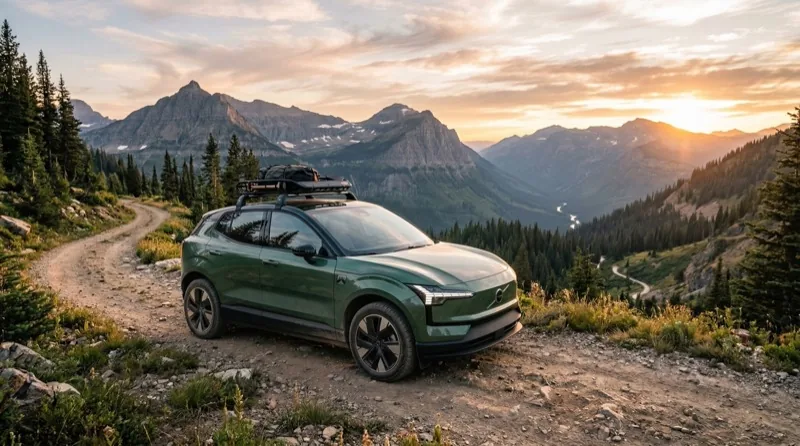
Rivian has set an ambitious delivery target for its most important vehicle yet. The company’s CFO Claire McDonough confirmed that Rivian expects to deliver 20,000 to 25,000 R2 units in 2026, with production starting in the second quarter at its Normal, Illinois plant. The R2 is Rivian’s first mass-market SUV, priced in the mid-$40,000 range — a significant step down from the R1S and R1T that start above $70,000.
The Math Behind 67,000 Total Deliveries
Rivian’s total delivery guidance for 2026 is 62,000 to 67,000 vehicles across its entire portfolio. Since R1T, R1S, and commercial van volumes are expected to remain roughly in line with 2025’s 42,000 units, that leaves 20,000 to 25,000 units for the R2. It’s a straightforward calculation, but the execution is anything but.
Production will start on a single shift, with a second shift planned for later in the year. McDonough cautioned not to expect meaningful R2 volume until the back half of 2026 — which means Rivian needs to ramp from zero to roughly 5,000+ units per month in just a few months to hit the high end of guidance.
Why the R2 Is Make-or-Break
The R2 isn’t just another product launch for Rivian — it’s the vehicle that determines whether the company can become a sustainable business. The R1 lineup proved Rivian can build excellent vehicles, but at price points that limit the addressable market. At mid-$40,000s, the R2 competes directly with the Toyota RAV4, Honda CR-V, and Tesla Model Y — the heart of the American SUV market.
Rivian has also redesigned its manufacturing process for the R2. The vehicle uses a new platform with fewer parts and a simpler assembly process, which should improve margins compared to the money-losing R1 line. The company has said it expects R2 to be gross margin positive from launch — a claim that will be closely watched by investors.
The Competition Has Moved
When Rivian first announced the R2 in 2024, the mid-$40K EV market had fewer credible options. Since then, Tesla has cut Model Y prices, Chevrolet’s Equinox EV has arrived at $33,000, and Hyundai’s Ioniq 5 continues to gain market share. The R2 will need to justify its price premium through build quality, software, and the kind of adventure-brand cachet that Rivian has cultivated with its R1 owners.
There’s also the question of charging infrastructure. Rivian is building out its own Adventure Network of chargers, but the network remains small compared to Tesla’s Supercharger network. Rivian has adopted the NACS charging standard, which gives R2 owners access to Tesla Superchargers — a practical necessity for a mass-market vehicle.
Can Rivian Actually Hit These Numbers?
Manufacturing ramps are where EV startups go to die. Tesla famously called it “production hell.” Lucid has struggled to scale beyond a few thousand units per quarter. Rivian itself took over a year to ramp R1 production to meaningful volumes.
Delivering 20,000-25,000 R2s in a partial production year — starting from a single shift in Q2 — requires everything to go right: supply chain stability, quality control on a new platform, and steady demand at a price point where customers have many alternatives.
The Bottom Line
Rivian’s R2 delivery target is ambitious but not unreasonable for a company that has proven it can build good vehicles. The real question isn’t whether Rivian can make 25,000 R2s — it’s whether 25,000 people will choose an R2 over a Model Y, Equinox EV, or Ioniq 5 at similar price points. The adventure branding and superior build quality give Rivian an edge, but the EV market in 2026 is far more competitive than when the R2 was first announced. This is Rivian’s shot at becoming a real automaker, not just a niche brand for outdoor enthusiasts.