Rivian Hands-Free Driving Marks a Big Autonomy Shift
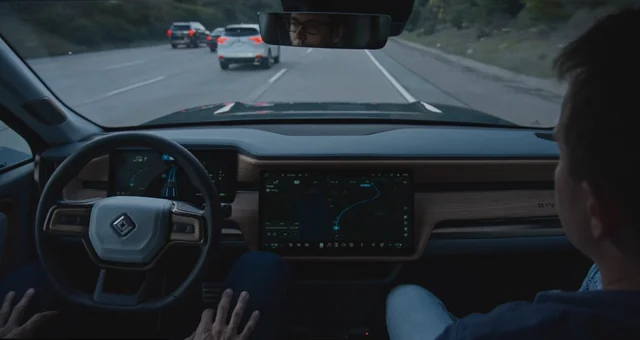
Rivian Hands-Free Driving Signals a New Phase in EV Autonomy
As reported by The Verge, Rivian has officially rolled out its most ambitious driver-assistance update yet. At first glance, it’s a software improvement. Look closer, and it’s a strategic signal about where Rivian — and the broader EV industry — is heading next.
Rivian’s new hands-free capability dramatically expands where drivers can take their hands off the wheel. But more importantly, it shows how automakers are cautiously threading the needle between innovation, safety, and regulation in the race toward autonomy.
Key Facts: What Rivian Just Launched
Rivian’s second-generation R1 vehicles are now receiving a software update that introduces Universal Hands-Free, a new driver-assistance system unveiled during the company’s first Autonomy & AI Day.
Here’s the condensed breakdown:
-
Hands-free driving is now supported on over 3.5 million miles of roads across the U.S. and Canada
-
Works on highways and surface streets with visible lane markings
-
Drivers must remain attentive and supervise at all times
-
The system does not stop for traffic lights, stop signs, or make turns
-
Navigation-based driving is not yet supported
In addition, the update includes digital wallet support for Rivian’s digital key and new performance features like Kick Turn and RAD Tuner for select models.
Why Rivian Hands-Free Driving Matters Right Now
This update isn’t about convenience alone — it’s about positioning.
Rivian is moving from a limited, highway-only assistance model to a much broader driving environment. That places it closer to competitors like Tesla and Ford, while still avoiding the marketing pitfalls of calling the system “self-driving.”
The underlying trend is clear: automakers are shifting autonomy forward through software, not hardware refreshes. Over-the-air updates now define how capable a vehicle becomes over time.
At the same time, Rivian’s careful limitations reflect lessons learned across the industry. Investigations into crashes involving advanced driver-assistance systems have made one thing clear: overpromising autonomy creates real-world risk. Rivian’s messaging stays conservative — and that may be its smartest move.
A Safer Middle Ground in the Autonomy Race
Unlike rivals that push boundary-pushing branding, Rivian emphasizes supervision and clearly defines what the system won’t do. That restraint matters.
Universal Hands-Free won’t:
-
Replace driver decision-making
-
Navigate intersections independently
-
Respond to traffic signals
-
Handle turns automatically
This creates a more transparent relationship between driver and machine. In practice, it reduces the chance that drivers overestimate what the vehicle can handle — a major issue regulators are now scrutinizing.
From an expert perspective, this suggests Rivian is optimizing for long-term trust, not short-term hype.
What This Means for Rivian Owners and Buyers
For current owners, the value is immediate. More usable hands-free driving means less fatigue on longer trips and more comfort in daily driving — without buying a new vehicle.
For prospective buyers, it signals that Rivian vehicles are improving meaningfully over time. That strengthens resale value and makes early adoption less risky.
Looking ahead, Rivian has publicly committed to:
-
Point-to-point autonomous driving (targeted for 2026)
-
A new autonomy computer with custom silicon
-
A roof-mounted lidar system debuting with the R2 SUV
Together, these moves suggest Rivian is building a layered autonomy roadmap — software first, hardware next, full autonomy later.
Rivian Hands-Free Driving: Before vs. Now
| Feature | Before Update | After Update |
|---|---|---|
| Supported roads | ~135,000 highway miles | 3.5+ million miles |
| Surface streets | Not supported | Supported (lane-marked) |
| Hands-free use | Limited | Broad regional access |
| Digital key wallets | Limited | iOS, Android, wearables |
| Performance modes | Standard | Kick Turn, RAD Tuner |
Bottom Line: Rivian’s update doesn’t promise autonomy — it delivers meaningful progress without overreach.
Frequently Asked Questions About Rivian Hands-Free Driving
Q: What is Rivian hands-free driving?
A: Rivian hands-free driving is a driver-assistance feature that allows drivers to remove their hands from the wheel on approved roads while remaining attentive. It does not replace the driver or operate independently.
Q: Can Rivian’s system drive itself in cities?
A: No. While the system works on some surface streets, it won’t stop for lights, make turns, or follow navigation. Drivers must control those actions manually.
Q: Is Rivian hands-free driving fully autonomous?
A: No. It is not autonomous driving. Rivian clearly positions it as supervised driver assistance, requiring constant driver attention.
Q: Which Rivian models get this update?
A: The Universal Hands-Free feature is rolling out to second-generation R1 vehicles via a software update.
Q: Will Rivian add full self-driving later?
A: Rivian has stated goals for point-to-point autonomy around 2026, but timelines may evolve based on technology and regulation.
The Bigger Picture: Autonomy Without the Hype
Rivian hands-free driving represents a mature step forward — not a moonshot. By expanding real-world usability while setting firm boundaries, Rivian is building credibility in a space crowded with bold claims.
If this approach continues, Rivian may not be first to full autonomy. But it could be the brand drivers trust most when autonomy finally arrives.