Reliable Robotics Raises $160 Million to Advance Autonomous Cargo Aircraft Technology
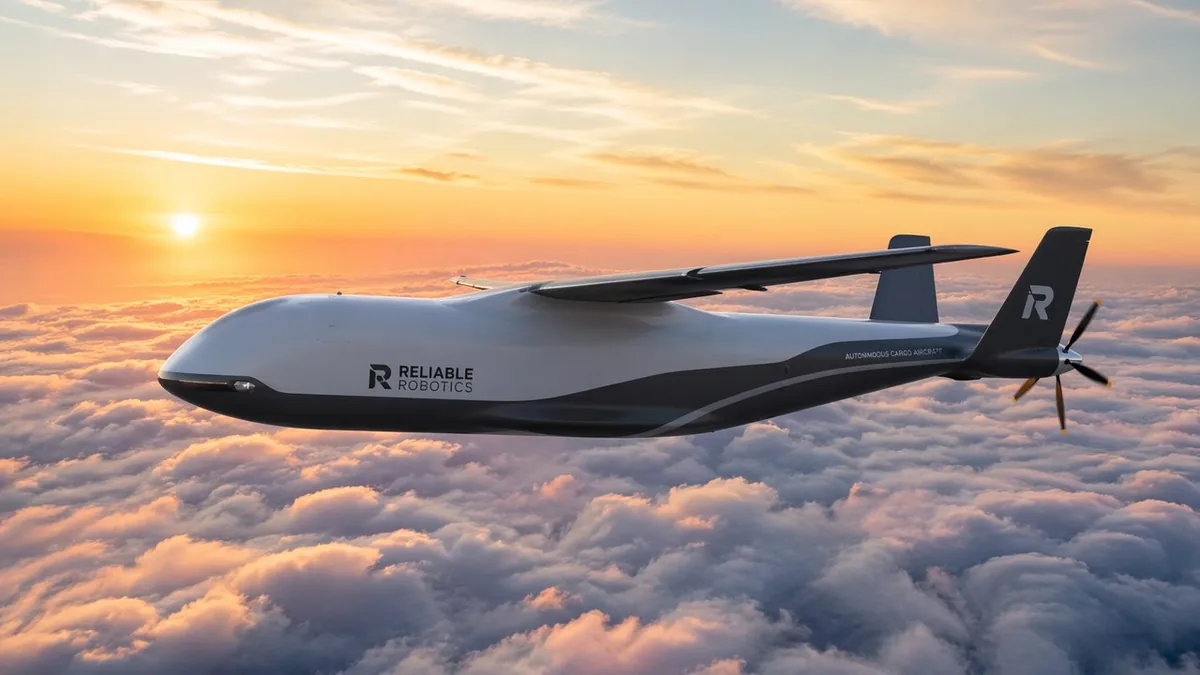
Reliable Robotics, a startup developing autonomous flight systems for cargo aircraft, has raised $160 million in new funding led by Nimble Partners, pushing its valuation to approximately $1 billion and positioning the company as one of the best-funded autonomous aviation startups in the world. The round comes as Reliable Robotics prepares for FAA certification of its autonomous flight systems for commercial cargo operations.
What Reliable Robotics Is Building
Unlike eVTOL companies building new aircraft from scratch, Reliable Robotics takes a different approach: it retrofits existing certified cargo aircraft — specifically the Cessna 208 Caravan — with its proprietary autonomous flight system, allowing the planes to fly without a human pilot in the cockpit. The system handles takeoff, cruise, landing, and emergency procedures autonomously, with remote pilot supervision available during flight via satellite link.
The retrofit approach has a significant regulatory advantage: the FAA has already certified the Cessna 208 Caravan as airworthy, so Reliable Robotics only needs to certify its autonomous system rather than an entirely new aircraft. This dramatically reduces the regulatory timeline compared to competitors building novel aircraft designs from the ground up.
The $160 Million Round and What It Funds
The $160 million raise, led by Nimble Partners with participation from existing investors, will be used primarily to advance FAA certification for commercial autonomous operations, expand the fleet of converted Caravans, and develop customer partnerships with cargo carriers looking to reduce pilot costs and extend service to underserved routes. Reliable Robotics has already flown thousands of autonomous test hours and has partnerships with several regional cargo operators who have committed to deploying the system once it receives full FAA approval.
The unicorn valuation reflects investor confidence in both the technology and the regulatory pathway. Autonomous cargo aviation addresses a genuine labor problem: the aviation industry faces a projected shortage of 80,000 pilots globally by 2032, and cargo operations — which are simpler and lower-risk than passenger flights — are the logical first application for autonomous systems.
Industry Context and Competition
Reliable Robotics competes with Xwing, which is also pursuing autonomous Caravan certification, and faces longer-term competition from larger aerospace players including Boeing and Airbus, which have their own autonomous flight research programs. The cargo-first, retrofit-focused strategy differentiates Reliable from newer entrants building purpose-built autonomous aircraft, and the FAA's incrementalist approach to autonomous aviation certification favors companies that work within existing aircraft categories.
Frequently Asked Questions
What does Reliable Robotics make?
Reliable Robotics makes autonomous flight systems that retrofit existing cargo aircraft, specifically the Cessna 208 Caravan, to fly without a human pilot. The system is supervised remotely via satellite link.
Is Reliable Robotics FAA certified?
Reliable Robotics is in the FAA certification process for commercial autonomous cargo operations. The company has completed thousands of autonomous test flight hours and is working toward full commercial approval.
Why focus on cargo aircraft instead of passenger planes?
Cargo operations are simpler, lower-risk, and more tolerant of automation than passenger flights. They also face a genuine pilot shortage problem that autonomous systems can directly address. Regulators and the public are also more accepting of autonomous cargo flights than autonomous passenger flights at this stage.
The Bottom Line
Reliable Robotics' $160 million raise at unicorn valuation reflects growing investor conviction that autonomous cargo aviation is no longer a distant future scenario — it's a near-term commercial reality. The combination of a retrofit approach, FAA-certified base aircraft, and a genuine labor shortage problem makes Reliable's path to market more credible than many aviation automation startups. Watch for FAA certification milestones over the next 12-18 months as the key catalyst for commercial deployment.