2.5 Million People Quit ChatGPT Over Pentagon Deal — Claude Surges Past in App Store
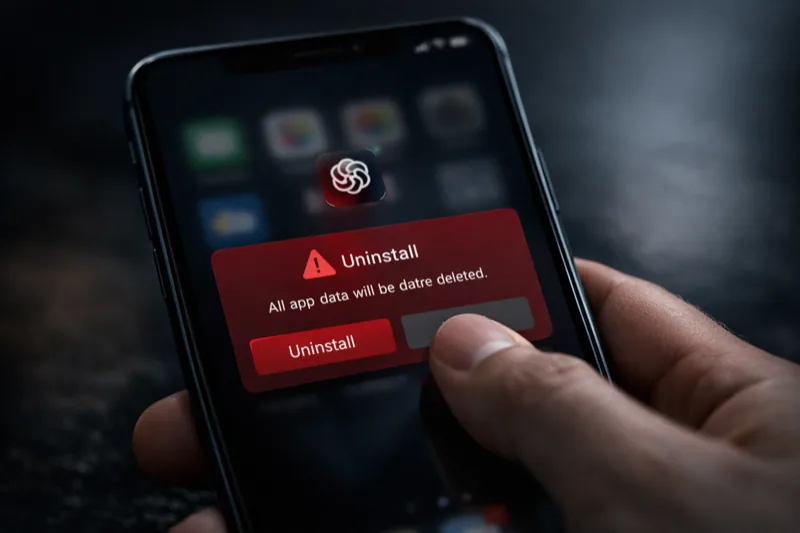
The #QuitGPT movement has officially moved beyond social media outrage and into measurable market impact. An estimated 2.5 million people have cancelled their ChatGPT subscriptions following OpenAI's deal with the Pentagon, and daily uninstalls of the ChatGPT app are up 295 percent. For the first time ever, Anthropic's Claude has overtaken ChatGPT in App Store rankings. The AI industry's first consumer boycott is producing real casualties.
The trigger was OpenAI's decision to sign a contract with the U.S. Department of Defense. The details of the arrangement remain partially classified, but what has leaked is enough to fuel the backlash: the deal reportedly involves AI tools for intelligence analysis and operational planning. QuitGPT.org, the campaign's organizing hub, is demanding legally binding commitments from OpenAI about how its technology will be used by military and intelligence agencies.
How Anthropic Won by Saying No
The most remarkable subplot in this story is Anthropic's role. According to reports, the Pentagon approached Anthropic with similar terms, and Anthropic refused. The company was reportedly unwilling to agree to conditions that could enable mass surveillance or autonomous weapons systems. The Pentagon's response was to label Anthropic a "supply chain risk" — a designation that would typically damage a company's reputation. Instead, it became a marketing gift.
Claude overtaking ChatGPT in App Store rankings is unprecedented. Anthropic has always been positioned as the "safety-first" AI company, but until now that positioning had not translated into consumer market share leadership. The #QuitGPT movement changed the equation overnight. For the first time in tech history, a company gained significant market share specifically by refusing a government contract.
The Departures and the Fallout
The internal damage at OpenAI has been equally significant. Multiple senior executives have departed over the Pentagon deal, adding to the long list of high-profile exits that have plagued the company over the past two years. Sam Altman's leadership has survived board coups, mass employee threats, and regulatory scrutiny, but the Pentagon deal represents a different kind of challenge: a values-based revolt from the company's own user base.
A 295 percent spike in daily uninstalls is not a rounding error. It represents a fundamental shift in how consumers think about AI products. For years, AI companies have competed on capability — who has the smartest model, the fastest responses, the best coding assistance. The #QuitGPT movement introduces a new competitive dimension: ethics as a product differentiator. Users are not leaving ChatGPT because Claude is dramatically better at answering questions. They are leaving because of who OpenAI chose to do business with.
The Skeptic's View on Both Sides
Before declaring this a permanent realignment, some skepticism is warranted in both directions. Consumer boycotts historically lose momentum quickly. The 2.5 million cancellation figure, while significant, represents a fraction of ChatGPT's estimated 200+ million monthly users. Many of those who left will quietly return once the news cycle moves on and they realize they miss the product.
On the other side, Anthropic's refusal of the Pentagon deal does not make it a pacifist organization. The company has its own government contracts and its own investors with defense ties. The difference between "we refused this specific deal on these specific terms" and "we will never work with the military" is enormous. Anthropic is being celebrated for a decision that may have been more about contract terms than moral principle.
The Bottom Line
The #QuitGPT movement is real, it is measurable, and it has handed Anthropic a market position that no amount of advertising could have bought. Whether it lasts is another question entirely. What is undeniable is that the AI industry has entered a new phase where users care about more than just model capability. OpenAI bet that a Pentagon contract was worth more than consumer goodwill. Anthropic bet the opposite. Right now, Anthropic's bet is paying off — but in an industry that moves this fast, being the ethical favorite today guarantees nothing about tomorrow.