Qatar Helium Shutdown Threatens AI's Entire Supply Chain: 33% of Global Supply Gone
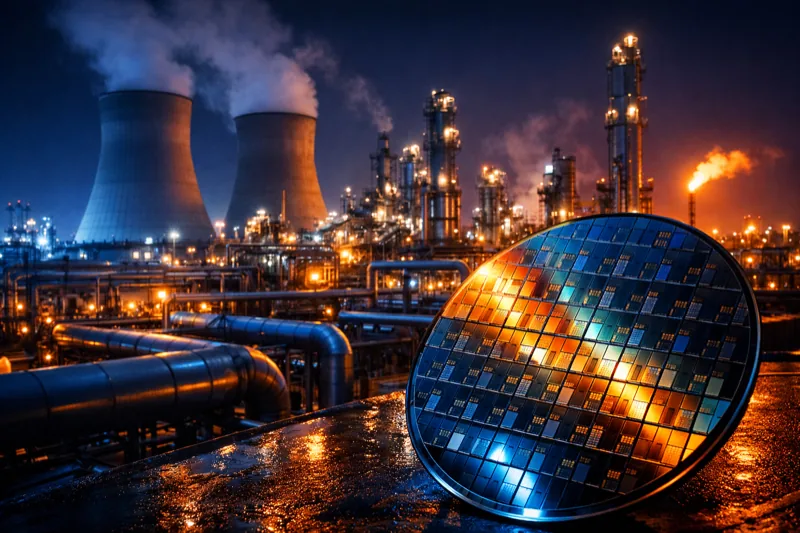
The Iran war has created an unexpected bottleneck for the entire AI industry — and it has nothing to do with chips, GPUs, or software. Drone attacks forced Qatar to shutter one of the world's largest energy hubs, taking approximately one-third of the global helium supply offline. Helium is essential for semiconductor manufacturing, and the world's biggest chipmakers are now scrambling.
Why Helium Matters for AI
Helium isn't just for birthday balloons. In semiconductor fabrication, helium is crucial for rapidly cooling chips during manufacturing to prevent overheating and defects. Without adequate helium supply, chip fabrication slows down or stops entirely. And the AI boom has made chip demand — and therefore helium demand — higher than ever.
The disruption is particularly acute for Asian chipmakers. While the US produces much of its own helium, Taiwan, Japan, and South Korea import most of theirs. TSMC and SK Hynix, which produce the overwhelming majority of advanced AI chips, may depend on Qatar for 40-50% of their helium supply, according to economist Andreas Steno Larsen.
A Bottleneck for the Entire AI Story
"This could potentially turn into a bottleneck for the entire AI story," Larsen wrote. The implications are significant: if TSMC can't get enough helium, it can't make enough chips. If it can't make enough chips, Nvidia can't deliver enough GPUs. If Nvidia can't deliver GPUs, every AI company from OpenAI to Anthropic faces capacity constraints.
Helium spot prices have already risen as much as 50%, though existing contracts — which dominate the industry — haven't fully reflected the increase yet. As helium consultant Phil Kornbluth told Yahoo Finance: "If the hostilities continue and the Strait of Hormuz stays closed for six months or a year, this is a really big deal."
The Supply Chain Is Long — and Fragile
The helium supply chain has a dangerous characteristic: it's slow. Cargo ships take weeks to deliver, so the full impact of the Qatar shutdown won't be felt immediately. But once existing reserves run out, the deficit hits hard. TSMC and Hynix may have months of reserves, but if the Strait of Hormuz remains contested, those reserves will eventually run dry.
The disruption extends beyond chips. Fertilizer prices have surged 30-50% since the conflict began, threatening food supply chains alongside technology ones. The Iran war is revealing just how many critical supply chains pass through the Persian Gulf chokepoint.
The Bottom Line
The AI industry has spent years worrying about GPU shortages, talent wars, and regulation. Nobody had "helium from Qatar" on their risk assessment. Yet here we are: a geopolitical conflict thousands of miles from Silicon Valley threatens to constrain the physical infrastructure that makes AI possible. The AI boom's biggest vulnerability isn't software, competition, or regulation — it's the unglamorous industrial supply chains that nobody thinks about until they break.