Palantir Demos Show How Pentagon Uses AI Chatbots for War Planning
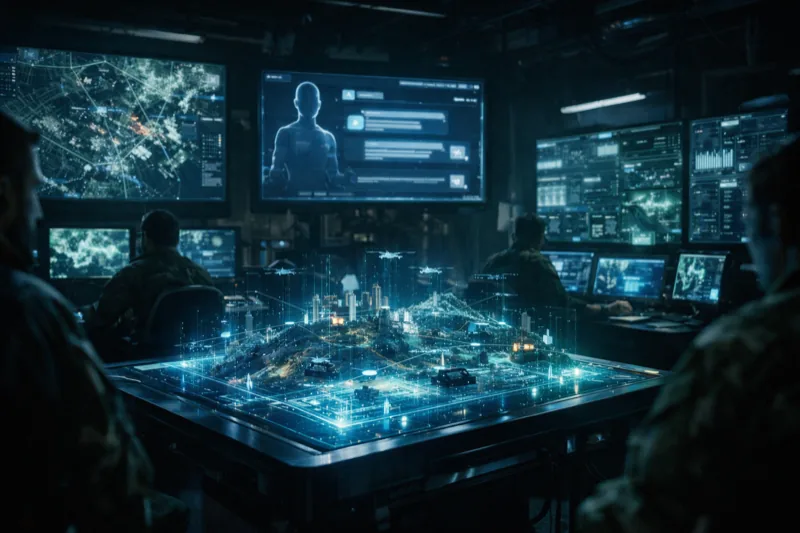
Palantir Shows Pentagon How AI Chatbots Can Plan Military Operations
Software demos and internal Pentagon records have revealed how defense contractor Palantir is integrating AI chatbots — including Anthropic's Claude — into military planning systems. The technology can analyze intelligence data, identify patterns, and suggest tactical next steps in real time.
The revelations come amid an escalating dispute between Anthropic and the Pentagon over how the startup's AI models should be used by the military.
What the Demos Show
Palantir's software demonstrations detail how AI chatbots could serve as powerful assistants for military commanders. The systems can:
- Rapidly process vast quantities of intelligence data that would take human analysts far longer to parse
- Identify patterns and connections across disparate data sources
- Synthesize information and suggest tactical responses in near real-time
- Generate operational plans based on current battlefield intelligence
Pentagon records also detail the kinds of queries being fed to these AI systems and the data used to generate responses, painting a picture of how deeply AI is already embedded in military decision-making workflows.
The Anthropic-Pentagon Standoff
The story is complicated by a bitter dispute between Anthropic and the US government. In late February, Anthropic refused to grant the Pentagon unconditional access to its Claude AI models, insisting the systems should not be used for mass surveillance of Americans or fully autonomous weapons.
The Pentagon responded by labeling Anthropic's products a "supply-chain risk." Anthropic has since filed two lawsuits alleging illegal retaliation by the Trump administration. Meanwhile, Palantir CEO Alex Karp has confirmed that his company is still using Claude in its tools despite the blacklist designation.
The Bigger Question
The demos raise uncomfortable questions about the role of AI in warfare. While proponents argue that AI-assisted planning could reduce civilian casualties by improving targeting accuracy, critics point out that automating war planning decisions introduces new risks — including the potential for AI hallucinations in life-or-death scenarios.
The Bottom Line
Palantir demonstrating AI chatbots for military war planning is not science fiction — it is happening now, with commercially available AI models. The fact that the Pentagon is simultaneously using Anthropic's technology while blacklisting the company for setting ethical boundaries reveals the fundamental tension at the heart of military AI: the people building these tools want guardrails, and the people deploying them do not.