OpenAI Opens London Office with Over 500 Staff, Making UK Its Largest Hub Outside the US
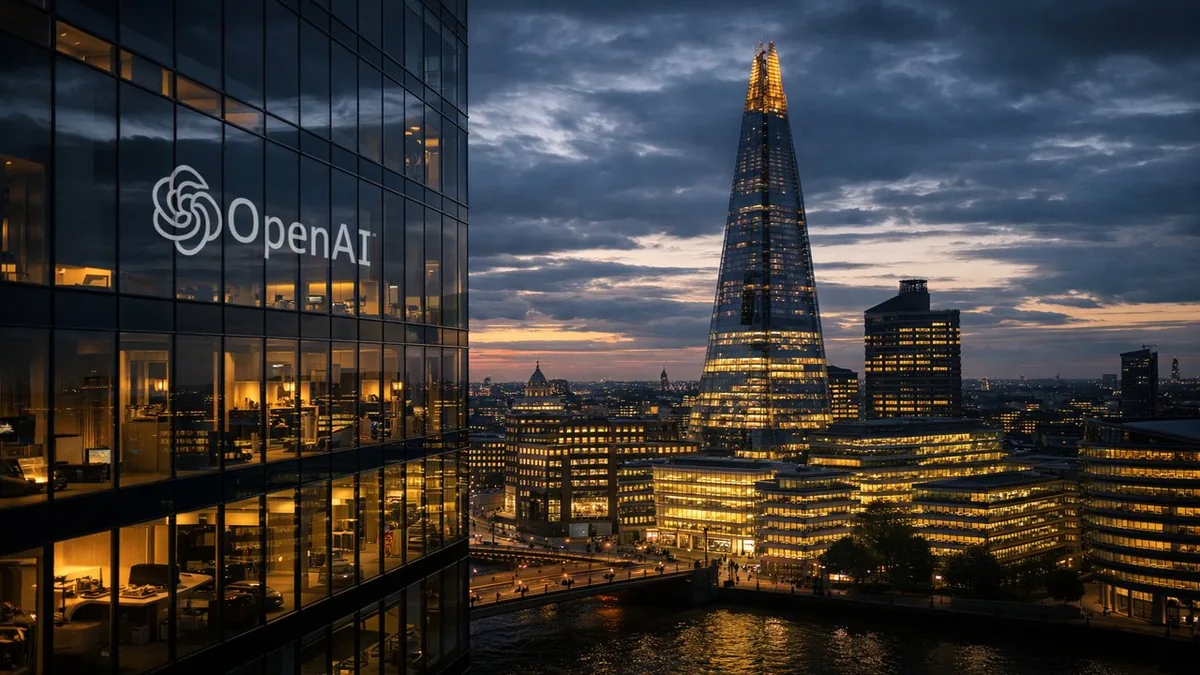
OpenAI is opening its first permanent London office with capacity for more than 500 staff, CNBC reported, marking the company's most significant international infrastructure commitment to date. The announcement comes as OpenAI simultaneously paused its UK Stargate data center plans due to high energy costs, creating a mixed picture for the UK government's ambitions to attract AI investment. London was already designated OpenAI's largest non-US research hub in February 2026 — the permanent office signals that commitment is real, even if the infrastructure component has stalled.
What the London Office Means for OpenAI's Global Strategy
A 500+ person London office is not a satellite location — it is a substantial second center of gravity for a company whose entire research and engineering leadership has historically been concentrated in San Francisco. OpenAI's UK presence is expected to focus on research, policy engagement with UK and European regulators, and sales to the region's large enterprise and government markets. The UK has positioned itself aggressively as an AI hub, hosting the first major international AI Safety Summit in 2023 and establishing the Alan Turing Institute and the AI Safety Institute as anchoring institutions. Having OpenAI's largest international office in London gives the UK government a strong claim to being the leading non-US AI center.
The London office also serves a talent acquisition function. The UK, and London specifically, has a deep pool of AI research talent from universities like Oxford, Cambridge, Imperial, and UCL, as well as from DeepMind — which remains headquartered in London under Google ownership. OpenAI competing for this talent pool directly, with a permanent local presence, rather than asking researchers to relocate to San Francisco, broadens its ability to hire. The office also provides an anchor for OpenAI's European customer relationships, where data residency requirements and GDPR compliance make local presence increasingly important for enterprise contracts.
The Data Center Contradiction
The London office announcement sits alongside the pause of OpenAI's UK Stargate data center, which was shelved due to energy costs and regulatory complexity. The juxtaposition illustrates a fundamental distinction in AI infrastructure strategy: people and policy can go where the ecosystem is strong, but compute goes where energy is cheap and abundant. OpenAI can staff a 500-person London office while training its largest models in Texas, Oklahoma, or the UAE — geographic separation between where AI is developed by people and where it is computed by machines is now routine. The UK's challenge is not attracting AI companies' offices; it is creating the conditions for the infrastructure investment that drives the real economic value.
Frequently Asked Questions
Where is OpenAI's London office?
OpenAI is opening its first permanent London office with capacity for more than 500 staff. The specific location has not been publicly disclosed, but London was already designated OpenAI's largest non-US research hub in February 2026.
What will OpenAI do in London?
OpenAI's London operations are expected to focus on AI research, policy engagement with UK and European regulators, European enterprise sales, and talent recruitment from the UK's strong AI research university ecosystem.
Is the UK still a top destination for AI investment?
The UK attracts significant AI talent and company presence. However, OpenAI's simultaneous pause of its UK Stargate data center illustrates that compute infrastructure investment follows cheap energy — an area where the UK faces structural disadvantages compared to the US and Middle East.
The Bottom Line
OpenAI's 500+ person London office is a meaningful commitment to the UK as an AI hub — for research, policy, and enterprise sales. It does not fully offset the loss of the UK Stargate data center, which would have delivered more direct economic impact. But it confirms London's status as the default home for AI companies' European operations, driven by talent depth, regulatory proximity, and time zone position between the US and Asia. For the UK government, the office is a win to publicize — while the energy and planning reforms needed to attract the next Stargate remain work in progress.