OpenAI Adds Hardware Key Authentication for ChatGPT via Yubico Partnership
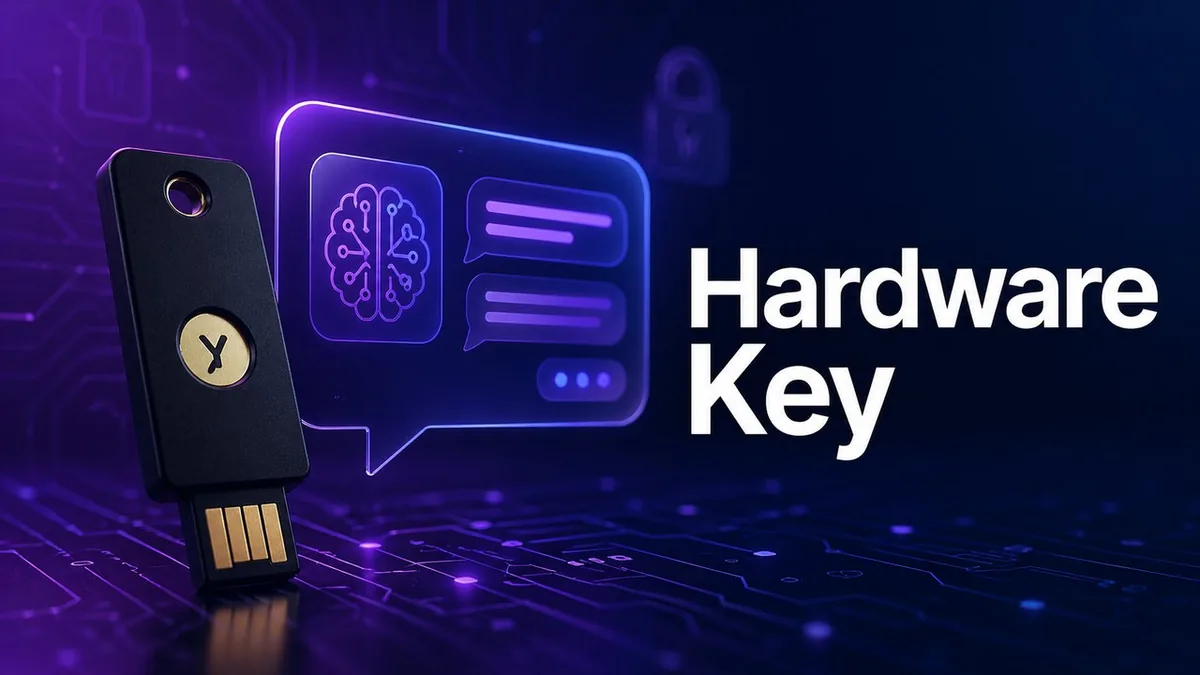
OpenAI announced advanced security features for ChatGPT accounts on Thursday, including a partnership with Yubico that makes ChatGPT the first major AI lab to support hardware security keys for account authentication. The launch addresses a problem that has quietly grown into a major risk: ChatGPT accounts now contain enormous amounts of sensitive personal and corporate data, and credential-stuffing attacks against AI accounts have spiked 4x year-over-year.
The new security features include: hardware key (FIDO2) support via Yubico's YubiKey 5, mandatory phishing-resistant 2FA for ChatGPT Enterprise customers, session-binding to specific devices for high-value accounts, and a new "stolen credential" alerting system that watches the dark web for compromised ChatGPT credentials.
Why this matters
The threat profile for ChatGPT accounts has evolved fast. Three patterns:
Conversation history as treasure. A typical ChatGPT power user has years of conversations covering work projects, personal life details, financial discussions, health questions, family matters. An attacker who compromises that account gets a high-resolution view of the user's life — often more detailed than what's in any single email account.
Custom GPTs and Memory. Many users have built custom GPTs with embedded API keys, business logic, and proprietary content. Memory features store explicit user preferences, recurring tasks, and confidential context across sessions. All of this is recoverable with account access.
Enterprise integration. ChatGPT Enterprise accounts are now connected to corporate Slack, Notion, Salesforce, and Google Workspace via integrations. A compromised admin account can pivot into the corporate stack via these integrations.
OpenAI flagged in the announcement that 2026 has seen a 400% YoY increase in credential-stuffing attempts against ChatGPT accounts. Credential reuse is the most common compromise vector — users who reused passwords from breached sites get their ChatGPT accounts taken over.
Yubico partnership specifics
The Yubico integration is FIDO2/WebAuthn standard — the same hardware key protocol that Google, Apple, Microsoft, and major banks use. ChatGPT users can register up to four hardware keys (recommended for redundancy) and use them as either second factor or primary authentication for accounts that opt into "passkey-only" mode.
For Enterprise customers, OpenAI's policy now allows administrators to mandate hardware-key authentication for the entire workspace. This is meaningful for regulated industries — financial services, healthcare, defense — that have been hesitant to roll out ChatGPT Enterprise without strong authentication. The mandatory hardware-key option likely unlocks meaningful new enterprise contract value.
What about competitors
Anthropic's Claude does not yet support hardware keys for consumer accounts (Enterprise has limited support). Google's Gemini supports hardware keys via Google Account integration. Microsoft Copilot supports hardware keys via Microsoft Entra. Meta AI does not.
OpenAI shipping first means consumer/individual ChatGPT users are the first to get hardware-key 2FA. Anthropic and Meta are likely to follow quickly — the security gap is now competitive risk, not just an under-prioritized feature.
My Take
The hardware-key launch is overdue. ChatGPT accounts have been valuable enough to warrant strong authentication for at least 18 months; the fact that OpenAI is only now shipping FIDO2 support reflects the company's product-velocity priorities (capability features always won over security features). The 4x credential-stuffing attempt rate is the forcing function — at some point compromise rates were going to attract negative press, and OpenAI moved before the inevitable major incident. The genuinely interesting development is the Memory + Custom GPT angle. As AI accounts accumulate more long-running personalization, the value of compromising one rises. Everyone using ChatGPT seriously should be turning on hardware-key 2FA today; people without YubiKeys should buy one or use passkeys via their phone. The convenience cost is small; the risk reduction is substantial. I'd predict a major ChatGPT account compromise incident within 6 months even with the new security features — there are too many users with weak setups for this to be cleanly avoided. The hardware-key option lets the security-conscious users opt out of that risk pool.
FAQ
Do I need a YubiKey? No — passkeys via your phone work too (Face ID/Touch ID for unlocking the credential). YubiKey is the most robust option but not the only one.
What if I lose my hardware key? OpenAI recommends registering at least two keys for redundancy. There's also a recovery flow via verified email + extended hold period, but it's intentionally slow to prevent social-engineering attacks.
Does this affect Free-tier ChatGPT users? Free users get the security features too, including hardware-key support. Some Enterprise-only features (mandatory enforcement, session binding) require the paid tier.
The Bottom Line
OpenAI ships hardware-key authentication via Yubico, plus other security features. ChatGPT accounts now have meaningful security infrastructure. Turn it on. Anthropic, Meta, Google all on notice to match.