Offshore Wind Lease Pause Puts U.S. Clean Power at Risk
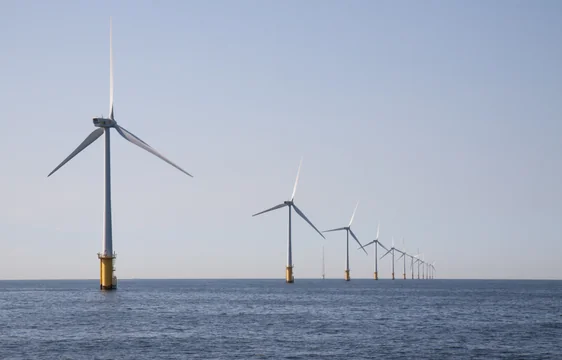
Offshore Wind Lease Pause Raises Security and Energy Stakes
The Trump administration has once again halted major offshore wind leases along the U.S. East Coast—just weeks after a federal judge overturned an earlier attempt. This renewed offshore wind lease pause doesn’t hinge on climate policy or economics, but on national security concerns tied to radar interference.
The decision reopens a critical debate: how the U.S. balances clean energy expansion, grid reliability, and defense readiness at a time when all three are under pressure.
Key Facts: What Just Happened?
The Department of the Interior announced a pause on leases for five large offshore wind projects representing nearly 6 gigawatts of power capacity.
Affected projects include developments off the coasts of New York, Massachusetts, Virginia, Connecticut, and Rhode Island. Together, they form a backbone of planned renewable energy supply for the Eastern Seaboard.
Interior Secretary Doug Burgum said the action addresses “emerging national security risks,” citing classified Pentagon reports and unclassified government analyses related to radar interference from wind turbines.
The pause is framed as temporary, intended to give agencies time to work with developers on mitigation strategies.
Why Offshore Wind and National Security Are Colliding
The core issue is radar. Wind turbines—especially offshore, large-scale installations—can interfere with radar systems used for air traffic control, weather monitoring, and military defense.
According to a 2024 Department of Energy report, turbine blades create complex Doppler signals that can obscure or confuse radar detection. While mitigation techniques exist, the report acknowledged that no solution fully restores radar performance in all scenarios.
A defense analyst quoted by TechCrunch noted that turbine interference can be filtered using advanced algorithms, similar in concept to noise-canceling headphones, but the process is technically demanding and not foolproof.
What’s missing from the administration’s statement, however, is context: federal agencies and wind developers have been actively addressing these concerns for years.
The Bigger Picture: A Pattern of Policy Whiplash
This offshore wind lease pause reflects a broader trend of regulatory instability in U.S. energy policy.
Over the past decade, offshore wind has moved from a niche experiment to a cornerstone of long-term grid planning, especially as data centers and electrification drive up power demand along the East Coast.
Repeated pauses—even temporary ones—create uncertainty that raises financing costs, delays construction timelines, and discourages long-term investment. For utilities and states banking on offshore wind to meet clean energy targets, unpredictability is almost as damaging as outright cancellation.
At the same time, national security concerns are not theoretical. Radar reliability is mission-critical, and adversarial technologies are evolving quickly. The challenge isn’t choosing one priority over the other—it’s aligning them.
Practical Implications for the Energy Industry
For developers, this pause likely means delays, renegotiations, and higher compliance costs.
For states, it complicates clean energy planning and may increase reliance on natural gas in the near term.
For businesses and consumers, the long-term risk is slower renewable deployment, which can translate into higher energy prices and weaker grid resilience.
Key implications include:
-
Longer project timelines due to additional federal reviews
-
Higher capital costs from regulatory uncertainty
-
Increased pressure on alternative energy sources
-
Greater emphasis on radar-friendly turbine siting and design
What Happens Next?
The most likely outcome is not a permanent shutdown, but stricter siting rules and expanded mitigation requirements.
Future offshore wind projects may face:
-
Mandatory radar impact modeling earlier in the approval process
-
Closer coordination with the Department of Defense
-
Design adjustments to turbine layout and blade movement patterns
Ironically, these measures already exist in many projects. The difference now is political framing.
If national security becomes a recurring justification for pauses, offshore wind could face a de facto slowdown—regardless of technological progress.
Conclusion: A Test of Energy Governance
The current offshore wind lease pause is less about turbines and more about trust.
Can federal agencies coordinate effectively? Can policymakers provide consistent rules? And can the U.S. expand clean energy without compromising security?
Answering “yes” to all three is essential. Otherwise, offshore wind risks becoming a symbol of policy gridlock rather than progress—at a time when the country can afford neither.
FAQ SECTION
Q: What is an offshore wind lease pause?
A: An offshore wind lease pause is a temporary halt on federal approvals that allow developers to build wind farms offshore. It delays construction and financing while the government reviews concerns such as environmental impact or national security risks.
Q: Why does radar interference matter for offshore wind?
A: Radar interference matters because wind turbine blades can distort radar signals used for defense and aviation. This can affect detection accuracy, especially near military or population centers, making it a national security issue.
Q: Can radar interference from wind turbines be fixed?
A: Partially. Mitigation technologies and improved siting can reduce interference, but no solution completely eliminates the issue in all cases. Ongoing collaboration has allowed many projects to move forward safely.
Q: Will this offshore wind lease pause stop projects permanently?
A: Unlikely. Most analysts expect delays rather than cancellations, with stricter mitigation requirements added before projects resume.