NVIDIA Launches Isaac GR00T Open Models, Newton 1.0 Physics Engine, and Isaac Sim 6.0 for Physical AI
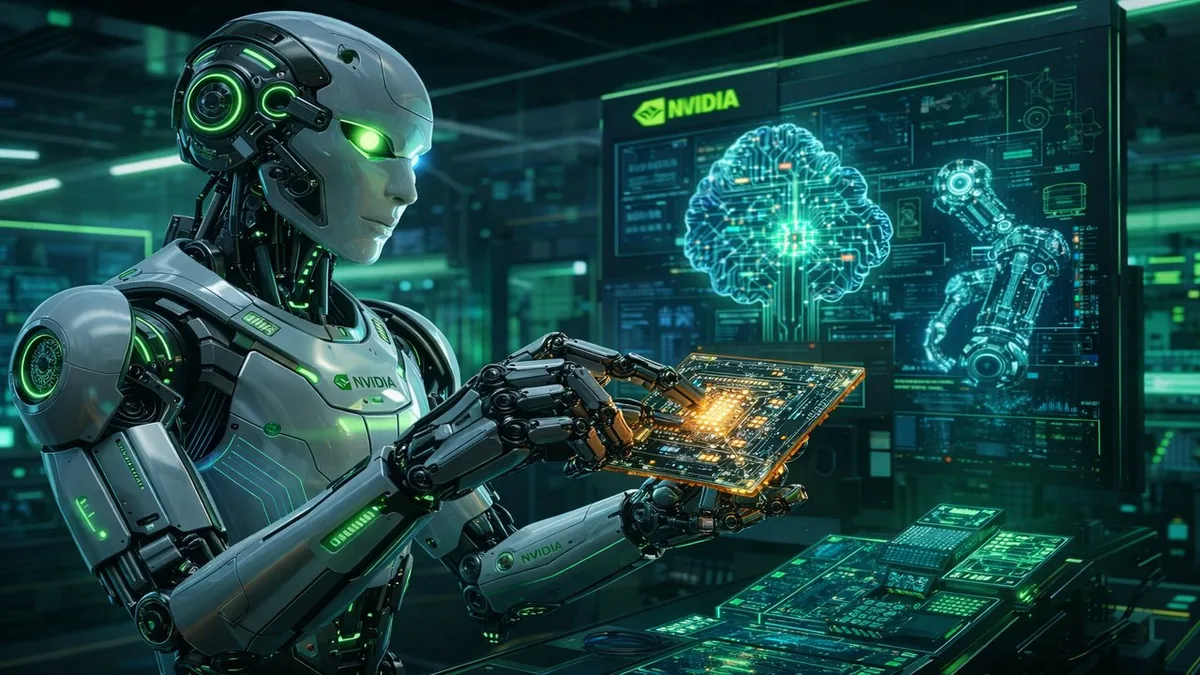
NVIDIA used National Robotics Week 2026 to unveil a sweeping set of physical AI advances — new open robot models, a generally available physics engine, and updated simulation platforms — that together position the company as the full-stack infrastructure provider for the next generation of intelligent machines. The announcements span software, simulation, and real-world deployment, and include partnerships with Toyota Research Institute, healthcare robotics firms, and agricultural automation companies. It is the most significant cluster of robotics releases NVIDIA has made in a single week, and mirrors the strategy the company used to become the default platform for large language model training. According to NVIDIA's blog, the week's releases are designed to accelerate the path from robot prototype to production deployment.
Isaac GR00T Open Models: Robots That Understand Language
The centerpiece release is Isaac GR00T, a new family of open models that enable robots to understand natural language instructions and execute complex, multistep tasks using vision-language-action reasoning. GR00T is designed for humanoid and dexterous robotic systems — giving robots the ability to interpret verbal or written commands and translate them into physical actions in unstructured environments.
The decision to open-source GR00T is deliberate. NVIDIA appears to be applying the same playbook that accelerated LLM adoption — releasing open models to build an ecosystem of developers and researchers — to the physical AI space. The broader rapid enterprise AI adoption seen in software is expected to follow in physical robotics as barriers to entry drop.
Newton 1.0, Isaac Sim 6.0, and the Simulation Stack
Newton 1.0, NVIDIA's open-source physics engine for robot simulation, reached general availability this week. Newton provides fast, reliable foundation capabilities for dexterous robot manipulation — accurate collision detection and realistic object contact simulation that lets developers train robots in virtual environments before deploying them in the physical world. Isaac Sim 6.0 and Isaac Lab 3.0 also reached general availability, completing the simulation platform stack.
The Cosmos World Foundation Models round out the training infrastructure. Cosmos generates synthetic training data for robots at scale, enabling robots to learn efficiently and generalize across diverse environments without requiring massive amounts of real-world data collection. Toyota Research Institute has already customized Cosmos for state-of-the-art dynamic view synthesis and teleoperation, one of the most demanding robotic applications.
Real-World Deployments Across Industries
The week's announcements are not purely research — NVIDIA showcased robots already operating in production. In healthcare, PeritasAI is using Isaac for Healthcare and the Rheo blueprint for surgical robot support and operating room instrument management. In agriculture, Aigen's solar-powered rovers use Jetson Orin for real-time weed identification, while Terra Robotics handles laser-weeding and Burro assists with harvesting. In clean energy, Maximo completed a 100-megawatt solar installation using an autonomous robot fleet — the first deployment of that scale using NVIDIA's physical AI stack.
In warehousing, Doosan Robotics uses NVIDIA Cosmos Reason to analyze box contents and dynamically adjust handling based on fragility — a practical example of vision-language reasoning applied to logistics. Research institutions including the University of Maryland are developing AI-powered humanoid systems for household tasks using the same platform.
Frequently Asked Questions
What is NVIDIA Isaac GR00T?
Isaac GR00T is NVIDIA's new family of open robot models that enable robots to understand natural language instructions and perform complex multistep tasks using vision-language-action reasoning. It is designed for humanoid and dexterous robotic systems and is open-source to encourage ecosystem development.
What is Newton 1.0 from NVIDIA?
Newton 1.0 is NVIDIA's open-source physics engine for robot simulation, reaching general availability during National Robotics Week 2026. It provides accurate collision detection and realistic object contact simulation, allowing developers to train and test robotic systems in virtual environments before physical deployment.
What industries is NVIDIA's physical AI platform being used in?
NVIDIA's physical AI platform is already deployed in healthcare (surgical robot support), agriculture (weed identification, laser-weeding, harvesting), clean energy (autonomous solar panel installation), and warehouse logistics (adaptive box handling). Research deployments also include household humanoid robotics.
The Bottom Line
NVIDIA's National Robotics Week releases mark a maturation of the company's physical AI strategy. By open-sourcing GR00T models, releasing Newton 1.0 to general availability, and showcasing real-world deployments across agriculture, healthcare, and warehousing, NVIDIA is building the developer moat in robotics that it already owns in AI training infrastructure. The question is no longer whether intelligent robots will enter the workforce — it is how quickly NVIDIA's platform becomes the default way they are built.