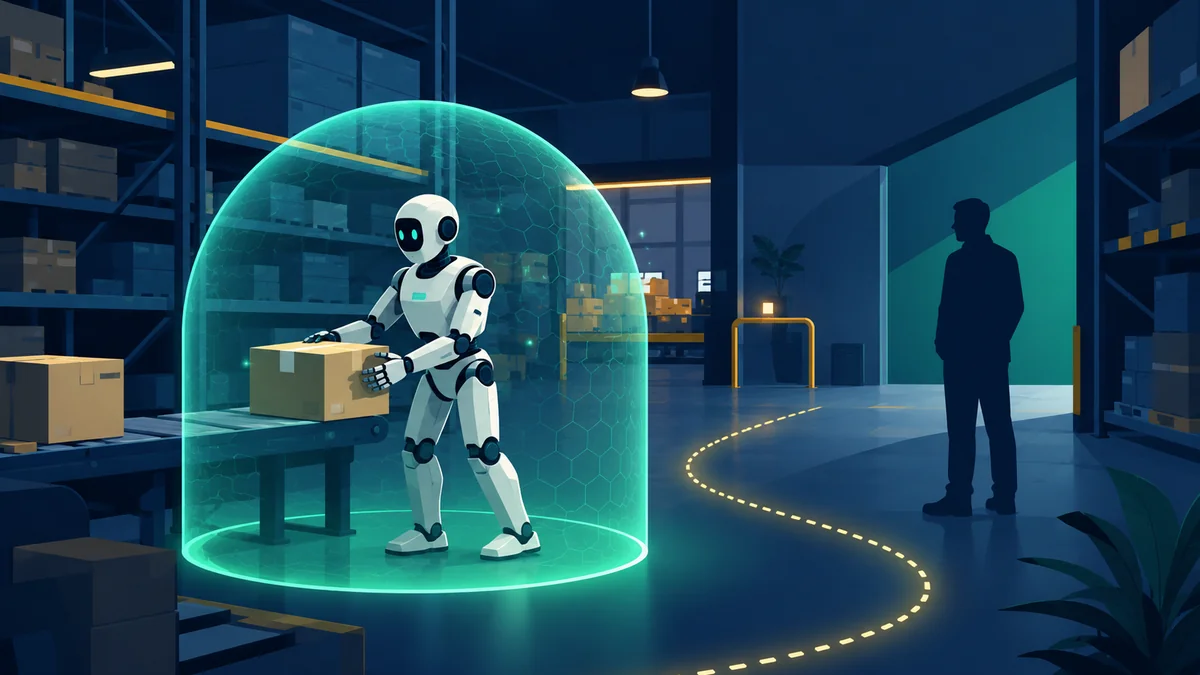
The robots are coming to work — literally. Humanoid machines are starting to move boxes in warehouses and parts on assembly lines, sharing the floor with human colleagues. That raises a problem the AI industry has mostly hand-waved away: how do you make a roaming, AI-driven robot provably safe around people?
On June 22, 2026, at the Automate show in Chicago, Nvidia put forward an answer: Halos for Robotics, billed as the industry's first full-stack, open safety system for physical AI. Here's what it is and why it could be a quiet turning point for the robot era.
What Happened
Nvidia announced Halos for Robotics, extending its existing Halos safety framework — originally built for autonomous vehicles — to robots and humanoids. The company says the system draws on more than 18,600 engineering-years of self-driving safety work, now repurposed for machines that walk, lift and roll through human workplaces.
In short: the safety lessons of self-driving cars are being handed to the humanoid robots entering factories — with hardware, software and certification bundled together.
What Is Halos for Robotics?
Halos for Robotics is pitched as the only full-stack, open robotics safety system. "Full-stack" is the key phrase: rather than a single product, it's a safety layer that runs from the chip up to certification, designed so robot makers don't each have to reinvent safety from scratch.
It fits squarely into Nvidia's broader push into physical AI — machines that perceive and act in the real world — which the company sees as its next frontier after powering the data-center AI boom. (We covered Nvidia's world-model side of that effort in Nvidia Cosmos.)
How It Works
Halos builds safety into every layer of the robot stack:
| Layer | What it provides |
|---|---|
| Hardware | Nvidia IGX Thor + Holoscan Sensor Bridge — safe AI compute and sensor connectivity |
| Software | Halos OS, including Halos Core for safety functions |
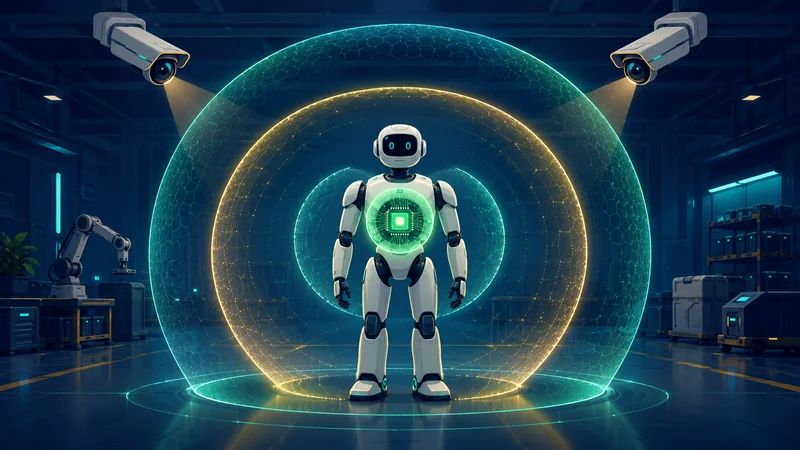
| "Outside-In" blueprint | External cameras and AI agents that watch the robot from outside |
| Certification | Halos AI Systems Inspection Lab to prepare for third-party sign-off |
The most interesting idea is that "Outside-In" Safety Blueprint: instead of trusting the robot to police itself, it adds external cameras and AI agents that monitor the robot's surroundings and can intervene — a second pair of eyes watching from above. It runs on Nvidia's own compute, the same silicon powering the wider AI hardware race.
The Certification Piece
Arguably the shrewdest part isn't the tech — it's the paperwork. Nvidia introduced the Halos AI Systems Inspection Lab, described as the world's first ANAB-accredited program for functional and AI safety for physical AI.
Translation: it's an independent lab that helps robot makers get their systems ready for third-party certification by recognized bodies including TÜV Rheinland, UL Solutions, TÜV SÜD, exida, SGS and CertX. That matters because buyers — factories, logistics firms — won't deploy robots at scale without credible, independent proof they're safe.
Who's Already Using It
This isn't a lab demo. Agility Robotics, a leading humanoid-robot maker, is the first to integrate elements of Halos into its own safety system. Its robot, Digit, is already working in logistics, manufacturing and warehouses at heavyweight names:
- Amazon
- GXO
- Schaeffler
- Toyota Motor Manufacturing Canada
In other words, Halos is aimed at robots that are already on real floors doing real work — exactly where safety guarantees matter most.
Why It Matters
Step back and the strategy is clever. Nvidia is betting that physical AI — robots, not just chatbots — is its next trillion-dollar wave. But there's a bottleneck: companies are nervous about putting autonomous machines next to humans without ironclad, certifiable safety.
By owning the safety stack — built on its chips, its software, and now its certification pathway — Nvidia plants itself at the center of the robotics boom the same way it did with AI training. Solve safety, and you unlock deployment; power the safety, and you power the whole industry.
What It Means
- Safety is the real unlock for humanoid robots. Capability is racing ahead; trust and certification are what gate mass deployment.
- Nvidia is going beyond chatbots. Physical AI is its next big bet, and it wants to own the foundations.
- "Outside-In" is a smart hedge. Watching robots with external sensors acknowledges that AI alone can't be fully trusted to police itself yet.
- Certification could become standard. Like crash ratings for cars, a credible robot-safety stamp may soon be a baseline buyers demand.
Frequently Asked Questions
What is Nvidia Halos for Robotics?
Announced on June 22, 2026, Nvidia Halos for Robotics is described as the industry's first full-stack, open safety system for physical AI — the robots and humanoids that operate in the real world alongside people. It extends Nvidia's existing Halos autonomous-vehicle safety work to factory and warehouse robots, spanning safety hardware, software and a certification program.
Why do robots need a dedicated safety system?
Humanoid and mobile robots are moving from cages into open workplaces where they share space with humans. Unlike a traditional industrial arm bolted behind a fence, a roaming robot powered by AI can behave unpredictably, so it needs layered safeguards and independent certification to be trusted around people. Halos aims to provide a standardized way to build and verify that safety.
How does Nvidia Halos for Robotics work?
It's a full-stack system with safety built into every layer. At the hardware level it uses Nvidia IGX Thor and Holoscan Sensor Bridge for safe AI compute and sensor connectivity. On top sits the Halos OS software stack (including Halos Core and an 'Outside-In' blueprint that adds external cameras and AI agents to watch the robot). Finally, an accredited inspection lab helps partners get third-party safety certification.
What is the Halos AI Systems Inspection Lab?
It's billed as the world's first ANAB-accredited program for functional and AI safety for physical AI. In plain terms, it's an independent lab that helps robot makers prepare their systems for certification by established bodies such as TÜV Rheinland, UL Solutions, TÜV SÜD, exida, SGS and CertX — giving buyers third-party assurance that a robot is safe.
Who is using Halos for Robotics?
Humanoid-robot maker Agility Robotics is the first to integrate elements of Halos into its safety system. Its robot Digit is already deployed in logistics, manufacturing and warehouse operations at major companies including Amazon, GXO, Schaeffler and Toyota Motor Manufacturing Canada — so the safety system targets robots that are already working in the real world.
Why is this a big deal for Nvidia?
Nvidia is betting heavily on 'physical AI' — robots and machines that sense and act in the world — as its next major growth area after data-center AI chips. Safety and certification are a key bottleneck to deploying humanoid robots at scale, so by owning the safety stack (built on its chips and software), Nvidia positions itself at the center of the coming robotics boom.
What does Halos mean for the future of humanoid robots?
Trust is the gate to adoption. If companies can certify that humanoid robots are safe to work beside people, deployment in factories, warehouses and eventually public spaces accelerates. A standardized, certifiable safety system like Halos could become the equivalent of safety ratings for cars — a baseline expectation that helps the whole industry scale responsibly.
Final Thoughts
It's easy to overlook a safety announcement next to flashy new models and chips. But Halos for Robotics may matter more than it looks. The humanoid-robot wave is real and accelerating — and the single biggest thing standing between a cool demo and a robot working next to your colleagues is provable safety.
By turning its autonomous-vehicle safety expertise into a certifiable, full-stack system for robots, Nvidia isn't just selling chips — it's trying to write the rulebook for how the robot era stays safe. If it works, the robots showing up at work won't just be capable. They'll be certified. We'll keep tracking the physical-AI race as it unfolds.