NASA's $4.3 Billion Roman Space Telescope Is Complete — 100x Hubble's View, On Time and On Budget
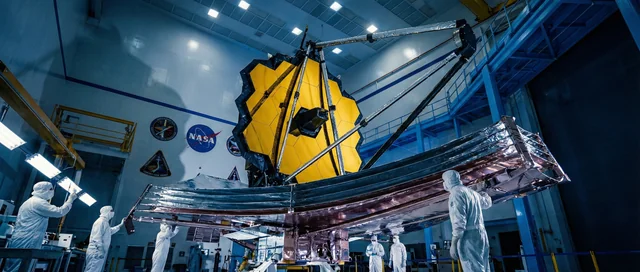
NASA has completed construction of the Nancy Grace Roman Space Telescope, a $4.3 billion flagship observatory that promises to revolutionize our understanding of the cosmos. In a rare feat for the agency, the project has stayed within its initial budget and is on track for a possible fall 2026 launch aboard a SpaceX Falcon Heavy rocket.
An Engineering Marvel a Decade in the Making
Technicians joined the observatory's inner and outer segments on November 25, 2025, inside Goddard Space Flight Center's largest clean room in Greenbelt, Maryland. The milestone marked the end of a construction effort that began in 2016, involving more than a thousand engineers assembling millions of individual components.
"Completing the Roman observatory brings us to a defining moment for the agency," said NASA Associate Administrator Amit Kshatriya. "Transformative science depends on disciplined engineering, and this team has delivered — piece by piece, test by test — an observatory that will expand our understanding of the universe."
Same Mirror as Hubble, 100x the View
Roman carries a 2.4-meter primary mirror — the same diameter as the legendary Hubble Space Telescope's — but weighing less than one-quarter as much thanks to advances in materials and manufacturing. Its Wide Field Instrument, a 300-megapixel infrared camera, will capture images with Hubble-quality resolution across a field of view 100 times larger.
To put that in perspective, surveys that would take Hubble decades to complete can be done by Roman in a fraction of the time. The telescope will essentially create the most comprehensive map of the infrared universe ever assembled.
Hunting Exoplanets with a Coronagraph
A second instrument, the Coronagraph, represents a groundbreaking technology demonstration. By blocking starlight, it can directly image nearby exoplanets — worlds orbiting other stars. This capability could pave the way for future missions specifically designed to search for habitable worlds and signs of life beyond Earth.
The Numbers Are Staggering
Once positioned at the Sun-Earth L2 point, roughly one million miles from Earth, Roman will spend at least five years surveying the infrared sky. Scientists expect the mission to:
- Discover more than 100,000 distant planets
- Observe hundreds of millions of stars
- Catalog billions of galaxies
What Comes Next
The telescope will now undergo a battery of environmental and performance tests before being shipped to NASA's Kennedy Space Center in Florida this summer. While formally scheduled to launch by May 2027, the team is targeting as early as fall 2026, with the most recent internal estimate pointing to a September launch.
"With Roman's construction complete, we are poised at the brink of unfathomable scientific discovery," said Julie McEnery, Roman's senior project scientist at NASA Goddard. "We stand to learn a tremendous amount of new information about the universe very rapidly after Roman launches."
The Bottom Line
The Roman Space Telescope represents something exceedingly rare in aerospace: a massive, ambitious project delivered on time and on budget. Named after Dr. Nancy Grace Roman — NASA's first chief astronomer who championed space-based telescopes and helped lay the groundwork for the Hubble program — this observatory is poised to open a new golden age of astronomical discovery. When it launches, it won't just look at the universe. It will see it as we never have before.