NASA Artemis II: Humans Are Going Back to the Moon After 54 Years
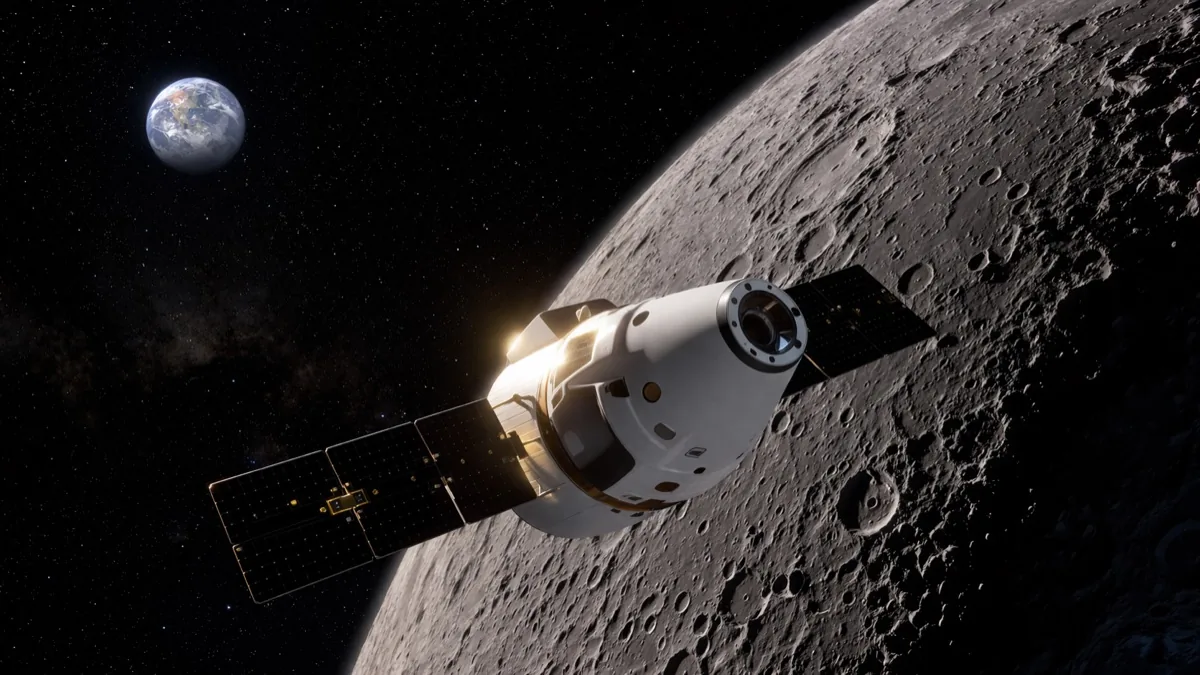
For the first time in 54 years, humans are traveling to the Moon. NASA’s Artemis II mission launched on April 1, 2026 from Kennedy Space Center, carrying four astronauts on a 10-day journey around the Moon and back. As of today, the crew is on Flight Day 5, speeding toward a lunar flyby on April 6 that will bring them within 8,000 kilometers (5,000 miles) of the Moon’s surface — the closest any human has been since Apollo 17 in December 1972.
This isn’t just a nostalgia trip. Artemis II is the first crewed test of the Orion spacecraft and the Space Launch System (SLS) rocket, proving the hardware that will eventually land astronauts on the lunar surface in Artemis III. And this crew is making history in ways that go far beyond the mission itself.
The Crew: Four Firsts in One Mission
Every member of the Artemis II crew is making history:
| Astronaut | Role | Agency | Historic First |
|---|---|---|---|
| Reid Wiseman | Commander | NASA | Oldest person to fly beyond low Earth orbit |
| Victor Glover | Pilot | NASA | First person of color beyond low Earth orbit |
| Christina Koch | Mission Specialist | NASA | First woman to fly beyond low Earth orbit |
| Jeremy Hansen | Mission Specialist | CSA (Canada) | First non-U.S. citizen beyond low Earth orbit |
Christina Koch already holds the record for the longest single spaceflight by a woman (328 days on the ISS). Victor Glover was the pilot of SpaceX Crew-1, the first operational crewed SpaceX mission. Jeremy Hansen represents Canada’s contribution to the Artemis program — a partnership that includes Canada building the Canadarm3 robotic arm for the planned lunar Gateway station.
Mission Timeline
| Date | Event | Details |
|---|---|---|
| April 1 | Launch | SLS liftoff from Kennedy Space Center, 6:35 PM EDT |
| April 1-2 | Earth orbit | Two orbits around Earth, systems checks |
| April 2 | Trans-lunar injection | Crew leaves Earth orbit — first humans beyond LEO since 1972 |
| April 3-5 | Outbound coast | Systems tests, trajectory corrections, crew activities |
| April 6 | Lunar flyby | Closest approach ~8,000 km from Moon surface; far side observations |
| April 7-9 | Return coast | Heading back to Earth |
| April 10 | Splashdown | Pacific Ocean, off San Diego coast |
What’s Happened So Far
The mission has been remarkably smooth so far — with one memorable exception:
- Launch (April 1): SLS performed flawlessly, delivering Orion into Earth orbit. The most powerful rocket NASA has ever launched worked exactly as designed.
- Trans-lunar injection (April 2): The upper stage fired to push Orion out of Earth orbit and toward the Moon. The crew officially became the first humans to leave Earth orbit since 1972.
- Trajectory so good, corrections were cancelled: Flight controllers cancelled the first outbound trajectory correction burn because Orion’s path was already precise enough — a testament to the SLS and Orion’s accuracy.
- The toilet broke (April 2): Yes, really. The Orion spacecraft’s toilet had an issue that the crew had to troubleshoot. They fixed it. Some things never change in space.
- Cabin prep for flyby (April 4-5): The crew is preparing the cabin for the lunar flyby, stowing equipment and getting cameras ready for what will be humanity’s first close-up look at the Moon in over half a century.
Video: LIVE updates as Artemis II astronauts embark on NASA moon mission (Associated Press)
Tomorrow: The Lunar Flyby
The highlight of the entire mission happens tomorrow, April 6. The Orion spacecraft will swing around the Moon, coming within approximately 8,000 kilometers (5,000 miles) of the lunar surface during a multi-hour flyby. During this window:
- The astronauts will photograph the Moon’s surface in unprecedented detail from human eyes
- They’ll observe areas of the far side of the Moon that no human has ever directly seen
- The flyby will test Orion’s navigation and communication systems in the lunar environment
- Data collected will directly inform the Artemis III landing site selection
After the flyby, Orion will use the Moon’s gravity to slingshot back toward Earth, with splashdown planned for April 10 in the Pacific Ocean off the coast of San Diego.
Why Artemis II Matters
Artemis II isn’t just a victory lap around the Moon. It’s the critical proving ground for everything that comes next:
- Artemis III — the actual lunar landing — will use the same Orion spacecraft and SLS rocket. Artemis II proves they can safely carry a crew to the Moon and back.
- The Orion life support systems are being tested with a real crew for the first time. The uncrewed Artemis I in 2022 tested the hardware, but humans are unpredictable — they breathe, eat, use the toilet (and break it), and generate heat.
- Deep space communication is being validated over lunar distances — critical for future Mars missions.
- The heat shield will be tested at lunar return speeds (~40,000 km/h) during Earth reentry, with humans aboard for the first time.
The Bigger Picture: Artemis Program Timeline
| Mission | Date | Objective |
|---|---|---|
| Artemis I | Nov 2022 | Uncrewed test flight around the Moon (completed) |
| Artemis II | Apr 2026 | Crewed flyby of the Moon (in progress) |
| Artemis III | ~2028 | First crewed lunar landing since 1972 |
| Artemis IV+ | 2029+ | Sustained lunar presence, Gateway station, Mars prep |
The ultimate goal of the Artemis program extends far beyond the Moon. NASA is using lunar missions to develop and test the technology needed for crewed missions to Mars — including life support, deep space navigation, and habitat systems. The Moon is the proving ground; Mars is the destination.
Frequently Asked Questions
When will Artemis II fly by the Moon?
Artemis II will perform its lunar flyby on April 6, 2026, coming within approximately 8,000 kilometers (5,000 miles) of the Moon’s surface. The crew will photograph the lunar surface and observe the far side of the Moon during a multi-hour flyby window.
Who are the Artemis II astronauts?
The Artemis II crew consists of NASA astronauts Reid Wiseman (Commander), Victor Glover (Pilot), Christina Koch (Mission Specialist), and Canadian Space Agency astronaut Jeremy Hansen (Mission Specialist). Together they represent four historic firsts: first woman, first person of color, first non-U.S. citizen, and oldest person to fly beyond low Earth orbit.
When will Artemis II return to Earth?
Artemis II is expected to splash down in the Pacific Ocean off the coast of San Diego on April 10, 2026, completing the approximately 10-day mission.
When was the last time humans went to the Moon?
The last time humans traveled to the Moon was Apollo 17 in December 1972 — over 54 years ago. Artemis II is the first crewed mission beyond low Earth orbit since then, making it one of the most historically significant space missions in half a century.