Musk Calls Universal Income "Best Way" to Handle AI Job Losses as OpenAI Proposes Public Wealth Fund
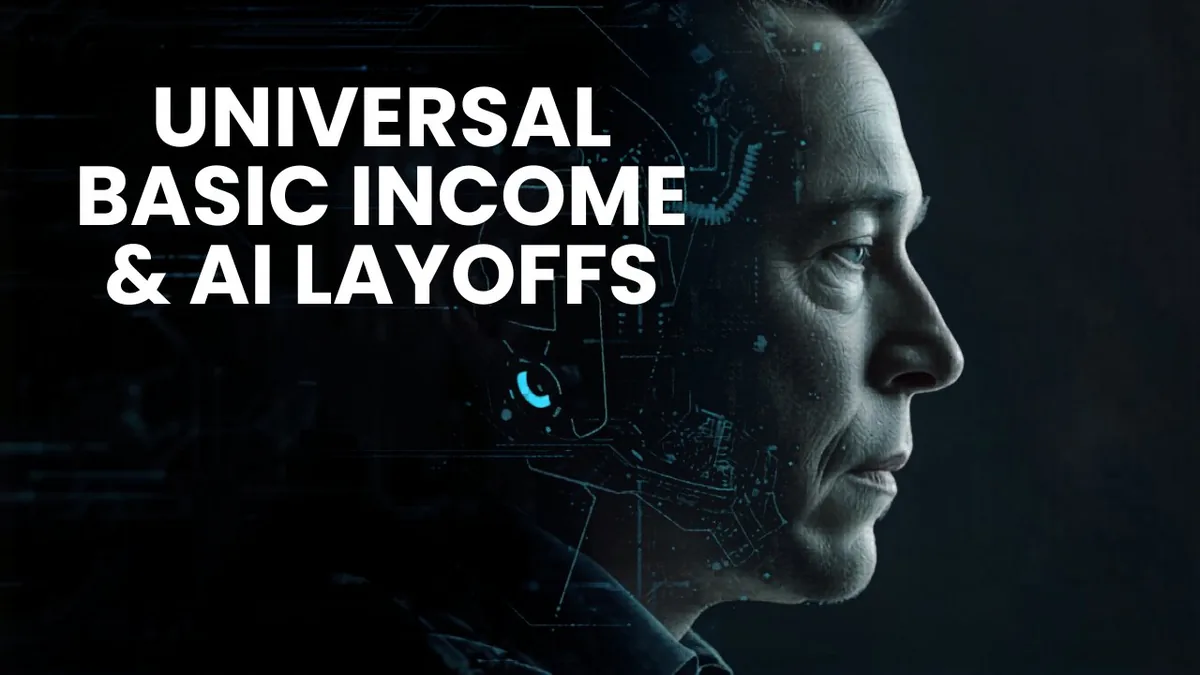
As AI-driven automation increasingly threatens white-collar and blue-collar jobs alike, a debate is intensifying among tech leaders and policymakers about how to support displaced workers. Two of the most prominent responses have emerged from unlikely sources: Elon Musk, who calls universal basic income (UBI) the "best way" to address AI-fueled unemployment, and OpenAI, whose internal policy document proposes a Public Wealth Fund as a mechanism to redistribute AI-generated economic gains.
Musk Champions Universal Basic Income
Elon Musk has long been a vocal supporter of UBI as AI automation accelerates. In his view, the economic displacement caused by increasingly capable AI — from factory robots to autonomous agents handling knowledge work — will be so severe that traditional employment-based income models will become untenable for large portions of the workforce. Musk's position is somewhat ironic given that his own companies, Tesla and xAI, are among the leading drivers of the automation revolution he warns about. His support for UBI represents a pragmatic acknowledgment that the technology he builds may require structural economic adaptation.
OpenAI's Public Wealth Fund Proposal
OpenAI's internal policy document, details of which have been reported, proposes a different mechanism: a Public Wealth Fund. Under this model, the government would take equity stakes in AI companies — including potentially OpenAI itself — and distribute dividends from that equity to citizens. The logic is that if AI creates enormous wealth concentrated among a small number of technology companies and their shareholders, the public should have a claim on that wealth through democratic ownership structures rather than purely through employment income.
Why This Debate Is Happening Now
The urgency of this conversation has grown as AI capabilities have expanded from narrow tools to general-purpose reasoning systems. Meta recently announced layoffs of 8,000 employees as it restructures around AI. OpenAI itself has seen executive departures as it pivots toward AGI development. The economic productivity gains from AI are becoming measurable — but so is the job displacement in sectors from customer service to software engineering. Economists are increasingly warning that without structural policy intervention, AI-driven growth could exacerbate inequality rather than reduce it.
The Policy Landscape
Several countries and cities have piloted UBI programs with mixed results — Finland's 2017-2018 experiment showed improved wellbeing but limited employment effects, while Kenya's GiveDirectly program has shown stronger long-term economic impacts. The challenge is funding at scale: a meaningful UBI for the US population would cost trillions annually. The Public Wealth Fund model attempts to solve this by capturing a share of AI-generated corporate value rather than relying on traditional tax revenue.
FAQ
What is universal basic income (UBI)?
UBI is a policy where every citizen receives a regular, unconditional cash payment from the government regardless of employment status, designed to provide a basic standard of living floor.
How would a Public Wealth Fund work?
The government would acquire equity stakes in major AI companies, either through taxation in shares, mandatory equity grants, or investment of public funds. Returns from that equity would be distributed to citizens as dividends.
Has UBI been tried before?
Yes — pilots have been run in Finland, Kenya, Canada, and several US cities. Results vary, but generally show improved wellbeing and reduced financial stress without significantly reducing work effort.
The Bottom Line
The convergence of Musk and OpenAI on some form of wealth redistribution mechanism — however different in structure — signals that even AI's most powerful architects recognize the economic disruption they are creating. The policy question is no longer whether AI will displace jobs, but who will capture the resulting economic surplus and how it will be shared.
Related Articles
- Meta to Lay Off 8,000 Employees in May 2026
- OpenAI Executives Departure Wave Signals Shifting Priorities
- Recursive Superintelligence Raises $500M