Musk Calls Universal Basic Income the "Best Way" to Handle AI Layoffs — OpenAI Agrees
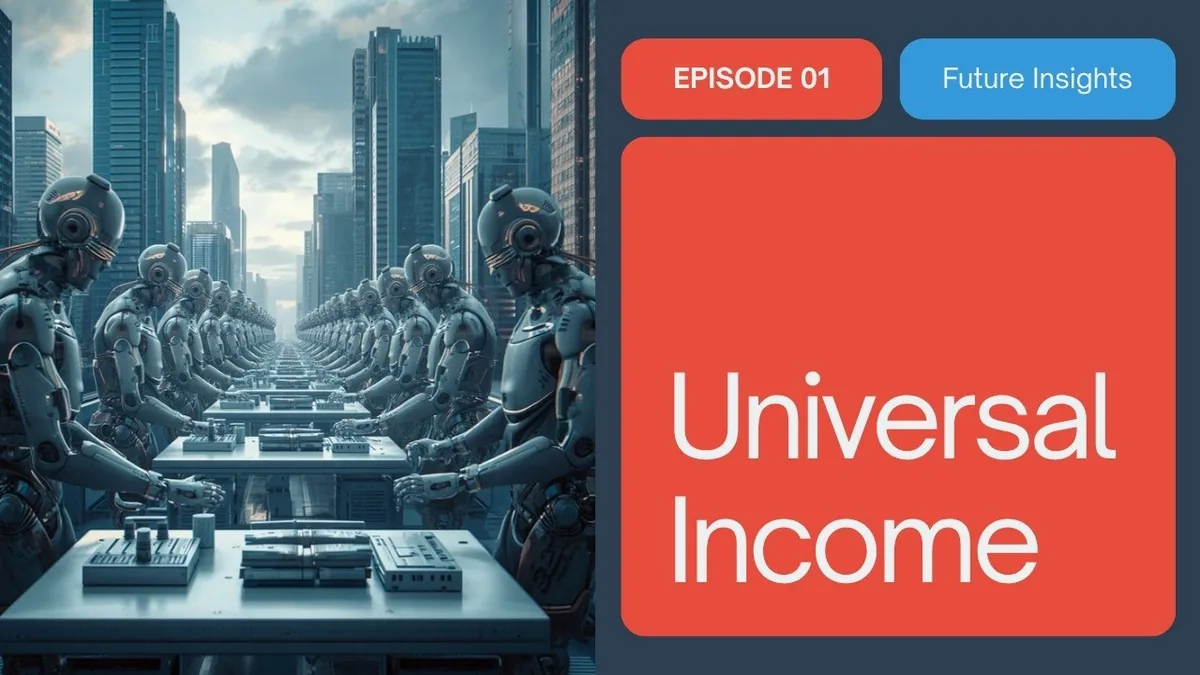
As AI-driven layoffs accelerate across industries, two of the most influential figures in the AI world are converging on a surprising answer: universal basic income. Elon Musk has called UBI the "best way" to address job displacement driven by AI automation, while OpenAI's latest policy documents propose the creation of a Public Wealth Fund to distribute AI's economic gains broadly.
Why UBI Is Back in the Conversation
Universal basic income has been discussed in tech circles for years, but the AI displacement wave is making the case feel more urgent. Meta's announcement of laying off roughly 8,000 employees — with more waves expected — is just the most visible example of AI efficiency reducing headcount across major corporations. When the companies building AI start publicly backing income redistribution mechanisms, it signals that even they see displacement as a real and near-term problem.
Musk's Position
Musk — who simultaneously runs companies developing AI (xAI) and robotics (Tesla/Optimus) — has shifted toward supporting UBI as an inevitable societal response to automation. His argument is straightforward: if AI and robots can do most jobs, then the economy needs a mechanism to distribute that productivity to humans who no longer have traditional employment. His alignment with this idea, despite being a primary driver of automation, adds a layer of credibility to the policy conversation.
OpenAI's Public Wealth Fund Proposal
OpenAI's policy documentation goes further with a specific mechanism: a Public Wealth Fund funded by AI-generated economic activity. The concept echoes sovereign wealth funds but applied domestically, where AI productivity gains are taxed or contributed to a national fund that pays dividends to citizens. It's a structural solution rather than a redistributive tax patch — more aligned with how the US could benefit from AI without requiring massive government expansion.
The Gap Between Rhetoric and Policy
Agreeing that UBI is a good idea and passing legislation to implement it are entirely different challenges. The US political environment remains deeply divided on government transfer payments, and "UBI funded by AI profits" would face enormous opposition from the same corporations that would be taxed to fund it. The conversation is important, but translating it into policy will require political will that doesn't currently exist.
The Bottom Line
When AI's biggest builders publicly advocate for income redistribution mechanisms, they're signaling that displacement is real and coming faster than policy can adapt. Whether UBI or a Public Wealth Fund becomes reality depends on political will — but the fact that Musk and OpenAI are both saying it out loud is a meaningful shift in the AI policy conversation.
Related Articles
- Meta Plans to Lay Off 8,000 Employees on May 20 — More Waves to Follow
- Recursive Superintelligence Raises $500M+ at $4B Valuation
- OpenAI Loses Bill Peebles and Kevin Weil Before IPO