Mind-Reading Tech Just Leveled Up — And the Real Story Isn’t What You Think
Mind-Reading Tech Just Leveled Up — And the Real Story Isn’t What You Think
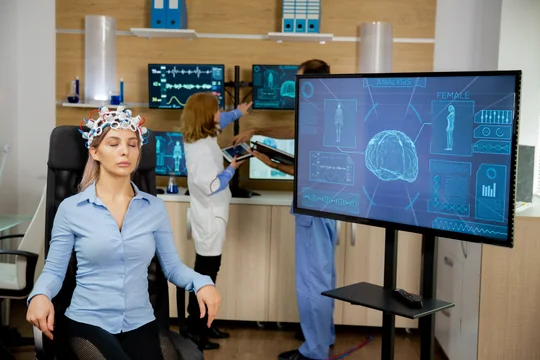
Brain-computer interfaces (BCIs) used to belong in sci-fi movies and futurist TED Talks. Yet here we are: devices can now predict a person’s intention before they’re even aware of it consciously. According to a recent report from Nature, researchers have begun tapping into brain regions tied not only to physical movement but also to planning, attention, and even early subconscious processing.
This breakthrough is exciting — but it also opens the door to profound ethical, privacy, and societal questions.
What happens when technology can read not just what we mean to do, but what we might do?
Let’s break down what’s happening and why this moment is a turning point.
BCIs Are No Longer Just About Movement — They’re Decoding Intent
For years, implanted BCIs helped people with paralysis control robotic limbs or digital interfaces by imagining movements. But the new phase targets brain regions that govern planning and internal decision-making, not just motor signals.
One of the earliest breakthroughs came from a volunteer who imagined playing digital piano keys. The fascinating part?
The system responded before she consciously attempted to press the key — meaning the device detected intention during the preconscious planning stage.
This wasn’t magic. It was a sign that BCIs can read far deeper layers of brain activity than scientists once believed.
The Quiet Revolution: AI Supercharges Brain-Signal Interpretation
Here’s where the story takes a bigger leap.
Artificial intelligence is drastically accelerating how well BCIs — implanted or wearable — can clean, interpret, and classify brain signals.
Even consumer-grade EEG headbands and headphones (yes, headphones) are now capable of:
-
Detecting stress levels
-
Measuring focus
-
Tracking reactions to content
-
Interpreting micro-signals tied to attention
With AI-powered signal processing, even noisy data can suddenly become meaningful.
Tech giants are circling the space. Apple has already patented EEG-enabled AirPod designs. Once a major player launches a brain-sensing wearable, this goes mainstream overnight.
The Real Issue Isn’t Mind-Reading — It’s Data Ownership
The ethical concern isn’t whether devices can read your emotions or intentions. It's who gets access to that data.
A 2024 investigation found that nearly all consumer neurotech companies claim full ownership of the neural data they collect — meaning they can:
✔ Use it
✔ Analyze it
✔ Monetize it
✔ Sell inferences to third parties
Even early subconscious reactions could be bundled into behavioral prediction models, advertising profiles, or political targeting datasets.
Chile and some US states have preemptively enacted “neurorights” legislation, granting special protection to neural signals. But these laws mainly protect raw data, not what AI can infer from it.
And the inferences are where the real power lies.
BCIs Are Heading for the Clinic — Fast
While no implanted BCI is yet cleared for mass clinical use, that’s changing quickly. Companies like Synchron, Neuralink, Paradromics, and others have made enormous progress:
-
Synchron may soon run a pivotal FDA trial for a minimally invasive implant.
-
Neuralink has implanted its device in more than a dozen volunteers.
-
Multiple companies are exploring BCIs that help restore speech through synthetic voice systems.
This generation of BCIs focuses on restoring movement and communication.
The next generation? Mental-health diagnostics and treatment.
Researchers are already mapping neural signatures associated with psychiatric disorders and using AI to build “foundation models” of brain activity — generalizable models trained on thousands of hours of neural data.
This is where mind-tech starts merging with medicine in unprecedented ways.
The Bigger Picture: A Future Where Thoughts Have Terms & Conditions
Here’s the uncomfortable truth:
As BCIs become more powerful, the line between assisting the brain and influencing it could blur.
Imagine:
-
Workplaces using attention-monitoring BCIs for productivity
-
Advertisers customizing content based on subconscious reactions
-
Apps that detect emotional vulnerability in real time
-
Medical BCIs that can tweak mood-related neural circuits
Is this progress? Absolutely.
Is it dangerous? Potentially.
This isn’t fear-mongering — it’s responsible foresight. When neurotech becomes commonplace, cognitive liberty becomes a foundational human right.
The conversation can’t wait until the technology is everywhere.
Our Take: This Is the Moment to Shape the Rules
The leap from motor-BCIs to intent-BCIs is a watershed moment.
But the most important takeaway isn’t the tech — it’s the timing.
Neural data is about to become the most valuable dataset in the world.
Before consumer adoption explodes, we need:
-
Clear data-ownership laws
-
Limits on AI-based cognitive inference
-
Transparent consent frameworks
-
Medical-grade privacy standards for consumer devices
-
Global neurorights policy alignment
If we get this right, neurotech could unlock a new era for accessibility, mental-health treatment, human-device interaction, and more.
If we don’t, we risk handing over the most intimate data humans possess.