Micron Completes $1.8B Acquisition of Powerchip DRAM Fab in Taiwan, Plans Second Facility
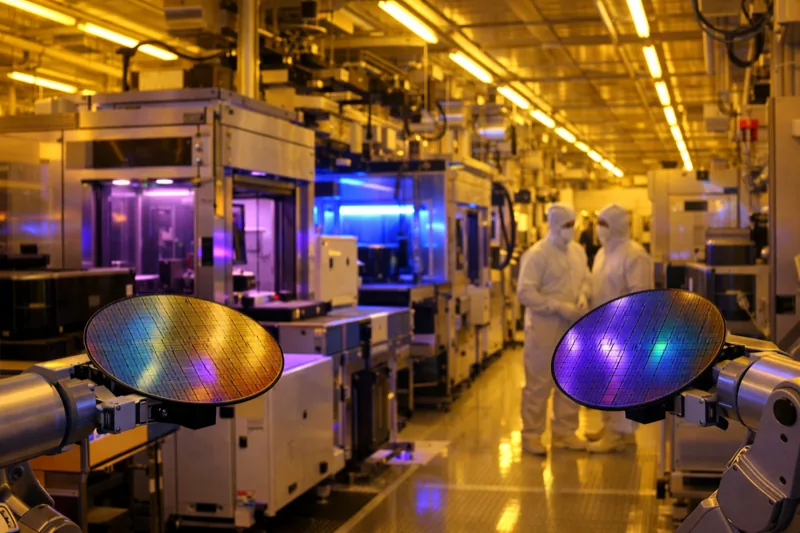
Micron Technology has completed its $1.8 billion acquisition of Powerchip Semiconductor Manufacturing Corp’s (PSMC) P5 fabrication site in Tongluo, Taiwan — and it’s already planning to double down with a second facility of comparable scale at the same location.
The $1.8 Billion Bet on Taiwan
The deal, first announced in January 2026, gives Micron a 300mm fab with 300,000 square feet of clean room space in Miaoli County, Taiwan. It marks the end of the decades-old “technology-for-capacity” model where companies like PSMC would build fabs and license process technology from memory giants like Micron. DRAM fabrication has become so capital-intensive that this arrangement is no longer viable.
The acquisition positions Micron to expand supply of leading-edge DRAM products, including the high-bandwidth memory (HBM) chips that are absolutely critical for training and running AI models. Every major AI company — from Nvidia to Google to Meta — is competing for HBM capacity, and there simply isn’t enough to go around.
The Second Fab: Construction Starts This Year
Micron isn’t wasting time. The company announced plans for a second manufacturing facility at the Tongluo site, adding approximately 270,000 square feet of additional clean room space. Construction is scheduled to begin by the end of fiscal 2026, with meaningful wafer output expected in the second half of 2027.
Combined, the two facilities will give Micron a massive DRAM production footprint in Taiwan, one of the world’s most important semiconductor manufacturing hubs.
Why This Matters for AI
The global RAM shortage isn’t a hypothetical — it’s already here. AI data centers are consuming memory at unprecedented rates, and HBM prices have been climbing steadily. Micron’s Taiwan expansion is a direct response to this demand, but even with two fabs, the gap between AI’s appetite for memory and the industry’s ability to produce it will continue to widen.
The $1.8 billion price tag also signals how expensive it has become to compete in the memory chip market. Building a single fab now costs what entire semiconductor companies were worth a decade ago.
The Bottom Line
Micron is spending billions to build DRAM capacity in Taiwan because AI demand has made memory chips one of the most strategically important technologies on Earth. The question isn’t whether this investment will pay off — it’s whether it’ll be enough. With AI workloads doubling every few months, even $3.6 billion in new fab capacity might just be a drop in the bucket.