Meta Rents Google's TPUs in Multibillion-Dollar Deal — Because Building Your Own Chips Was Too Hard
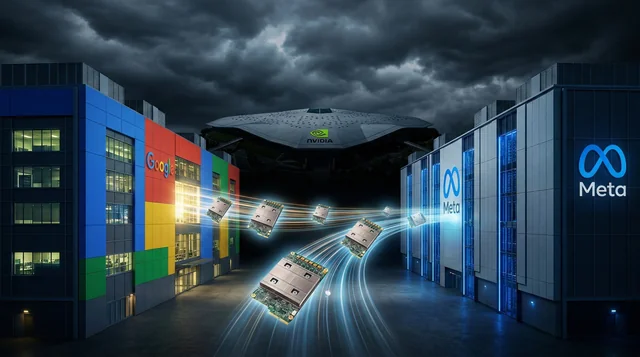
Meta Platforms has signed a multibillion-dollar, multiyear deal to rent Google's Tensor Processing Units (TPUs) for AI model development, according to The Information. The deal marks a significant shift in the AI chip landscape and a direct challenge to Nvidia's dominance.
The Deal
Under the agreement, Meta will rent access to Google's TPUs — custom AI chips originally designed for Google's own internal use — to train and develop new AI models. Meta is also reportedly in talks to outright purchase TPUs for its own data centers as early as 2027.
This comes just days after AMD announced it would sell up to $60 billion in AI chips to Meta, and weeks after Meta signed a deal with Nvidia to buy current and future AI chips. Meta is clearly hedging its bets across every major chip provider.
Why Meta Needs Google's Chips
The timing is particularly revealing. Reports indicate that Meta recently scrapped its most advanced internal AI chip design after struggling with the architecture. Rather than doubling down on custom silicon — a strategy that has worked well for Google and Amazon — Meta appears to be pivoting to a multi-vendor procurement strategy.
The sheer scale of AI infrastructure spending tells the story: companies are pouring hundreds of billions into compute capacity, and no single chip vendor can meet the demand. Meta's approach is essentially to buy from everyone — Nvidia GPUs, AMD GPUs, and now Google TPUs — to ensure it has enough horsepower for its AI ambitions.
What This Means for Nvidia
For years, Nvidia has enjoyed near-monopoly status in AI training chips. While it still dominates, this deal signals that the largest AI companies are actively diversifying their chip supply chains. Google's TPU business is becoming a serious cloud revenue driver, and deals like this validate Google's strategy of commercializing its custom silicon.
Google has also reportedly signed an agreement with a large investment firm to fund a joint venture that would lease TPUs to other customers — suggesting this is just the beginning of Google's push to become a major AI chip vendor in its own right.
The Bigger Picture
The AI chip market is entering a new phase where the biggest tech companies are simultaneously customers, competitors, and suppliers to each other. Meta builds AI models that compete with Google's Gemini, yet now rents Google's hardware to do it. Google sells chips to Meta while competing for AI supremacy. And Nvidia watches as its biggest customers actively seek alternatives to reduce their dependence.
The multibillion-dollar price tag underscores just how expensive the AI arms race has become — and how desperate these companies are to secure compute capacity at any cost.