Maine's Governor Vetoed a Bill That Would Have Paused New Data Centers — Here's Why
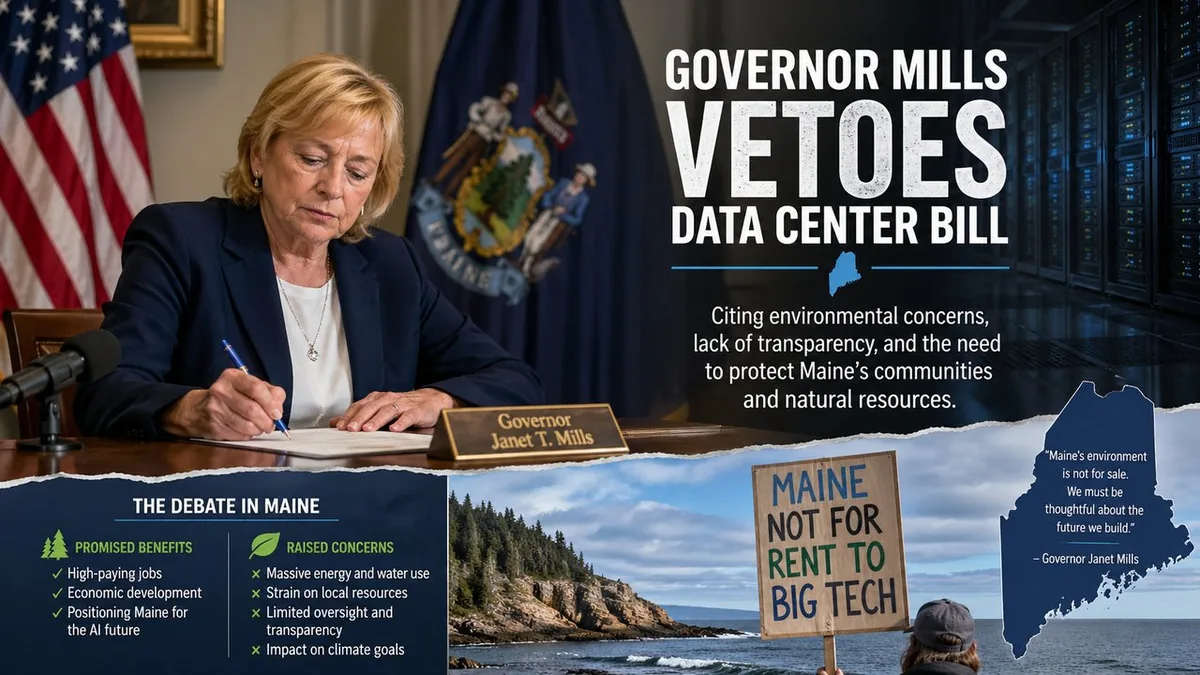
Maine's governor has vetoed a bill that would have created a temporary pause on new data center construction in the state — a move that would have made Maine the first US state to enact such a measure. The governor's stated reason: the bill failed to include an exemption for an existing data center project in a distressed mill town that is counting on that investment for economic recovery.
What the Bill Would Have Done
The legislation targeted the environmental and energy load concerns that come with large-scale data center construction — particularly AI training facilities, which consume enormous amounts of electricity and water. A pause would have given the state time to assess infrastructure capacity and develop a regulatory framework before committing to new approvals. Advocates argued Maine's grid isn't ready for the demand these facilities generate.
The Mill Town Exception
The veto rationale is economically revealing. A distressed former mill town in Maine has a data center project in the pipeline that represents significant local employment and tax revenue. The governor chose that community's economic needs over the broader environmental policy goal — a judgment call that reflects the real tension in AI infrastructure policy: the communities that need investment most are often the ones willing to take on the infrastructure others don't want.
The Broader Pattern
States and localities are increasingly caught between energy and water concerns about AI infrastructure on one side, and the economic development arguments from data center operators and the workers they employ on the other. Maine's veto is a preview of how that tension resolves in most US jurisdictions: economic development wins.
My Take
The governor's specific objection is legitimate — killing an existing project in a distressed community is genuinely harmful. But the veto also conveniently kills the broader policy goal. The right answer was a better-drafted bill with the exemption included. Whether a revised bill comes back is now the question.
The Bottom Line
Maine's veto shows that data center policy is local politics as much as environmental policy. The US will not pause AI infrastructure build-out through state legislation — at least not the way this bill was written.