Larry Summers Controversy: What the Epstein Emails Reveal About Leadership in 2024
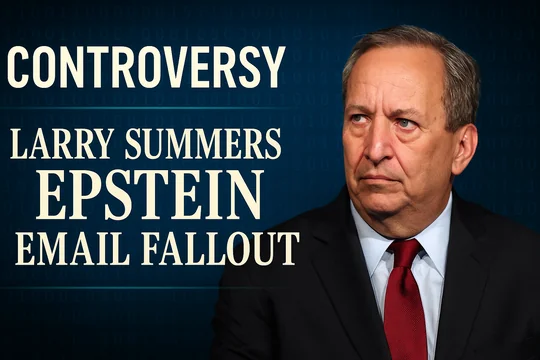
When Public Trust Breaks: What Larry Summers’ Epstein Email Fallout Signals for Institutions Today
Public trust is one of the rare currencies that can’t be bought back once it’s spent. And this week, former Treasury Secretary and Harvard president Larry Summers became yet another cautionary example of how quickly reputations can unravel in the digital age.
According to reporting from NBC News, Summers announced he will be stepping away from public-facing engagements after Congress released thousands of emails revealing years of communication between him and Jeffrey Epstein—correspondence that continued even after Epstein’s first conviction.
But the news isn’t just about one man's misjudgment. It exposes a deeper institutional problem: Why do powerful spaces keep overlooking warning signs until a crisis forces a reckoning?
Below is a breakdown of what happened—and what it reveals about influence, accountability, and the responsibilities of leaders in 2024.
The Core News (Summarized Without Repetition)
As NBC News reports, more than 20,000 emails from Epstein’s estate were released by the House Oversight Committee. Among them were years of communication between Epstein and Summers, including casual exchanges as recent as 2019—just before Epstein’s final arrest.
Summers publicly apologized, expressing “deep shame,” and announced he would pause public commitments while continuing to teach at Harvard. Several institutions—including the Center for American Progress, the Yale Budget Lab, and The New York Times—have since distanced themselves.
Why This Story Matters: The Bigger Picture
1. The Old Playbook of Influence Is Failing
For decades, high-profile figures leaned on the belief that private relationships—even questionable ones—could remain private. The Summers-Epstein correspondence proves that era is over.
Today, inboxes are archives, and power comes with permanent receipts.
This shift forces leaders to rethink not just their behavior, but the company they keep.
2. Institutions Are Finally Facing Accountability Pressure
Universities, think tanks, boards, and tech organizations were once insulated from public backlash. Not anymore.
Summers’ connections to Harvard, OpenAI, CAP, and major media outlets triggered immediate scrutiny—not because of what he did recently, but because transparency now demands a higher standard.
Modern institutions can no longer rely on internal reputation alone. Public trust is now part of the accreditation.
3. This Isn’t Only About Summers—It’s About the System
Whenever someone powerful maintains ties with a convicted sex offender, it raises questions about what they were gaining, protecting, or ignoring.
The real headline is how normalized these networks of influence once were.
The public is no longer willing to accept:
-
“Everyone knew him.”
-
“It wasn’t illegal.”
-
“It was a different time.”
Ethics is no longer a gray area—it’s a requirement.
4. What Happens Next? Expect More Documents, More Disclosures
The House is preparing legislation that could force the DOJ to release more Epstein-related records. That means Summers is likely not the last high-profile figure to face fallout from what those emails may reveal.
The transparency era is accelerating—and many institutions are not prepared.
Our Take: Leadership Requires More Than Credentials
Summers’ career includes top-tier roles in government, academia, finance, and tech. Yet even with an elite résumé, one truth remains:
A brilliant mind does not excuse reckless judgment.
In 2024 and beyond, leaders will be judged less by their institutional position and more by:
-
Their decision-making
-
Their ethical compass
-
The company they keep
-
Their ability to model accountability
Summers stepping back is not the end of a story—it’s the beginning of a much larger cultural shift.
Conclusion: Transparency Is the New Reputation
The Summers–Epstein revelations serve as a reminder:
In a world where every email can become public, ethical leadership is no longer optional—it’s strategic survival.
Institutions, boards, universities, and policymakers must now confront this reality head-on. The public isn’t calling for perfect leaders—just honest ones.