What is the evil eye? And how does this relate to Judaism?
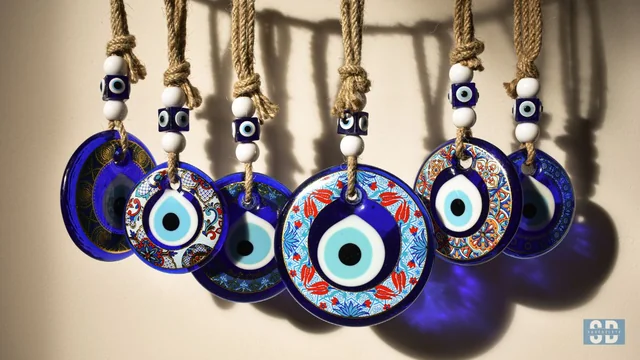
The evil eye, known as ayin hara in Hebrew, describes a negative and potentially harmful energy believed to be generated when someone looks at another person or their possessions with envy, jealousy, or ill intent. This concept holds significant importance in Jewish tradition and has roots in both the Talmud and Jewish law (Halacha).
Understanding Ayin Hara in Jewish Tradition
According to Jewish teachings, a person is commanded not to gaze enviously at another's possessions or fortune. When someone violates this principle, they are considered to possess an "evil eye." This belief explains why traditional Jewish custom discourages counting people directly, as well as why two brothers or a father and son are not typically called up to the Torah consecutively.
Among the Ten Commandments given by God to the Jewish people is "Do not covet" (Lo Tachmod), which encapsulates the spiritual foundation of the evil eye concept. Medieval sages clarified that the evil eye is not merely a physical phenomenon where negative energy visibly emanates from a person's eyes. Rather, as Rabbi Dovber Shneuri, a Chabad Rebbe, explained, "the eye" refers to the soul's vision—the wisdom and attention of one's mind.
How Does the Evil Eye Work?
The mechanism of ayin hara operates on a spiritual level. When a person looks at someone else's fortune with envy or negative intent, they essentially question why that person deserves such blessings. This triggers a more rigorous examination in the Heavenly court regarding whether the blessed individual truly merits their good fortune.
If the person being gazed upon has any sins, the evil eye can cause Heaven to judge them more strictly. Conversely, when someone looks at another's blessings with genuine appreciation and without envy, they actually contribute positive energy and protect that person from spiritual harm.
Latest Developments in Jewish Life (December 2025)
The Jewish community continues to navigate significant developments affecting religious life, antisemitism concerns, and cultural preservation:
Combating Antisemitism
In December 2025, the Senate Committee on Foreign Relations approved President Trump's nomination of Chabad Rabbi Yehuda Kaploun to serve as special envoy to monitor and combat antisemitism. World Jewish Congress President Ronald S. Lauder has emphasized that antisemitism remains "rampant throughout our culture – on campuses, online, in politics, and even in the halls of government."
Legislative Initiatives
California's Jewish Public Affairs Committee has achieved a significant milestone with AB 715, the first-in-the-nation bill designed to counteract antisemitism in K-12 schools. This legislative approach represents a model for other states seeking to protect Jewish students and educate about Jewish culture and history.
Religious and Political Intersections
Recent comments by Pope Leo XIV calling for a two-state solution in the Israeli-Palestinian conflict drew strong reactions from Israeli leaders. National Security Minister Itamar Ben-Gvir stated that such a solution "goes against the Torah," highlighting the intersection of religious interpretation and modern political discourse.
Community Resilience
In the two years since October 7, 2023, many American Jews have worked to process trauma and reconnect with their cultural and spiritual roots. Community organizations have emphasized the importance of Jewish education, tradition preservation, and solidarity.
Comparison: Jewish Protective Symbols and Traditions
| Symbol/Tradition | Hebrew Name | Primary Purpose | Origin | Common Use |
|---|---|---|---|---|
| Hamsa | יד מרים (Yad Miriam) | Protection from evil eye | Ancient Middle East | Home decoration, jewelry, amulets |
| Red String | חוט השני (Chut HaShani) | Ward off evil eye, bring good luck | Kabbalistic tradition | Worn on left wrist |
| Mezuzah | מזוזה | Divine protection for home | Biblical commandment (Deut. 6:9) | Doorframes of Jewish homes |
| Star of David | מגן דוד (Magen David) | Jewish identity, protection | Medieval period | Jewelry, synagogues, flags |
| Chai Symbol | חי | Blessing of life and vitality | Hebrew letter symbolism | Jewelry, gifts, donations |
| Saying "Bli Ayin Hara" | בלי עין הרע | Verbal protection from evil eye | Talmudic tradition | After praising someone/something |
| Spitting Three Times | פו פו פו (Pu Pu Pu) | Dispel evil eye after praise | Eastern European tradition | Yiddish/Ashkenazi customs |
| Kamea (Amulet) | קמיע | Mystical protection | Kabbalistic writings | Worn or hung in homes |
The Hamsa: Hand of Miriam
The Hamsa, also known as the Hand of Miriam (named after Moses' sister), is one of the most recognized Jewish protective symbols. This hand-shaped amulet, often featuring an eye in its center, appears throughout Jewish homes, synagogues, and as personal jewelry.
According to tradition, when a person displays or wears a Hamsa, they invite blessings into their life while receiving protection from the envious gazes of others. The five fingers of the Hamsa correspond to the five books of the Torah, and raising one's hands—as Moses did during the battle described in Exodus 17:11—symbolizes connection to divine power and victory over adversity.
The Hamsa may contain Kabbalistic texts and prayers known as Kamaya. These mystical inscriptions typically include home blessings such as: "Make this building full of calmness and beauty. Let this home create righteous people that will give this home the words of the Hebrew Bible."
Other Significant Jewish Symbols
The Menorah
The seven-branched menorah, which stood in the Holy Temple in Jerusalem, remains one of Judaism's most important symbols. While sometimes depicted with rounded branches, historical sources suggest the original menorah had straight or angled branches. Today, the menorah appears on synagogues, Jewish letterheads, and is used during Chanukah celebrations (though the Chanukah menorah has nine branches).
Luchot: The Two Tablets
The two tablets given to Moses on Mount Sinai, containing the Ten Commandments, serve as a perpetual reminder to live according to God's will. Though often depicted with curved tops—a historically inaccurate representation introduced during the Renaissance—the Talmud describes the original tablets as cube-shaped and made of sapphire.
The Four Species (Arba'at HaMinim)
Used during the holiday of Sukkot, the four species (palm branch, citron, myrtle, and willow) represent different types of Jews who must come together in unity. Binding them together for the mitzvah symbolizes the unity of the Jewish nation despite diverse backgrounds and characteristics.
The Chai Pendant
After the Star of David, the Chai symbol is among the most popular Jewish emblems. The Hebrew word "chai" (חי) means "life" and consists of two letters: chet and yud. The numerical value of these letters combined equals 18, which is why Jews traditionally give gifts and donations in multiples of 18.
Protection Against the Evil Eye
Traditional Jewish wisdom offers several approaches to protection from ayin hara:
- Positive Intent: When viewing someone else's blessings, appreciate them genuinely and acknowledge that all good things come from God. This transforms potentially harmful envy into beneficial blessing.
- Verbal Protection: Use phrases like "bli ayin hara" (without the evil eye) or the Yiddish "kein ayin hara" (kenainahora) when discussing good fortune or praising someone.
- Physical Symbols: Display or wear protective items such as the Hamsa, red string bracelets, or amulets with sacred texts.
- Spiritual Practice: The most effective protection comes from maintaining good thoughts and behaviors, as positive spiritual energy naturally repels negative influences.
Why You Shouldn't Worry About the Evil Eye
Despite the Talmud's acknowledgment of the evil eye concept, it also teaches an important principle: those who do not concern themselves with troubling matters will find that those matters do not concern them. In other words, excessive worry about ayin hara can be counterproductive.
Rabbi Dovber, the Maggid of Mezritch, taught that all living things derive their existence from God's continuous creative power. Nothing exists independently of the Divine. When you approach life with positivity and gratitude, recognizing that all blessings originate from God, you align yourself with positive spiritual forces that naturally protect against negative energy.
Conversely, looking at someone's possessions with envy—even while outwardly praising them—without acknowledging the Divine source, separates those things from their spiritual vitality. This separation diminishes blessings for both the envious person and potentially their target.
Frequently Asked Questions (FAQ)
What is the evil eye in Judaism?
The evil eye (ayin hara) is a concept in Jewish tradition describing negative spiritual energy that can be directed at someone through envious or jealous gazes. It is not a physical phenomenon but rather a spiritual one, rooted in the soul's intentions and the mind's focus.
Is belief in the evil eye required in Judaism?
Belief in the evil eye is not a required tenet of Jewish faith, but it is acknowledged in the Talmud and Jewish law. Different Jewish communities and individuals have varying levels of belief and practice regarding protection from ayin hara.
What is a Hamsa and is it Jewish?
The Hamsa is a hand-shaped amulet used for protection against the evil eye. While it appears in multiple Middle Eastern cultures, it has significant meaning in Judaism, where it is called the "Hand of Miriam" (Yad Miriam). Many Jewish homes display Hamsa decorations, and Jewish jewelry often incorporates this symbol.
How do you protect yourself from the evil eye?
Jewish tradition offers several protective measures: saying "bli ayin hara" when discussing good fortune, wearing or displaying protective symbols like the Hamsa, maintaining positive thoughts about others' blessings, and most importantly, living a righteous life aligned with Torah values.
What does "kein ayin hara" mean?
"Kein ayin hara" (or "kenainahora") is a Yiddish phrase meaning "no evil eye." It is spoken after mentioning something positive or when praising someone to ward off potential negative energy from envious listeners.
Why is the number 18 significant in Judaism?
The number 18 corresponds to the numerical value of the Hebrew word "chai" (חי), meaning "life." This is why Jews traditionally give gifts, charitable donations, and monetary presents in multiples of 18—it represents a blessing of life to the recipient.
What is the Star of David's significance?
The Star of David (Magen David), a six-pointed star, is the most recognized symbol of Judaism. While its exact origins are debated, it has graced synagogues worldwide for centuries and represents Jewish identity. It appears on the flag of Israel and is associated with King David and the Jewish people.
Can non-Jews wear Jewish symbols like the Hamsa?
Many Jewish symbols, particularly the Hamsa, are widely used across cultures in the Middle East. While Jewish religious items like tefillin or tallit are reserved for Jewish use, decorative symbols like the Hamsa are generally considered acceptable for anyone to wear or display, though it's respectful to understand their cultural significance.
What is the difference between the Menorah and Chanukiah?
The Menorah is the seven-branched candelabrum that stood in the ancient Temple in Jerusalem. The Chanukiah (Hanukkah menorah) has nine branches—eight for each night of Chanukah plus one "shamash" (helper candle) used to light the others. While related symbolically, they serve different purposes.
Is the evil eye mentioned in the Bible?
The concept appears indirectly through commandments against coveting (Exodus 20:17) and references to looking with good or evil eyes (Proverbs 22:9, 28:22). The Talmud and later rabbinic literature provide more detailed discussions of ayin hara.
Conclusion
The concept of the evil eye in Judaism encompasses far more than superstition—it reflects profound spiritual teachings about the power of intention, the importance of gratitude, and the interconnectedness of all souls. Whether through physical symbols like the Hamsa, verbal protections like "bli ayin hara," or the ultimate protection of righteous living, Jewish tradition offers multiple paths for cultivating positive energy and deflecting negativity.
As Jewish communities worldwide continue to face challenges including rising antisemitism, these ancient traditions of protection and blessing take on renewed significance. The symbols, prayers, and practices developed over millennia serve not only as spiritual safeguards but also as powerful connections to Jewish identity, heritage, and the eternal covenant between God and the Jewish people.
By approaching others' blessings with genuine appreciation rather than envy, and by recognizing the Divine source of all good things, we can transform potential negative energy into positive blessings—for ourselves and for those around us.