Japan's Tech Giants Form AI Consortium to Build 1-Trillion-Parameter Physical AI Model
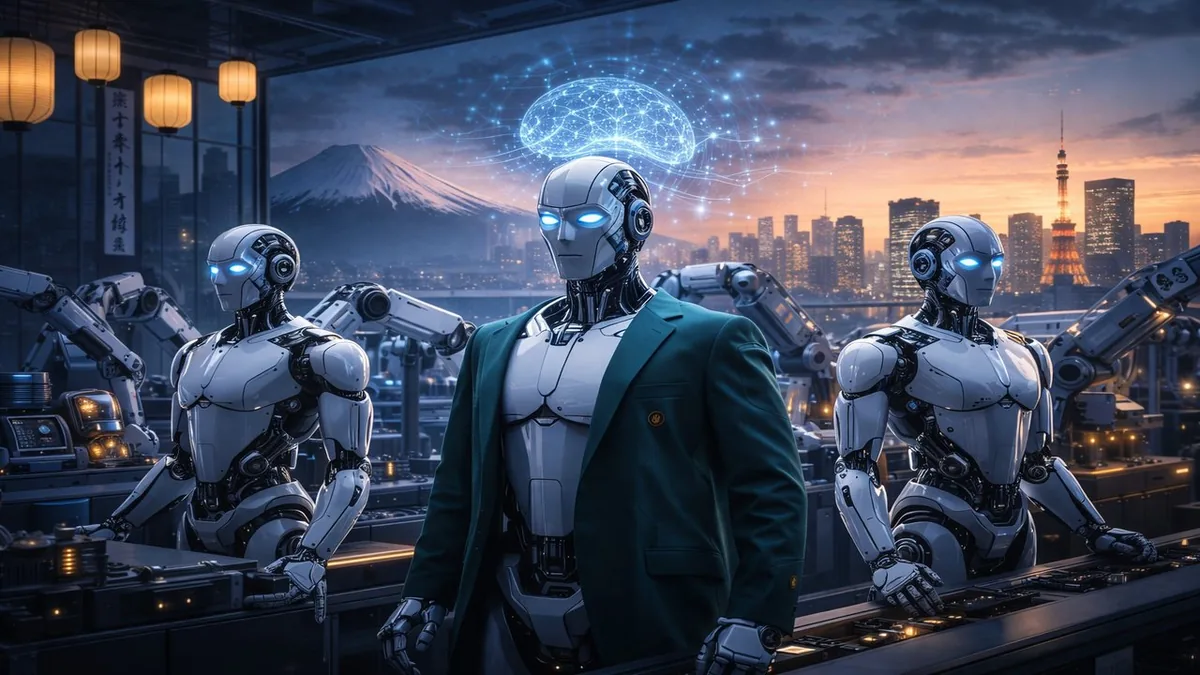
Ten of Japan's most powerful technology and industrial companies — including SoftBank, Sony, and Honda — have joined forces to develop a 1-trillion-parameter AI model purpose-built for physical AI applications, Nikkei Asia reported. The consortium marks Japan's most ambitious coordinated push into frontier AI development, targeting the kind of large-scale model that underpins robots, autonomous vehicles, and industrial automation. The initiative comes as Japan accelerates its broader semiconductor and AI investment strategy, having already committed $16.3 billion to chipmaker Rapidus for advanced domestic chip production.
Why Physical AI Requires a Different Kind of Model
Physical AI — AI that perceives and acts in the real world through robots, vehicles, and industrial systems — places demands on foundation models that are fundamentally different from text or image generation. These systems require real-time environmental understanding, precise motor control outputs, and the ability to generalize from simulated training to unpredictable real-world conditions. A 1-trillion-parameter model is orders of magnitude larger than most current robotics foundation models, suggesting the consortium is aiming for a system capable of powering a broad range of physical applications from a single unified base.
The involvement of Honda — one of the world's leading robotics companies through its ASIMO program and ongoing humanoid development — alongside Sony, which produces robotic entertainment and industrial systems, and SoftBank, which owns Boston Dynamics-adjacent Pepper robotics assets, gives the consortium direct hardware deployment pathways for whatever model they develop. Unlike US frontier lab models built primarily for software applications, this consortium is wiring its AI development directly into companies that build physical machines.
Japan's Dual-Track AI Strategy
The consortium model reflects Japan's broader approach to AI competitiveness: rather than trying to build a single national champion to compete head-on with OpenAI or Anthropic, Japan is pursuing a coordinated industrial consortium that distributes development costs across multiple companies while giving all participants shared access to the resulting capability. The Rapidus semiconductor initiative follows the same logic — state anchor investment, corporate consortium, shared strategic asset. Together, the chip and model strategies give Japan a theoretically self-sufficient physical AI stack: domestic chips from Rapidus feeding models from the consortium into robots from Honda, Sony, and others. Whether execution can match the ambition is the key open question for a country that has struggled to translate industrial coordination into software leadership.
Frequently Asked Questions
Which companies are in Japan's AI consortium?
The consortium includes SoftBank, Sony, Honda, and eight additional Japanese technology and industrial companies. The 1-trillion-parameter physical AI model they are jointly developing targets robotics, autonomous vehicles, and industrial automation applications.
What is physical AI?
Physical AI refers to AI systems that perceive and act in the real world — powering robots, autonomous vehicles, drones, and industrial machines — rather than operating purely in software environments like chatbots or image generators. Physical AI requires real-time environmental understanding and precise control outputs.
How does this relate to Japan's Rapidus chip initiative?
The AI consortium and Rapidus represent two complementary pillars of Japan's national AI strategy — domestic chips from Rapidus to train and run frontier models, and frontier models from the consortium to power physical AI applications built by Japanese manufacturers.
The Bottom Line
Japan's ten-company AI consortium targeting a 1-trillion-parameter physical AI model is the most significant coordinated AI development effort Japan has launched. The combination of SoftBank's capital, Sony's hardware and entertainment assets, Honda's robotics expertise, and eight other industrial companies creates a development entity with both the funding and the deployment pathways to make a 1T physical AI model commercially meaningful. The real test is execution — Japan has a long history of industrial coordination and a shorter history of software leadership. This bet is that physical AI is where those two tracks finally converge.