Intel Joins Elon Musk's Terafab: The $20B AI Chip Megaproject With Tesla, SpaceX, and xAI
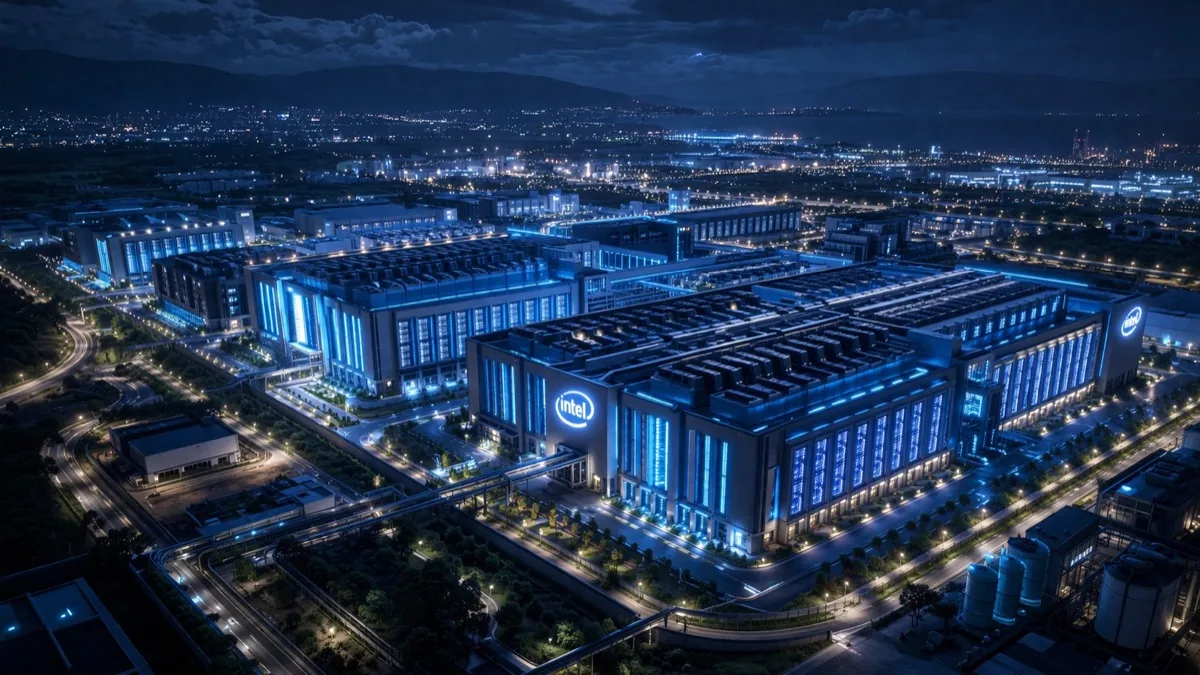
Intel has officially joined Elon Musk's Terafab project — alongside Tesla, SpaceX, and xAI — in what could be the most ambitious semiconductor manufacturing initiative ever attempted. The goal: produce 1 terawatt of AI compute per year, targeting 1 million wafer starts per month using Intel's 2nm process technology. Intel stock surged more than 3% on the announcement.
What Is Terafab?
Terafab was unveiled by Elon Musk on March 21, 2026 at Austin's historic Seaholm Power Plant. Musk described it as "the most epic chip-building exercise in history." The concept: consolidate every stage of semiconductor production — chip design, lithography, fabrication, memory, advanced packaging, and testing — under one roof, at unprecedented scale.
The name comes from the target output: one terawatt (1 TW) of AI compute capacity per year. To put that in context, the entire global AI chip market today produces a fraction of that annually.
Intel's Role
Intel's official statement was clear: "Intel is proud to join the Terafab project with @SpaceX, @xAI, and @Tesla to help refactor silicon fab technology. Our ability to design, fabricate, and package ultra-high-performance chips at scale will help accelerate Terafab's aim to produce 1 TW/year of compute."
Intel CEO Lip-Bu Tan added: "Elon has a proven track record of reimagining entire industries. This is exactly what is needed in semiconductor manufacturing today."
Critically, Tesla won't build its own chip fab — Intel is the foundry. Tesla provides the AI compute demand (for FSD, Cybercab robotaxis, and Optimus humanoid robots); Intel provides the manufacturing infrastructure.
Scale and Timeline
| Metric | Target |
|---|---|
| Initial phase | 100,000 wafer starts/month at 2nm |
| Full scale | 1 million wafer starts/month |
| Annual chip output | 100–200 billion custom AI chips |
| Investment | ~$20–25 billion (initial phase) |
| Location | North Campus of Giga Texas, Austin |
| Compute target | 1 terawatt/year of AI compute |
Why This Matters for Intel
For Intel CEO Lip-Bu Tan, this is validation of his "Foundry First" pivot. Intel has been losing ground to TSMC for years and has struggled to land major anchor customers for its foundry services. Terafab could be that anchor — and it's entirely U.S.-based.
It also directly challenges TSMC's dominance. By using Intel's American fabs instead of TSMC's Taiwan facilities, Musk is making a geopolitical bet on domestic chip manufacturing that aligns with the broader U.S. push to onshore semiconductor production.
Why This Matters for the AI Industry
The real wildcard is compute economics. If Terafab delivers 1 TW/year of compute capacity, it would exert massive downward pressure on AI chip prices — directly disrupting Nvidia's current high-margin GPU business model.
Tesla's demand side is clear: every Cybercab robotaxi needs custom AI chips, every Optimus robot needs AI inference capacity, and as AI models like GLM-5.1 push toward 8 hours of autonomous compute, the demand curve keeps rising.
There's also a recursive element: Musk has said Optimus humanoid robots will help build and operate the Terafab facility — AI chips helping build the robots that build more AI chips.
The Bigger Picture
Terafab represents a bet that the AI compute race will be won by whoever controls fabrication, not just chip design. As companies like Anthropic hit $30B in revenue running on third-party compute, the companies that own the physical chip stack will have an enormous strategic advantage.
Intel's joining — announced just 17 days after Musk unveiled the project — signals this is moving fast from concept to reality. For Intel shareholders, it's a lifeline. For the AI industry, it's a warning shot at Nvidia, TSMC, and the current compute oligopoly.