India-US Trade Deal Protects Farmers While Expanding Agricultural Exports
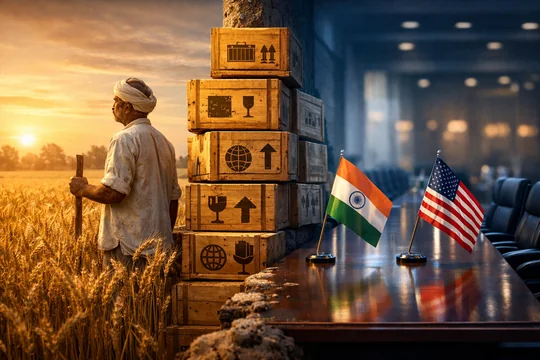
The India-US Bilateral Trade Agreement marks what both sides are calling a transformative moment in trade relations. At its core, the deal promises to protect Indian farmers and domestic producers while simultaneously expanding export opportunities — a balancing act that trade negotiators rarely pull off cleanly.
What the Deal Actually Does
India currently maintains a trade surplus of over $1.3 billion in agricultural trade with the United States. The new agreement aims to consolidate and grow that position through a three-pillar framework: enhanced market access, tariff stability, and safeguards for sensitive domestic products.
The approach is designed to ensure trade remains complementary to domestic priorities rather than disruptive — a principle that sounds elegant on paper but will face real-world testing when competing interests collide.
Zero Tariffs on Forestry Products
One of the most concrete provisions is the placement of forestry-linked products under zero reciprocal tariff. These include:
- Vegetable plaiting materials
- Vegetable waxes and saps
- Bleached beeswax
- Bamboo shoots
- Various nuts
This move is expected to strengthen income streams for forest-dependent and tribal communities, while promoting agroforestry and allied rural activities. For communities that have historically been on the margins of India's economic growth story, direct tariff-free access to the American market could be genuinely transformative.
The Three-Pillar Framework
India's negotiating approach rests on three pillars:
1. Market Access: Expanded duty access for several farm and processed food products, giving Indian exporters clearer pathways into American markets.
2. Tariff Stability: Predictable tariff structures that allow farmers and producers to plan long-term rather than react to sudden policy shifts.
3. Domestic Safeguards: Protection mechanisms for sensitive products, ensuring that increased trade doesn't undercut Indian farmers in their own markets.
Who Benefits Most
The immediate beneficiaries are Indian agricultural exporters who gain reduced tariffs and improved market access. Processed food producers stand to gain from new duty access provisions. And forest-dependent communities — including tribal populations — benefit from zero-tariff access for their products.
For farmers more broadly, the deal promises stable domestic markets alongside growing export potential. The combination of protection at home and opportunity abroad is the ideal outcome, if the framework holds under pressure.
The Real Test Ahead
Trade agreements are only as good as their implementation and durability. The $1.3 billion agricultural surplus is a strong starting position, but maintaining it requires constant vigilance. The real questions will emerge when the US inevitably pushes for greater access in more sensitive categories — dairy, grains, and genetically modified crops have historically been flashpoints in India-US agricultural trade.
The three-pillar framework sounds robust in a press release. Whether it holds when confronted with American agricultural lobbying and election-cycle trade politics is another matter entirely.
The Bottom Line
This trade agreement represents smart positioning by Indian negotiators — expanding exports in areas of strength while maintaining protective barriers where needed. The zero-tariff provisions for forestry products could deliver real income gains to some of India's most economically vulnerable communities. But the long game in India-US agricultural trade has always been about what comes next, not what's on the table today. The framework is in place. The pressure will follow.