India Launches World's First Digital Currency-Based Food Ration System
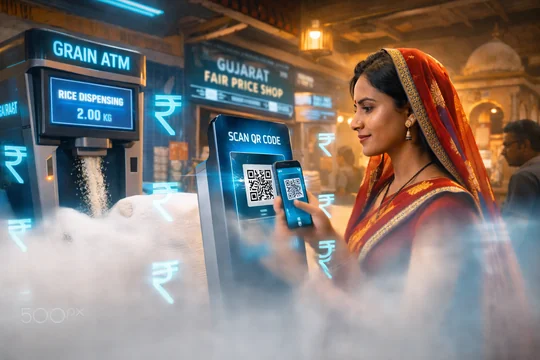
In a landmark move that could reshape how governments deliver welfare benefits globally, India has launched the world's first Central Bank Digital Currency (CBDC)-based Public Distribution System (PDS). Union Home Minister Amit Shah inaugurated the pilot program in Gandhinagar, Gujarat, on February 14, 2026, marking a significant milestone in India's digital currency journey.
How the CBDC-Based Ration System Works
The system, developed by Punjab National Bank (PNB) in partnership with the Reserve Bank of India (RBI), replaces traditional cash-based food grain subsidies with digital rupee tokens. Here's how it works:
- Digital tokens are credited directly to beneficiaries' mobile wallets linked to their Aadhaar identity
- Smartphone users scan QR codes at fair price shops to redeem their grain entitlements
- Feature phone users receive OTP-based authentication through their Aadhaar-linked mobile numbers
- Transactions are instant and recorded on the CBDC network, eliminating middlemen and corruption
The Pilot Program: Scale and Scope
The initial pilot covers 26,333 families across four districts in Gujarat — the Sabarmati zone in Ahmedabad, along with Surat, Anand, and Valsad. While the numbers may seem modest, the implications are enormous. India's Public Distribution System serves approximately 800 million people under the Pradhan Mantri Garib Kalyan Anna Yojana (PMGKAY), making it the largest food welfare program in the world.
The pilot is also being extended to Chandigarh and Puducherry, with plans for nationwide rollout based on results.
Annapurti Grain ATM: A Game-Changer
Alongside the CBDC-based PDS, Shah also launched the "Annapurti Grain ATM" — an automated machine that dispenses up to 25 kilograms of grain in just 35 seconds. This innovation addresses one of the biggest pain points of the traditional system: long queues and manual weighing at ration shops.
Gujarat has also begun distributing tur dal and chana (lentils) in sealed 1-kilogram packets through the PDS, further modernizing the supply chain.
India's CBDC Momentum
India's digital rupee initiative has been gaining steady traction. The country currently has approximately 7 million CBDC users across 19 participating banks. While adoption has been gradual, this PDS integration represents the most compelling real-world use case for a central bank digital currency anywhere in the world.
Unlike cryptocurrency projects that often struggle to find practical applications, India's approach ties the digital rupee directly to welfare delivery — ensuring that the technology serves the people who need it most.
Why This Matters Globally
Several countries are experimenting with CBDCs, including China's digital yuan and the European Central Bank's digital euro project. However, none have attempted to integrate digital currency with food welfare at this scale. India's pilot could serve as a blueprint for other developing nations looking to modernize their welfare delivery systems.
The combination of CBDC technology with Aadhaar biometric authentication and mobile wallets creates a uniquely Indian solution that leverages the country's existing digital infrastructure — including the Unified Payments Interface (UPI) ecosystem that already processes billions of transactions monthly.
Challenges Ahead
Despite the promise, several challenges remain:
- Digital literacy: Many PDS beneficiaries in rural areas may struggle with the new technology
- Connectivity: Reliable internet access is still limited in some regions where PDS is most needed
- Feature phone limitations: While OTP-based authentication is a workaround, the experience may not be as seamless
- Scalability: Moving from 26,000 families to 800 million beneficiaries is a massive undertaking
However, India has a track record of executing large-scale digital programs — from Aadhaar enrollment to UPI adoption — that suggests these challenges are surmountable.
The Bottom Line
India has effectively turned food rations into a fintech problem and is solving it with digital currency. The CBDC-based PDS pilot represents the most ambitious real-world application of central bank digital currency globally. If successful, it could transform how 800 million Indians access their food entitlements — and provide a model for digital welfare delivery worldwide.