India Launches VoicERA: An Open-Source Voice AI Stack for 22 Languages and 700+ Dialects
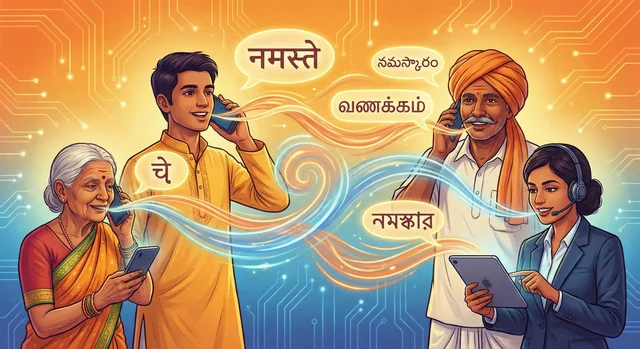
India took a significant step toward building a voice-first digital ecosystem this week, unveiling a comprehensive policy report, a developers' toolkit, and an open-source Voice AI platform called VoicERA at the India AI Impact Summit 2026 in New Delhi. The initiative, led by the Digital India BHASHINI Division under the Ministry of Electronics and Information Technology, aims to make voice the foundational layer of the country's Digital Public Infrastructure.
What Is VoicERA?
VoicERA is an open-source, end-to-end Voice AI stack deployed on the BHASHINI National Language Infrastructure. Developed in collaboration with EkStep Foundation, the Centre for Open Societal Systems, IIIT Bengaluru, and AI4Bharat, the platform is designed to be open, pluggable, interoperable, and deployable both on cloud and on-premise.
This means government departments and research institutions can build voice-enabled services without reconstructing entire technology stacks from scratch — a critical advantage in a country where digital infrastructure varies dramatically between urban centers and rural regions.
22 Languages, 700+ Dialects
The platform targets applications across India's 22 constitutionally recognized languages and more than 700 dialects. Use cases include agriculture advisories, education support, grievance redressal, and government scheme discovery — services that could transform daily life for hundreds of millions of citizens for whom literacy or language remains a barrier to engaging with technology.
"In a country of immense linguistic diversity, voice technologies are not merely an innovation — they are an instrument of digital inclusion," said Amitabh Nag, CEO of the Digital India BHASHINI Division.
Speech Datasets as Digital Public Goods
The accompanying policy report proposes a bold framework: treating foundational speech datasets as digital public goods — not corporate assets, not proprietary models, but shared resources for the entire ecosystem. Additional recommendations include improving openness and representativeness of speech models, investing in sustainable public infrastructure for speech AI, and embedding safeguards against misuse.
The Developers' Toolkit
The developers' toolkit identifies challenges faced by those building voice applications in Indian languages, including uneven data representation, weak quality assurance, and fragmented governance structures. Curated through consultations with linguists, AI ethicists, and technical experts, it offers a lifecycle-oriented framework covering everything from data collection and model development to deployment and governance.
Global Recognition: The New Delhi Declaration
The launches came during the broader India AI Impact Summit 2026, which concluded with the adoption of the New Delhi Declaration endorsed by 88 countries and international organizations. Dr. Ariane Hildebrandt, Director-General at Germany's Federal Ministry for Economic Cooperation and Development, noted that "when voice AI works in local languages and dialects, it becomes a gateway to public services, health care, education, and economic participation."
The Bottom Line
India is applying the same playbook that made UPI a global payments phenomenon — treating critical technology as public digital infrastructure rather than a private market. VoicERA represents a bet that voice, not text, will be the primary interface for the next billion internet users. In a country where hundreds of millions of people speak languages that most AI models barely understand, this isn't just a technology initiative. It's an accessibility revolution.