India AI Infrastructure: Blackstone’s $1.2B Bet
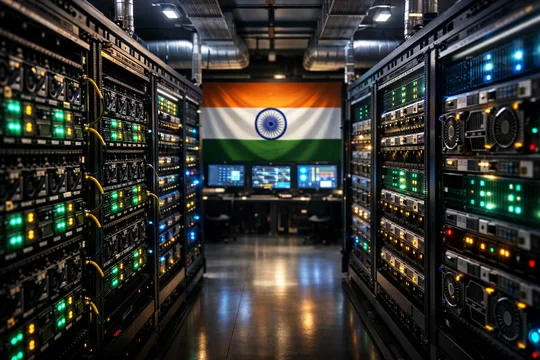
India AI Infrastructure: Why Blackstone’s Bet Matters
India’s AI ambitions just got a serious capital injection. Blackstone is backing Mumbai-based startup Neysa with up to $1.2 billion in combined equity and debt financing—one of the largest commitments to India AI infrastructure to date.
This isn’t just another funding round. It’s a signal that global capital sees India as the next major frontier for AI compute.
Key Facts Behind the Deal
Here’s what happened:
-
Blackstone and co-investors will invest up to $600 million in primary equity, giving Blackstone a majority stake in Neysa.
-
Neysa plans to raise another $600 million in debt.
-
The startup currently operates about 1,200 GPUs and aims to scale beyond 20,000.
-
India reportedly has fewer than 60,000 GPUs deployed today, but that number could grow to more than two million in the coming years.
-
Neysa focuses on GPU-first infrastructure tailored for enterprises, government agencies, and AI developers.
In short: capital is flowing into domestic AI compute capacity at a scale India hasn’t seen before.
The Bigger Picture: Why India AI Infrastructure Is Strategic
This deal isn’t just about one startup. It reflects three deeper shifts in global AI.
1. AI Compute Is the New Oil
Training and running advanced AI models requires massive GPU clusters. But supply is tight worldwide. Enterprises are struggling to access chips, networking, and specialized data center capacity.
India has a massive developer base and one of the largest AI user markets. Yet most advanced workloads still rely on foreign hyperscalers. That creates:
-
Latency issues
-
Data sovereignty concerns
-
Regulatory friction
Investing in India AI infrastructure reduces dependence on overseas compute hubs and aligns with the government’s push for digital self-reliance.
2. Regulated Industries Need Local Clouds
Sectors like banking, healthcare, and public services must keep sensitive data within national borders. That’s driving demand for GPU cloud providers in India that can guarantee local hosting.
Neysa’s CEO noted that customers want hands-on support and fast response times—something hyperscalers don’t always provide. This “high-touch AI cloud” model may be a competitive advantage in emerging markets.
3. Private Equity Is Chasing AI Data Center Investment in India
Blackstone has already invested globally in data centers and AI infrastructure. Its move into India signals confidence that:
-
AI workloads will surge locally
-
Enterprise demand is real, not speculative
-
Domestic platforms can scale to global standards
When institutional capital enters early-stage infrastructure markets, it usually means long-term conviction—not hype.
Why This Matters to Founders, Enterprises, and Investors
If you’re building in AI, this shift changes the playing field.
For AI Startups
Local compute reduces dependency on U.S.-based clouds. That could mean:
-
Lower latency for Indian users
-
Better compliance with data rules
-
Faster deployment cycles
Over time, we may see more AI-first startups choosing India as a primary launch market—not just a support base.
For Enterprises
Large companies exploring generative AI often stall because infrastructure is complex. A domestic AI compute provider offering managed support could accelerate adoption.
That’s especially important in regulated sectors where experimentation must happen within compliance guardrails.
For Investors
The projection from tens of thousands of GPUs to potentially millions suggests infrastructure demand could multiply rapidly. If that growth materializes, early movers in AI data center investment in India could capture significant value.
However, scaling GPU clusters isn’t easy. It requires:
-
Reliable chip supply
-
High-performance networking
-
Massive energy capacity
-
Advanced cooling systems
-
Skilled engineering talent
Capital alone doesn’t guarantee execution.
What Happens Next?
Several outcomes seem likely over the next 3–5 years:
1. More Neo-Cloud Players Will Emerge
We’ll see more specialized GPU cloud providers in India targeting niche verticals—defense, fintech, healthcare AI.
2. Hyperscalers Will Localize Further
Global cloud giants won’t sit still. Expect expanded India regions and AI-optimized offerings.
3. Policy Will Play a Bigger Role
Government procurement and national AI programs could accelerate demand. If public sector projects anchor early usage, private adoption may follow faster.
4. Consolidation Is Inevitable
Not every infrastructure startup will survive. Scale advantages and capital intensity will favor a few dominant players.
The real question isn’t whether India AI infrastructure will grow. It’s who will control it.
The Long-Term View
AI innovation doesn’t just depend on algorithms—it depends on compute. Countries that control their AI infrastructure shape their digital futures.
Blackstone’s bet suggests that India isn’t just a consumer of AI—it aims to be a producer, operator, and exporter of AI capability.
If Neysa and similar platforms execute well, this moment could mark the beginning of India’s transition from AI talent hub to AI infrastructure powerhouse.
And that’s a far bigger story than a funding announcement.