Huawei Launches Pura X Max: A Passport-Style Foldable with 7.7-Inch Display
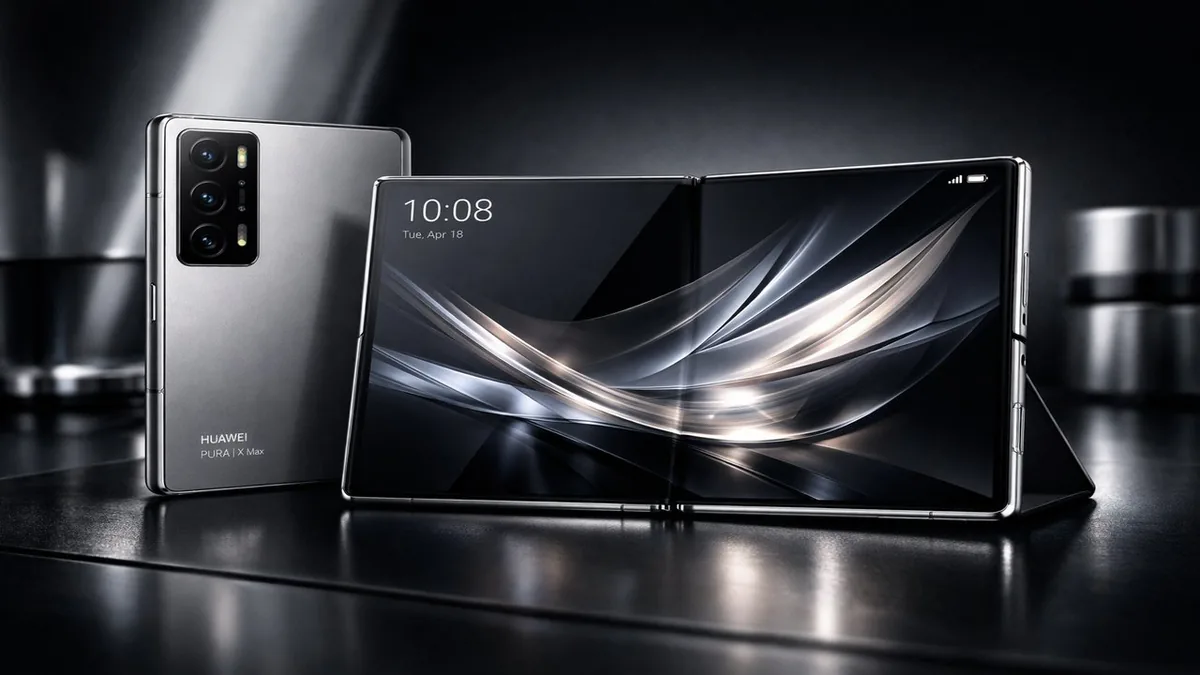
Huawei has launched the Pura X Max, a new passport-style foldable smartphone that represents the company's most ambitious form factor experiment to date. The device features a 5.4-inch cover display and unfolds to reveal a 7.7-inch internal display, offering a horizontally oriented foldable form factor that differentiates it from the vertically folding clamshell designs dominant in the foldable market. The Pura X Max launches in China starting at approximately $1,613.
The Passport Form Factor
Unlike most foldables that fold vertically (like a clamshell) or horizontally to create a wider tablet-style screen, the Pura X Max uses a landscape-oriented folding design similar to a passport or small notebook. When closed, the 5.4-inch cover display is wider than tall — an unusual configuration that Huawei says is optimized for media consumption and reading. When unfolded, the 7.7-inch display provides a premium tablet-like experience in a remarkably thin package.
Specifications and Features
The Pura X Max runs Huawei's in-house Kirin chipset, which the company has continued to develop despite U.S. semiconductor export restrictions. The device features Huawei's latest camera system, the company's HarmonyOS operating system, and 5G connectivity. The premium price point positions it as a luxury tech statement piece competing with Samsung's Galaxy Z Fold series and Google's Pixel Fold.
Huawei's Strategic Context
The Pura X Max launch is part of Huawei's ongoing strategy to maintain premium brand positioning in China despite being cut off from Google services and Western semiconductor supply chains. The company has invested heavily in developing domestic alternatives — Kirin chips, HarmonyOS, and its own app ecosystem — and continues to release headline-grabbing devices to demonstrate that it remains a technology innovator rather than a declining casualty of U.S. sanctions.
The Bottom Line
The Pura X Max is a genuinely interesting form factor experiment from Huawei. Whether the passport-style folding wins consumer adoption is uncertain, but it demonstrates Huawei's willingness to take design risks that Samsung and Google have not. Watch for it to influence foldable form factor experimentation across the Android ecosystem over the next 12–18 months.