How Top UX Agencies in New York Actually Think About Product Work
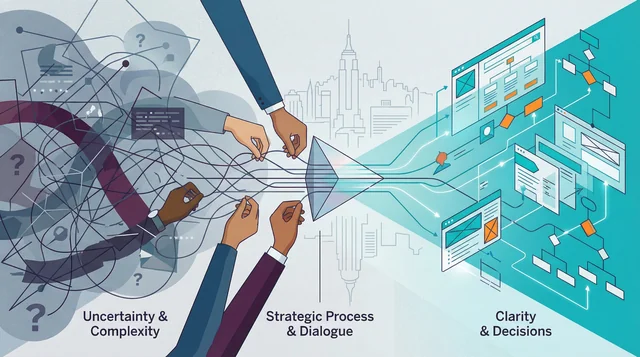
People often talk about UX design as if it’s a clearly defined service. In reality, it’s closer to a working style. You notice it not in frameworks or deliverables, but in how teams behave when things get unclear—which they almost always do.
New York is full of talented designers. That alone doesn’t explain why certain agencies consistently get repeat work while others struggle to move beyond one-off engagements. The difference usually comes down to how teams think about products, not how they present themselves.
When companies look for top ux agencies, they’re rarely just shopping for screens. They’re trying to reduce risk. Missed assumptions. Poor adoption. Internal confusion. A good UX partner doesn’t eliminate those risks entirely, but they surface them early, when changes are still possible.
That mindset is what separates competent execution from work that actually holds up.
Strong agencies design decisions, not just interfaces
A common misconception is that UX agencies are hired to “make things easier to use.” That’s part of the job, but it’s not the core value. The real contribution is decision-making support.
Every product is full of decisions that compete with each other. Speed versus clarity. Flexibility versus simplicity. Power users versus first-time users. There’s no universal right answer, only trade-offs.
Top teams are explicit about those trade-offs. They don’t hide them behind visual polish or generic best practices. They talk through consequences. They document reasoning. They make it easier for stakeholders to understand why something was designed a certain way—even if they disagree.
This approach is especially important in New York environments, where products evolve quickly and teams change often. Design decisions that aren’t well explained tend to get undone later, usually at a cost.
Process is a tool, not a promise
Most agencies will show you a structured process. Workshops, discovery, ideation, testing, delivery. The outline itself isn’t meaningful. What matters is how rigidly it’s applied.
In real projects, priorities shift. New information comes in late. Technical constraints appear halfway through design. Teams that insist on following a predefined process at all costs usually struggle in those moments.
The more experienced agencies treat process as a tool, not a promise. They adjust it as conditions change. Sometimes that means skipping steps. Other times it means revisiting work that was assumed to be done.
You can hear this flexibility in the way they talk. Less “this is how we always do it,” more “this is what makes sense here.” That difference sounds small, but it affects everything downstream.
Why location still matters in a remote world
It’s easy to assume geography no longer matters. In theory, great design can happen anywhere. In practice, local context still plays a role—especially in New York.
Many companies here operate under pressure from investors, regulators, or competitive markets that move fast. Timelines are tight. Stakeholders are opinionated. Meetings are direct. Agencies used to this environment tend to communicate differently.
They get to the point faster. They ask sharper questions. They’re comfortable pushing back without over-explaining. That alignment reduces friction, even when teams are distributed.
This is one reason why companies still prioritize top design agencies in new york when stakes are high. Not for proximity, but for shared operating norms.
Research is only useful if it changes something
User research is widely discussed and frequently underused. Many teams collect insights, create slide decks, and then proceed with decisions that ignore most of what was learned.
The strongest UX agencies don’t treat research as a phase. They treat it as leverage. Findings are tied directly to design decisions. When something from research doesn’t influence the outcome, they’re clear about why.
This clarity prevents a common failure mode: research theater. Interviews conducted to validate a direction that was already chosen. Personas created but never referenced again.
Instead, good teams keep research lightweight and relevant. Fewer artifacts. More impact.
Collaboration reveals maturity quickly
You can learn a lot about an agency by how collaboration feels in the first few weeks. Are conversations focused? Do they listen carefully before responding? Are notes and next steps clear?
Mature teams respect that clients have limited time and attention. They don’t overload meetings with unnecessary detail, but they also don’t gloss over important decisions. There’s a balance.
This matters because UX work sits between disciplines. Product, engineering, marketing, leadership. Agencies that can translate between those groups reduce internal strain. Ones that can’t often create more work for everyone else.
When collaboration works well, design becomes a stabilizing force rather than another moving part.
Industry experience helps—but curiosity matters more
Agencies often highlight vertical experience. Fintech. Healthcare. SaaS. E-commerce. Familiarity does help, especially with regulatory or technical constraints.
But there’s a risk in leaning too heavily on past patterns. What worked for one product doesn’t automatically apply to another. Assumptions carry over easily, sometimes without being questioned.
The better signal is curiosity. Teams that ask basic questions even in familiar industries tend to uncover differences that matter. Teams that rely on templates tend to miss them.
This is where working with a thoughtful ui ux design company pays off. Not because they’ve “seen it all,” but because they don’t assume they have.
Metrics are part of the design conversation
UX isn’t separate from performance. Good agencies understand that, and they’re comfortable discussing metrics—not just aesthetics.
That doesn’t mean every project needs a complex analytics setup. It means design decisions are tied to outcomes. Conversion, retention, task success, error rates. Something concrete.
When agencies avoid these conversations entirely, it’s usually because they’re not confident in how their work performs beyond first impressions. Teams with experience don’t shy away from accountability, even when results are mixed.
They know that honest evaluation builds trust over time.
Cost conversations reflect values
Budget discussions reveal more than pricing. They show how an agency thinks about scope, risk, and responsibility.
Some studios underprice to win work, then compensate by cutting corners or pushing change orders. Others price conservatively and explain why—not to upsell, but to protect the work.
The second approach is usually safer. It signals long-term thinking. A willingness to say no. An understanding that UX shortcuts often lead to rework later.
In New York, where projects move fast and expectations are high, that discipline matters.
Choosing a partner is a judgment call
There’s no checklist that guarantees the right choice. Portfolios can mislead. References can be selective. Chemistry can feel right and still fall apart under pressure.
What helps is paying attention to how teams think out loud. How they respond to uncertainty. Whether they ask questions that challenge your assumptions or simply reinforce them.
Strong UX agencies don’t promise certainty. They offer clarity where it’s possible and honesty where it isn’t. Over time, that’s what keeps products from drifting—and teams from burning out.
The rest tends to follow naturally.