How to Actually Get Better Answers from AI Chatbots (Most Tips Don't Work)
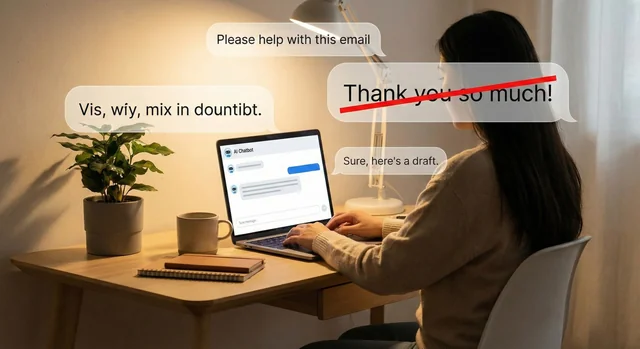
When researchers tested whether calling an AI "smart" or telling it "This will be fun!" improved its accuracy, the results were clear: it made no consistent difference. But one bizarre technique did stand out — when they made an AI pretend it was on Star Trek, it got better at basic maths.
That's the state of "prompt engineering" in 2026: a mix of folklore, wishful thinking, and occasional surprises. BBC Future spoke to AI researchers and experts to separate what actually works from what doesn't.
Most Popular Techniques Don't Work
People have tried everything to get better answers from large language models (LLMs): flattery, politeness, threats, role-playing as experts, even insulting the AI. According to experts, most of it is a waste of time — especially with modern models.
"It was 100% a crapshoot back then," says Rick Battle, an applied machine learning engineer at Broadcom who co-authored the Star Trek study. "Today, the newer AI models are better at picking up the most important parts of your prompt. They probably won't be swayed by these small changes in language."
One 2024 study found LLMs gave better answers when asked politely. Another small test found a previous version of ChatGPT was more accurate when insulted. The research is conflicting, inconclusive, and quickly goes out of date as AI companies constantly update their models.
Stop Treating AI Like a Person
The core mistake people make is anthropomorphising AI tools. Companies design chatbots to feel like people — and it works too well. 70% of users are polite to AI (2025 survey), and 12% say they're nice to protect themselves from robot uprisings.
Sam Altman, CEO of OpenAI, even responded to a tweet about this, suggesting OpenAI has spent "tens of millions of dollars" in electricity costs from users saying please and thank you.
"Don't be fooled. AI tools are mimics, not living beings," says Battle. "If you want better answers, stop treating AI like a person and start treating it like a tool."
What Actually Works: 5 Proven Tips
Here's what AI experts actually recommend:
1. Ask for multiple options
"The first thing I tell people is don't ask for one answer, ask for three or five," says Jules White, a computer science professor at Vanderbilt University. Asking for multiple variations forces you to re-engage and think about what you actually want.
2. Give examples
Instead of describing what you want, show the AI what you want. If you want an email written in your style, share 10 past emails. Examples are far more effective than a list of "do this, don't do that" instructions.
3. Let AI interview you
Tell the AI to ask you questions one at a time until it has enough information. "By doing it one question at a time, it can adapt to your answers," says White. This works especially well for complex tasks like writing job descriptions or planning projects.
4. Be careful with role-playing
Telling an AI it's a "maths professor" or "expert doctor" can actually make it less accurate for factual questions — it encourages overconfidence and hallucination. Role-playing works well for open-ended tasks like brainstorming, practice interviews, or creative writing, but avoid it when you need accurate information.
5. Stay neutral
"Don't lead the witness," says Battle. If you're comparing two options, don't tell the AI which one you're leaning towards — you'll just get confirmation of your existing preference.
Should You Still Say Please?
Politeness won't make AI more accurate, but it might make you more comfortable using it — which could indirectly help. There's also a philosophical argument: being habitually rude to anything, even software, may reinforce habits that carry into human interactions.
"The bigger thing for me is saying 'please' and 'thank you' might make you more comfortable interacting with the AI," says Sander Schulhoff, an entrepreneur who helped popularise prompt engineering. "It's not helping the performance of the model, but if it's helping you use the model more, then it's useful."
Bottom Line
The best prompts aren't about magic words — they're about clearly expressing what you need. Ask for options, give examples, let the AI ask you questions, stay neutral, and skip the flattery. The more efficiently you communicate, the better your results — and the less energy you waste on both ends.