How Kodiak and Bosch Are Scaling Autonomous Trucking Tech
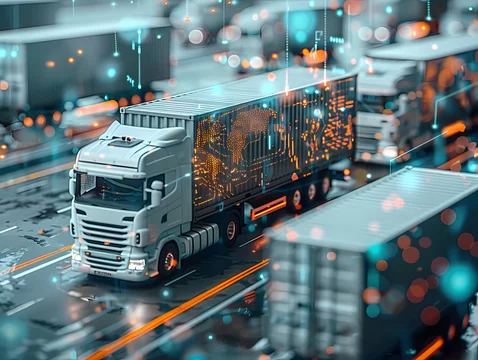
Autonomous Trucking Hits a New Scaling Phase With Kodiak and Bosch
Self-driving truck startup Kodiak AI has partnered with automotive giant Bosch to accelerate the rollout of autonomous trucking technology. On the surface, this looks like another industry collaboration. In reality, it signals a shift from experimental pilots to mass-market deployment.
The big question isn’t if autonomous trucking will scale—it’s how fast and who will make it practical. This partnership offers clues.
Key Facts: What Was Announced and Why It Matters
Kodiak AI and Bosch revealed their collaboration at the 2026 Consumer Electronics Show in Las Vegas. The goal is to jointly develop a modular hardware-and-software system that can convert standard semi-trucks into autonomous vehicles.
Key points to know:
-
Kodiak provides the autonomous driving software and system design
-
Bosch supplies production-grade hardware like sensors and steering systems
-
The solution works across truck manufacturers, not just one brand
-
Systems can be installed on factory lines or added later by upfitters
Kodiak already operates driverless trucks in commercial service, including oil field logistics in the Permian Basin. Bosch brings global manufacturing scale and automotive-grade reliability to the equation.
Why This Autonomous Trucking Deal Is a Bigger Deal Than It Sounds
Scaling Has Been the Missing Piece
Most autonomous trucking companies can demo impressive technology. Fewer can manufacture it at scale. Hardware complexity, supply chains, and vehicle integration have slowed the industry.
Bosch changes that equation. Its experience building components for millions of vehicles gives autonomous trucking something it’s lacked: industrial credibility.
From Custom Builds to Repeatable Systems
Kodiak’s early trucks were heavily customized. The new approach focuses on standardized, redundant platforms that can be replicated across fleets. That’s essential for moving beyond pilot programs.
As Kodiak CEO Don Burnette put it, the focus is on “modularity, serviceability, and system-level integration.” In plain terms: easier installs, easier maintenance, and lower long-term costs.
The Market Is Ready, Even If Regulators Aren’t
Labor shortages, rising freight demand, and pressure to improve safety all favor autonomous trucking. While regulation still varies by state, commercial use cases like highways and industrial routes are already viable.
Practical Implications for Fleets and the Industry
For fleet operators, this partnership hints at near-term changes:
-
Lower adoption friction: Trucks won’t need to be built from scratch
-
Vendor flexibility: Fleets aren’t locked into a single OEM
-
Faster deployment: Upfitting existing trucks becomes realistic
For the broader ecosystem, it signals consolidation. Startups with strong software but weak manufacturing will likely seek similar partnerships—or get left behind.
For Bosch, the upside is equally clear. Supplying autonomous trucking hardware positions the company at the center of a fast-growing commercial autonomous vehicles market.
What Comes Next for Autonomous Trucking?
Notably, neither company shared a production timeline. That uncertainty matters. Scaling hardware is one thing; aligning software validation, safety certification, and fleet economics is another.
Still, the direction is clear. Autonomous trucking is moving from proof of concept to repeatable product. Partnerships like this suggest the industry’s next phase will be less about flashy demos and more about boring—but essential—execution.
The winners will be the companies that make autonomy easy to buy, easy to install, and easy to trust.
Conclusion: A Quiet Turning Point for Autonomous Trucking
The Kodiak–Bosch collaboration may not come with a launch date, but it marks a meaningful inflection point. Autonomous trucking is no longer just a startup experiment—it’s becoming an industrialized solution.
As production-grade hardware meets real-world deployments, expect fewer headlines about testing and more about scale. The road to autonomous trucking at mass adoption just got shorter.
FAQ SECTION
Q: What is autonomous trucking?
A: Autonomous trucking refers to commercial trucks that use self-driving systems to operate with little or no human input, primarily on highways or fixed routes, improving safety, efficiency, and labor availability.
Q: Why is the Kodiak and Bosch partnership important?
A: The partnership combines Kodiak’s proven self-driving software with Bosch’s manufacturing scale, addressing one of the biggest barriers to autonomous trucking: reliable, mass-produced hardware.
Q: Can existing trucks be converted to autonomous ones?
A: Yes. According to Kodiak, the new systems can be added during production or retrofitted later by third-party upfitters, making adoption more flexible for fleets.
Q: When will these autonomous trucking systems be available?
A: No timeline has been announced. Both companies confirmed development is underway, but production availability has not yet been disclosed.