How an AI Music Agent Is Transforming Music Creation in 2026

The way musicians, content creators, and producers make music has changed dramatically over the past few years. Yet, the biggest leap may not be the one you have heard about — it is not a smarter synthesizer or a better DAW plugin. It is the rise of the AI Music Agent: a conversational, intelligent system that understands your creative vision, plans every musical element, and composes a complete, broadcast-ready track from a single text description.
In this article we break down what an AI Music Agent actually does, why it is fundamentally different from older music generators, and how platforms built on this technology — such as AI Music Agent — are redefining professional music production.
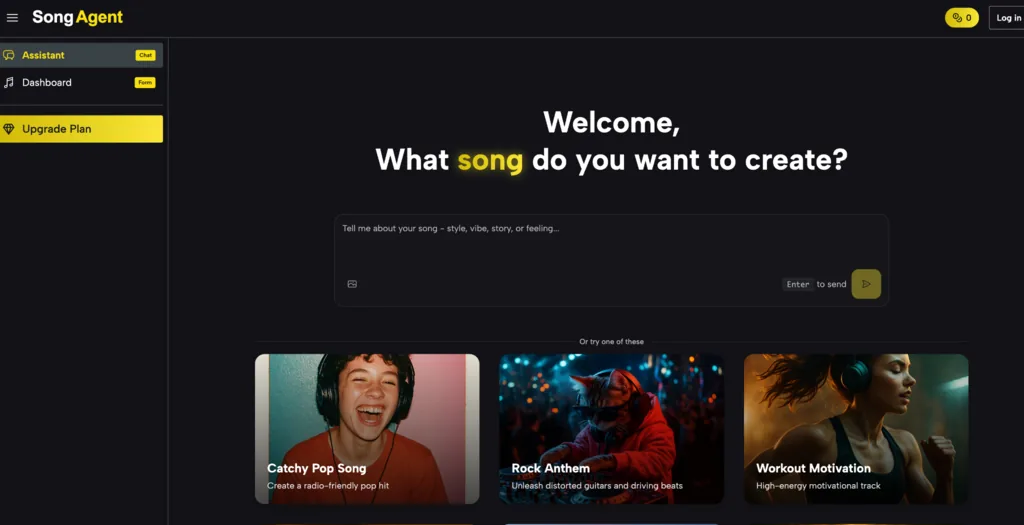
What Exactly Is an AI Music Agent?
A traditional AI music generator works like a slot machine: you press a button and it spits out a random audio clip. An AI Music Agent works more like a session musician who has read every music theory textbook ever written. The difference lies in three core capabilities.
-
Musical Intelligence
Rather than assembling audio fragments at random, a true AI Music Agent analyses your request for genre, mood, emotional arc, and structural intent. It then composes chord progressions, melodies, and arrangements that follow professional music theory — the same principles a conservatory-trained composer would apply.
-
The Musical Blueprint
Before a single note is generated, the AI presents a detailed plan: proposed song structure (intro, verse, chorus, bridge, outro), instrumentation, key signature, tempo, and stylistic reference points. You review and approve the blueprint, so the output matches your creative vision before any rendering time is spent.
-
Iterative Refinement
Once the first version is ready, the conversation continues. You can type "make the chorus more energetic," "swap the electric guitar for strings in the bridge," or "create an instrumental version" and the agent refines accordingly — no export, no re-import, no manual re-editing required.
Key Features That Make an AI Music Agent Powerful
Batch Album Composition
Perhaps the most transformative capability is the ability to compose entire albums rather than single tracks. Describe a ten-song indie rock album with a cohesive theme and the agent orchestrates all ten tracks in parallel, maintaining consistent style and sonic identity across every song. Work that would take weeks in a traditional studio can be done in hours.
Multi-Genre Flexibility
Modern AI Music Agents are trained across a wide spectrum of styles — pop, rock, electronic, orchestral, jazz, lo-fi, hip-hop, ambient, and cinematic scoring. They can also blend genres on demand, giving creators genuinely unique hybrid soundscapes that would be technically difficult to produce manually.
Full Production Pipeline
A well-built AI Music Agent does not stop at composition. It handles arrangement, mixing, and mastering — delivering broadcast-ready files suitable for streaming platforms, sync licensing, film, advertising, and game audio. Advanced features such as track extension, vocal separation, and multiple export formats round out a truly end-to-end workflow.
Copyright-Free Commercial Use
Because the AI generates original compositions rather than remixing existing recordings, every track produced is free of third-party copyright claims. Premium-tier users typically receive full commercial rights — no royalty fees, no attribution requirements — making the music immediately usable in any commercial context.
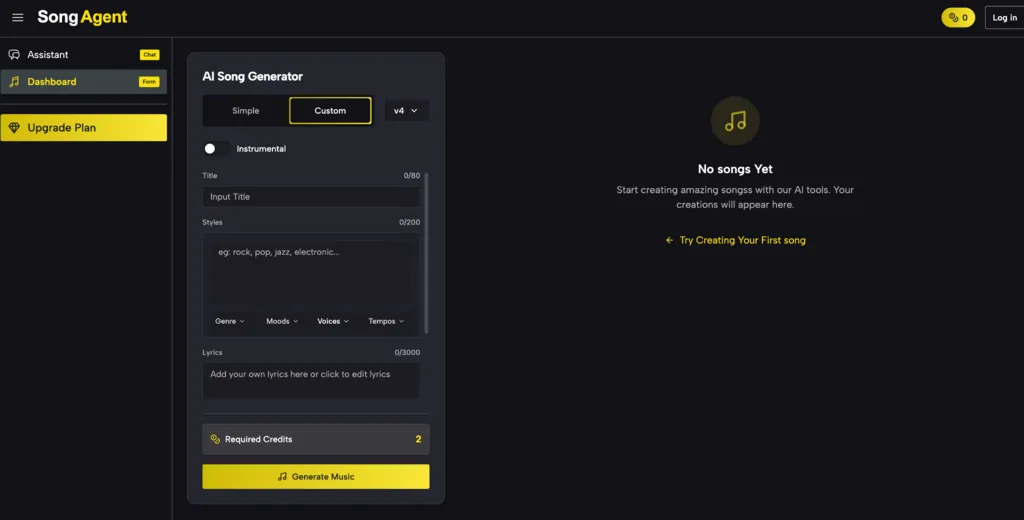
How to Get the Best Results from an AI Music Agent
The quality of your output scales directly with the quality of your prompt. Here are four principles that experienced users follow:
-
Be specific about mood and context: "Uplifting acoustic folk for a travel documentary" will always outperform "happy guitar music."
-
Specify structure when it matters: Mentioning a key signature, BPM range, or song sections ("build to a big chorus at 1:30") gives the agent clear compositional targets.
-
Use the blueprint stage: Do not skip the preview. Catching a misalignment at the plan stage costs nothing; catching it after rendering wastes time.
-
Iterate in conversation: Treat the agent as a collaborator. Small, specific revision requests ("the verse feels too sparse — add a subtle synth pad") produce better results than starting over.
Practical Use Cases Across Industries
The versatility of an AI Music Agent makes it relevant far beyond the recording studio:
-
Content Creators & YouTubers: Generate unique, mood-matched background music for every video without paying per-track licensing fees.
-
Indie Filmmakers & Podcasters: Commission a complete audio brand — intro theme, background beds, stings, and outro — from a single creative brief.
-
Game Developers: Produce looping battle tracks, ambient dungeon music, and triumphant cutscene scores with stylistic consistency across every level.
-
Advertising Agencies: Prototype three or four jingle variations for a client in the time it once took to brief a single composer.
-
Music Producers & Labels: Rapidly prototype new sounds with artists and use the AI as a creative springboard before committing to studio sessions.
-
Wellness & Education Brands: Create long-form ambient meditation series, or catchy educational songs for children, at scale and on demand.
Conclusion
The shift from music generator to AI Song Agent represents one of the most significant changes in music production in decades. The ability to describe a complete musical vision in plain language, review a professional blueprint, and receive a broadcast-quality, royalty-free track — and then refine it through natural conversation — is no longer a distant promise. It is available today.
Whether you are a solo creator looking for affordable background music, a producer accelerating your workflow, or a brand in need of a consistent sonic identity, an AI Music Agent offers a level of creative leverage that was previously impossible outside of a fully-staffed studio. Technology is here. The question is simply what you will create with it.