Hospice Software with Ultimate Buyers' Guide
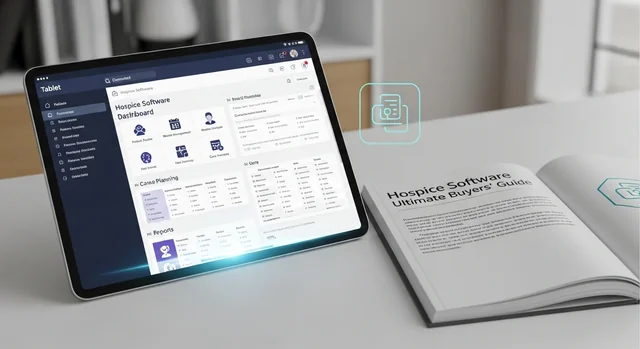
The hospice care industry is experiencing unprecedented transformation in 2025, driven by advanced technologies, evolving patient expectations, and significant regulatory changes. Modern hospice software solutions have evolved far beyond basic charting and billing systems to become comprehensive platforms that leverage artificial intelligence, predictive analytics, and integrated telehealth capabilities to deliver personalized, compassionate end-of-life care.
With the Centers for Medicare & Medicaid Services (CMS) implementing a 2.9% payment increase for hospice services in 2025, organizations are investing more strategically in technology solutions that enhance both operational efficiency and patient outcomes. This comprehensive guide explores the latest hospice software innovations, key features to consider, and how these platforms are reshaping the delivery of end-of-life care.
The Evolution of Hospice Software in 2025
Today's hospice software platforms represent a dramatic shift from traditional record-keeping systems. The integration of AI-powered predictive analytics enables healthcare providers to anticipate patient needs, optimize care plans, and allocate resources more effectively. These intelligent systems analyze vast amounts of patient data to identify patterns that might indicate changes in condition, medication needs, or family support requirements.
You might also be interested in 3 Best Webinar Software with Buyers Guide.
Remote patient monitoring has become a cornerstone of modern hospice care, allowing continuous oversight of patients in their homes while reducing the need for frequent in-person visits. Advanced sensors and wearable devices seamlessly integrate with hospice software platforms, providing real-time data on vital signs, sleep patterns, and overall comfort levels.
Key Features of Modern Hospice Software Platforms
AI-Powered Predictive Analytics
The most significant advancement in 2025 hospice software is the implementation of artificial intelligence for predictive care planning. These systems analyze historical patient data, current symptoms, and treatment responses to forecast potential complications or changes in care needs. This proactive approach enables hospice teams to adjust care plans before issues become critical, improving patient comfort and family satisfaction.
Machine learning algorithms continuously refine their predictions based on outcomes, creating increasingly accurate models for different patient populations and diagnoses. This technology has proven particularly valuable in managing pain levels, predicting symptom escalation, and optimizing medication timing.
Integrated Telehealth and Virtual Care
Telehealth augmentation has become standard in hospice software platforms, enabling seamless video consultations, remote assessments, and virtual family conferences. These integrated solutions eliminate the need for separate telehealth platforms, ensuring all patient interactions are documented within the primary hospice record.
Advanced video conferencing features include multi-party calls for interdisciplinary team meetings, secure messaging systems for family communication, and virtual reality therapy sessions that provide comfort and distraction for patients experiencing anxiety or pain.
Comprehensive Remote Monitoring Capabilities
Modern hospice software integrates with a wide array of remote monitoring devices, from simple pulse oximeters to sophisticated multi-parameter sensors. These devices automatically transmit data to the hospice software platform, where algorithms analyze trends and alert care teams to significant changes.
The most advanced systems include environmental monitoring capabilities that track room temperature, humidity, and air quality, ensuring optimal comfort conditions for patients receiving home-based care.
Virtual Reality Therapy Integration
A groundbreaking addition to hospice software in 2025 is the integration of virtual reality therapy modules. These systems provide immersive experiences designed to reduce anxiety, manage pain, and offer meaningful experiences for patients with limited mobility. VR sessions can transport patients to peaceful natural settings, enable virtual visits with distant family members, or provide guided meditation experiences.
Top Hospice Software Solutions for 2025
MatrixCare Hospice Platform
MatrixCare has significantly enhanced its hospice solution with advanced AI capabilities and improved mobile functionality. The platform now includes predictive analytics for symptom management, integrated telehealth services, and comprehensive family communication portals. Pricing starts at $89 per user per month for basic functionality, with advanced AI features available in premium tiers starting at $149 per user monthly.
Homecare Homebase Hospice
This cloud-based platform excels in remote patient monitoring integration and offers sophisticated quality metrics tracking. The 2025 version includes enhanced voice recognition technology for documentation, automated care plan adjustments based on patient data, and comprehensive CMS compliance reporting. Pricing ranges from $95 to $175 per user per month depending on feature sets.
PointClickCare Hospice
Known for its user-friendly interface and robust reporting capabilities, PointClickCare has added advanced mHealth app integration and personalized care plan automation. The platform's strength lies in its comprehensive family engagement tools and seamless integration with existing healthcare systems. Monthly costs range from $78 to $145 per user.
CareVoyant Hospice Management
A newer entrant that has gained significant traction, CareVoyant focuses heavily on AI-driven care optimization and virtual reality therapy integration. Their platform offers unique features like predictive family support needs assessment and automated comfort care protocols. Pricing starts at $105 per user monthly for standard features.
For more details, check out our guide on 3 Best Art Gallery Software with Buyers Guide.
| Software Platform | Starting Price/User/Month | AI Analytics | Telehealth Integration | Remote Monitoring | VR Therapy | Voice Recognition |
|---|---|---|---|---|---|---|
| MatrixCare Hospice | $89 | Yes | Full Integration | Advanced | Limited | Yes |
| Homecare Homebase | $95 | Yes | Full Integration | Comprehensive | No | Advanced |
| PointClickCare | $78 | Basic | Partial | Standard | No | Yes |
| CareVoyant | $105 | Advanced | Full Integration | Advanced | Yes | Limited |
Digital Health Interventions and mHealth Applications
The proliferation of mobile health applications has created new opportunities for hospice care delivery. Modern hospice software platforms now integrate seamlessly with patient and family-facing mobile apps that provide medication reminders, symptom tracking, communication tools, and educational resources.
These digital health interventions extend beyond simple information sharing to include interactive features like guided breathing exercises, pain assessment tools, and direct communication channels with care team members. Families can use these apps to report concerns, schedule visits, and access resources for grief support and practical caregiving guidance.
Personalized Care Plan Development
Advanced algorithms now analyze patient preferences, medical history, family dynamics, and cultural considerations to generate highly personalized care plans. These systems consider factors like preferred communication styles, spiritual needs, cultural practices, and individual comfort preferences to create truly individualized care approaches.
The most sophisticated platforms continuously adjust these care plans based on patient feedback, family input, and clinical observations, ensuring that care remains aligned with evolving needs and preferences throughout the hospice journey.
Voice Recognition Technology and Documentation
Voice recognition technology has matured significantly in 2025, with hospice software platforms now offering highly accurate, context-aware dictation capabilities. These systems understand medical terminology, patient names, and care-specific language, dramatically reducing documentation time for clinical staff.
Advanced voice recognition goes beyond simple dictation to include voice-activated care plan updates, hands-free patient assessment documentation, and verbal communication with family members that automatically generates visit summaries and care notes.
Focus on Home-Based Care Excellence
The 2025 emphasis on home-based hospice care has driven software developers to create platforms specifically optimized for distributed care delivery. These systems excel at coordinating care across multiple locations, managing supply chains for home-based equipment, and ensuring consistent care quality regardless of the care setting.
Geographic information systems (GIS) integration helps optimize visit routing, predict travel times, and ensure equitable care distribution across service areas. Advanced scheduling algorithms consider factors like patient acuity, staff expertise, traffic patterns, and family preferences to create optimal care delivery schedules.
See also: Top CRM software of 2024 - Salesforce | A Review.
Quality Metrics and Outcome Improvements
Modern hospice software platforms have transformed quality measurement from reactive reporting to proactive quality improvement. Real-time dashboards display key performance indicators, patient satisfaction scores, and clinical outcomes, enabling immediate response to quality concerns.
These systems track comprehensive metrics including pain management effectiveness, family satisfaction, spiritual care delivery, and bereavement support outcomes. Advanced analytics identify trends and patterns that inform quality improvement initiatives and help hospice organizations exceed regulatory requirements.
CMS Compliance and Payment Optimization
With the 2.9% CMS payment increase for 2025, hospice organizations are focusing on maximizing reimbursement while maintaining compliance with evolving regulations. Modern software platforms include automated compliance checking, real-time claim validation, and comprehensive audit trail capabilities.
These systems help organizations optimize their revenue cycle by identifying documentation gaps, ensuring appropriate level-of-care assignments, and streamlining the billing process for maximum efficiency and accuracy.
Implementation Considerations and Best Practices
Successful hospice software implementation in 2025 requires careful planning and consideration of organizational needs, staff capabilities, and patient populations. The most effective implementations follow a phased approach, beginning with core functionality and gradually adding advanced features as staff become comfortable with the platform.
Training programs should emphasize not just technical functionality but also how new technologies enhance patient care and family support. Staff buy-in is crucial for successful adoption, particularly for advanced features like AI-powered care planning and voice recognition documentation.
Integration with Existing Systems
Modern hospice software must integrate seamlessly with existing healthcare systems, including hospital EHRs, pharmacy systems, and medical device platforms. The most successful implementations prioritize interoperability, ensuring that patient data flows smoothly between systems without creating additional documentation burdens for clinical staff.
Related: Best Proxy Server Sites, Software & Services in 2025: Complete Guide with Pricing.
API-first architectures enable flexible integration with emerging technologies and third-party applications, future-proofing software investments as new innovations become available.
Future Outlook and Emerging Trends
The hospice software landscape continues to evolve rapidly, with emerging technologies like augmented reality for staff training, blockchain for secure data sharing, and advanced genomics integration for personalized symptom management on the horizon.
Artificial intelligence capabilities will continue to expand, with future systems potentially offering predictive models for family grief support needs, automated care protocol adjustments, and intelligent resource allocation based on community needs and seasonal variations.
Frequently Asked Questions
What are the most important features to look for in hospice software in 2025?
The essential features include AI-powered predictive analytics, integrated telehealth capabilities, comprehensive remote patient monitoring, voice recognition for documentation, mobile accessibility, and robust family communication tools. Advanced platforms should also offer personalized care plan automation and real-time quality metrics tracking.
How much should I expect to pay for hospice software in 2025?
Pricing typically ranges from $78 to $175 per user per month, depending on the feature set and level of AI integration. Basic platforms start around $78-95 per user monthly, while comprehensive solutions with advanced analytics and VR therapy capabilities can cost $145-175 per user monthly. Most vendors offer tiered pricing with scalable feature sets.
How does AI predictive analytics improve hospice care?
AI predictive analytics analyzes patient data to forecast potential complications, symptom changes, and care needs before they become critical. This enables proactive care plan adjustments, optimized medication timing, and better resource allocation. The technology has shown particular effectiveness in pain management prediction and family support needs assessment.
What remote monitoring devices integrate with modern hospice software?
Current platforms integrate with pulse oximeters, blood pressure monitors, weight scales, glucose meters, temperature sensors, sleep monitoring devices, and environmental sensors. Advanced systems also support wearable devices that track movement, heart rate variability, and sleep patterns to provide comprehensive patient status information.
How does virtual reality therapy work in hospice care?
VR therapy in hospice software provides immersive experiences designed to reduce anxiety, manage pain, and offer meaningful experiences for patients with limited mobility. Sessions can include virtual nature experiences, guided meditation, virtual family visits, and therapeutic games designed specifically for end-of-life care comfort.
What are the benefits of voice recognition technology in hospice documentation?
Voice recognition dramatically reduces documentation time, allows hands-free operation during patient care, and improves accuracy by understanding medical terminology and context. Advanced systems can automatically generate visit summaries, update care plans through voice commands, and create family communication notes from verbal interactions.
How do mHealth apps enhance hospice care for families?
Mobile health apps provide families with medication reminders, symptom tracking tools, direct communication with care teams, educational resources, and grief support materials. These apps enable real-time reporting of patient status, scheduling of visits, and access to 24/7 support resources, improving family engagement and care coordination.
What should I consider when implementing new hospice software?
Key considerations include staff training requirements, integration with existing systems, data migration complexity, compliance with regulatory requirements, scalability for organizational growth, and ongoing support availability. A phased implementation approach typically works best, starting with core functionality and gradually adding advanced features.
How do modern hospice software platforms ensure CMS compliance?
Current platforms include automated compliance checking, real-time claim validation, comprehensive audit trails, and built-in regulatory reporting tools. They automatically flag documentation gaps, ensure appropriate level-of-care assignments, and maintain detailed records for regulatory audits while optimizing reimbursement through accurate coding and billing.
See also: MobileTrans Review: Data Transfer Tool for iPhone & Android.
What is the ROI timeline for hospice software investment?
Most organizations see positive ROI within 12-18 months through improved operational efficiency, reduced documentation time, optimized billing processes, and enhanced patient satisfaction scores. Advanced features like predictive analytics and remote monitoring typically show additional returns through reduced emergency interventions and improved care quality metrics within 18-24 months.