Hollywood Lied About Heart Attacks: The Silent Signs That Actually Kill
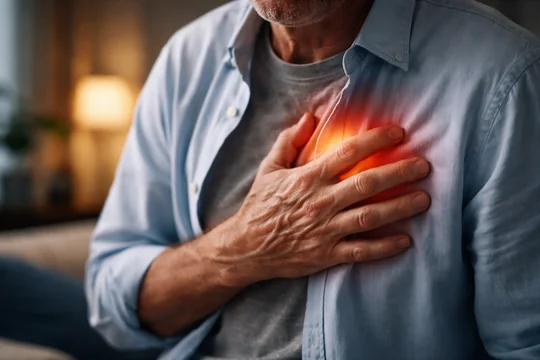
A relative of New York Times wellness writer Jancee Dunn experienced chest pain one afternoon. He brushed it off, said he'd sleep on it, and go to the hospital the next day if he still felt lousy. He died of a heart attack that night.
It's a gut-punch of an opening to a deeply important article — and a reminder that heart attacks don't always announce themselves the way Hollywood would have you believe. There's no dramatic chest-clutching, no cinematic collapse. Sometimes, it's just fatigue. Or nausea. Or a dull ache in the jaw.
Every year, about 805,000 Americans have a heart attack, and 12 percent of them are fatal. While deaths from heart attacks have dropped nearly 90 percent since 1970 thanks to medical advances, the numbers remain staggeringly high. And a big part of the problem? People don't recognize the signs in time.
The 4 Most Common Warning Signs
Dunn spoke with three leading cardiologists — Dr. Donald Lloyd-Jones (Boston University), Dr. Seth Martin (Johns Hopkins Medicine), and Dr. Latha Palaniappan (Stanford University) — to break down the symptoms everyone should know.
1. Chest Pain or Discomfort
The primary symptom is pain or discomfort in the center of the chest. All the experts described it as feeling like an elephant sitting on your chest — pressure, squeezing, or a sensation of fullness.
Some people may mistake this for heartburn, Dr. Martin noted. But heartburn tends to have "a burning quality, which is different than a pressure, squeezing or fullness." That said, the differences aren't "a foolproof test." If the pain lasts a few minutes or keeps coming and going, take it very seriously.
2. Pain in the Jaw, Neck, Back, or Arms
Chest pain often radiates to other parts of the body. People may feel pressure moving into their neck, shoulders, or arms. Most commonly, pain appears in the left arm because the heart is a left-sided structure — but it can affect the right arm too. Sometimes it travels to the back or jaw, where it may feel like a persistent ache.
3. Shortness of Breath
When a damaged heart muscle can't pump enough blood, fluid can build up in the lungs, leading to sudden shortness of breath. This can happen even when you're sitting still — you don't have to be exerting yourself. It can occur with or without chest discomfort.
4. Fatigue, Faintness, or Nausea
These are the lesser-known signs that catch people off guard. Unusual or unexplained tiredness, lightheadedness, nausea, feelings of anxiety or doom, and breaking into a cold, clammy sweat are all potential indicators.
"My father, for instance, died of a heart attack in 1984, and his symptoms started with unusual fatigue," Dr. Palaniappan shared.
The Silent Heart Attack Problem
Over 20 percent of heart attacks are considered "silent" — causing either no symptoms, mild symptoms, or symptoms people don't connect to a heart attack. It might look like the flu or indigestion. The damage to the heart muscle is often only detected later through diagnostic testing.
What You Should Do
If you experience one or more of these symptoms:
- Call 911 immediately — don't drive yourself to the hospital. EMS crews can begin treatment the moment they arrive.
- Get to the ER within 30 minutes of noticing symptoms.
- Get treatment within 90 minutes of arriving at the hospital.
- Don't dismiss unusual symptoms — if something feels "new or severe or unusual for you," it's safer to assume it might be heart-related.
Studies have long shown that women in particular are more likely than men to dismiss heart attack warning signs. And if the symptoms are new, don't wait to see how you feel in the morning.
The Bottom Line
The real danger isn't the heart attack itself — medical science has gotten remarkably good at treating them. The real danger is the delay. Every minute counts. As Dr. Lloyd-Jones put it, if you come in and it turns out you're not having a heart attack, "that's very good news." But if you don't come in and you are? That's a story that doesn't always have a happy ending.
Source: The New York Times — By Jancee Dunn, Published October 10, 2025